Artistic approach
THE WORK ON DISPLAY AT CHAUMONT-SUR-LOIRE IS A SPECIAL COMMISSION FROM THE CENTRE REGION (2011-2013)
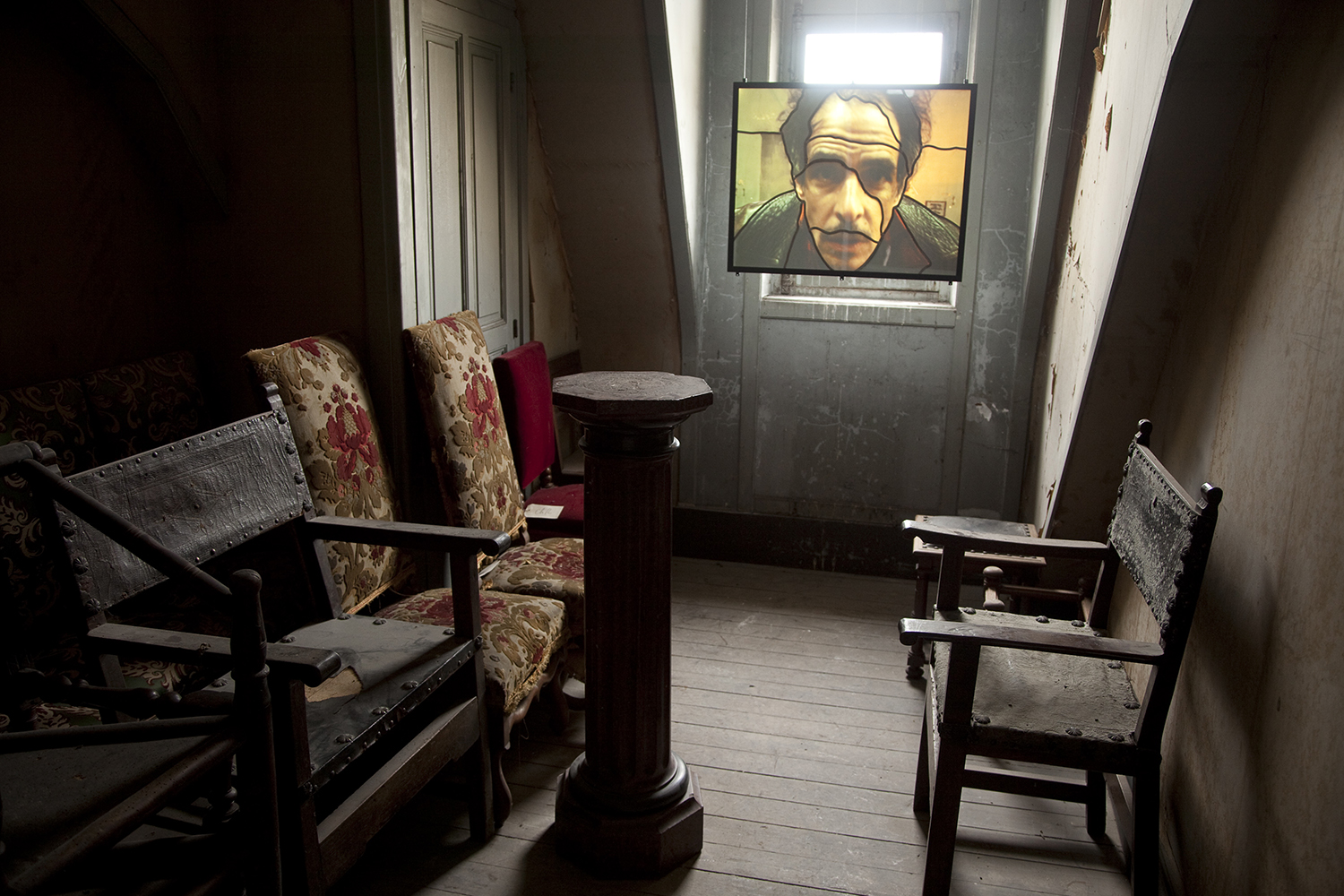
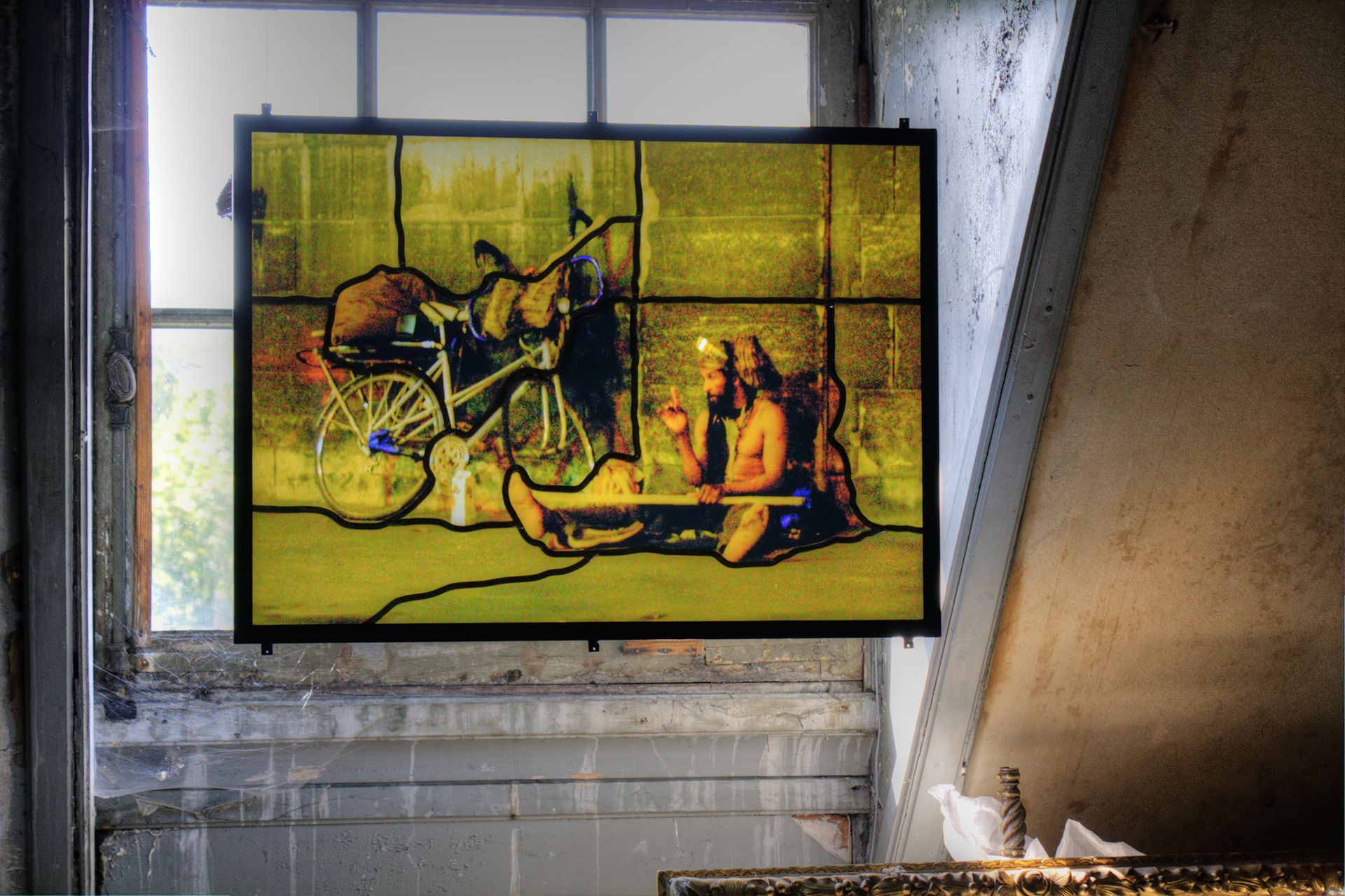
The 72 panes of stained glass, which have been specially created for the Château de Chaumont-sur-Loire by Sarkis, establish a dialogue with those that are already there in the building.
They use light to evoke the life and history of the place. By bringing together images which are fundamental for Sarkis, in some ways they constitute his imaginative museum.
Sarkis conceives this journey of light as an initiatory mental pathway through which visitors create their own story. He places his stained glass in front of each window on the first and second floor of the Château's south wing. These panels of light, revealing images of life and death, love and architecture, fix past histories and future visions in the present moment. Sarkis confronts images of ancient techniques, for instance a photograph of a mosaic, with an image evoking modernity. Sarkis is creating this new work in two stages.
In 2011, 40 panes of stained glass are being designed and installed in front of the windows of the south wing.
In 2012, 32 panes of stained glass will take their place in the Château's kitchens and basements.
Sarkis has left 11 of the 72 stained-glass windows that he designed specially for the Domaine to it.
"Rooms almost in ruins in a marvellous Château: this is the contrast which struck me on my first visit.
It had been snowing. There were hardly any visitors. There was a certain melancholy feel in almost all the rooms, both those open to the public and those that were closed to them.
We had started the tour of the Château with the rooms that are well fitted out and open to the public. Then, we had gone on through rooms almost in ruins and closed to visitors, where abandoned objects awaited us. The walls breathed time, the past. The rooms had not been heated for decades – I remember going up to a small window and looking out; the snowy landscape seemed as if it had been fixed for a really long time under a changing light. Fixed images which would change with the light, these later transformed, giving birth to the idea of stained glass.
A scenario was about to take shape. I would invite people to take a walk to the abandoned rooms, I would only change or touch very few things, sometimes I wouldn’t even let the visitors go in, keeping them on the threshold looking at the interior of the room like a stage set… Suddenly, you would catch sight of a pane of stained glass hanging in front of a window, like an actor in counterpoint. New stained glass, with its ancient technique and its contemporary image, evoking the vast richness of our culture, of all times, of all places, of here and elsewhere: a cherry tree in blossom in a Japanese garden, an abandoned palace beside a lake in Ahmedabad, a sunset at Nordland, the section of the Carrara white marble mountain, the face of an Indian dancing girl in the rain, Liebeskind’s architecture of the Jewish Museum in Berlin, a well amidst greenery in Tuscany, the resurrection of a person from the dead in a film by Dreyer, 12 candles in an old church in Armenia, the birth of a new architecture on the borders of an old district in England, the dance of a Shaman tribe, the face of a man looking at us in huge close-up, the snowy landscape seen from a small window in the Château de Chaumont…
Each of the windows in the rooms, amidst a state of abandon, would have its suspended stained glass, lit by natural daylight and another, artificial light. Both light sources would give birth to other lights. An acutely rich image, fixed in the stained-glass technique, but also moving thanks to the light sources.
In the first year, at the time of the opening in April 2011, 40 panes of stained glass will be hung in place, including 10 which will be made on site. 32 panes of stained glass will be designed in the second year.
The panes of stained-glass do not tell a story, they are open to the history of our world, to thousands upon thousands of images." Sarkis
Biographical NOTES
Sarkis
TURKEY
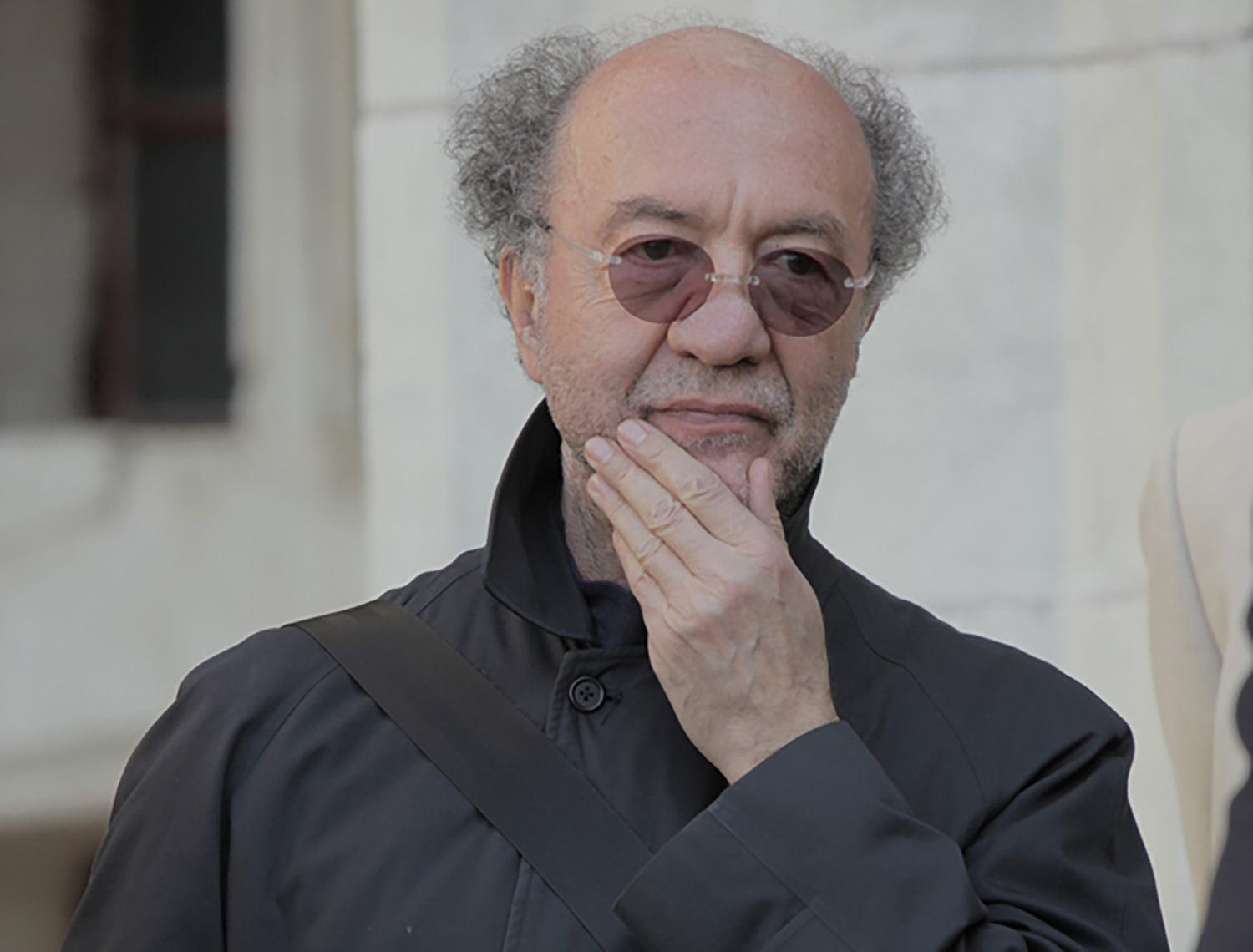
Serkis Zabunyan, known as Sarkis (his Christian name), is a French artist of Armenian descent who was born in Istanbul in Turkey in 1938. He started to paint at a very early age and supplemented this by studying interior architecture at the Academy of Fine Arts in Istanbul. He also studied at the Saint-Michel French Senior High School and got a degree from Mimar Sinan University.
Legend has it that Sarkis, whose real name is Zabunyan, saw the start of his career with Edvard Munch's The Scream, when as a sixteen-year-old from Istanbul he came face to face with the Norwegian expressionist’s painting. The idea of being a painter really made an impression on him and he exhibited his first obscure, oracular gouaches, while he was studying at the Academy of Fine Arts in Istanbul. However, we had to wait until 1962 for Zabunyan to become Sarkis: and it was not just his name that was to change after the artist, who is of Armenian descent, arrived in France on the eve of the May revolutions, it was his whole artistic expression. He put the conceptual stamp on his work when he launched his first exhibition Do you know Beuys? at the May Salon in 1967: from then on, Sarkis has had an ongoing dialogue with the history, artists and works which have had a profound effect on his creative path. The following year, he was already refining his sensory and enigmatic installations, by working with light, sounds and materials (felt, neons, unusual antiques…), which later became his trademarks. He taught at the Decorative Arts School in Strasbourg during the 1980s and then did a series of exhibitions in France and abroad from 1990 onwards. After the Liechtenstein Palace in Vienna (1995) and the Mamco in Geneva (1996), and in addition to the Istanbul Biennale (2009), Sarkis was invited to adorn the contemporary art museum in Lyon (2002), the Louvre (2007) and the Pompidou Centre, which dedicated a major individual exhibition to him in 2010.
Since 16 February 2011, the Mamco in Geneva has been home to the “Hôtel Sarkis” exhibition, bringing together the majority of Sarkis’s works that evoke creative people (musicians, painters, film-makers, philosophers, sculptors, writers, etc.).