Artistic approach
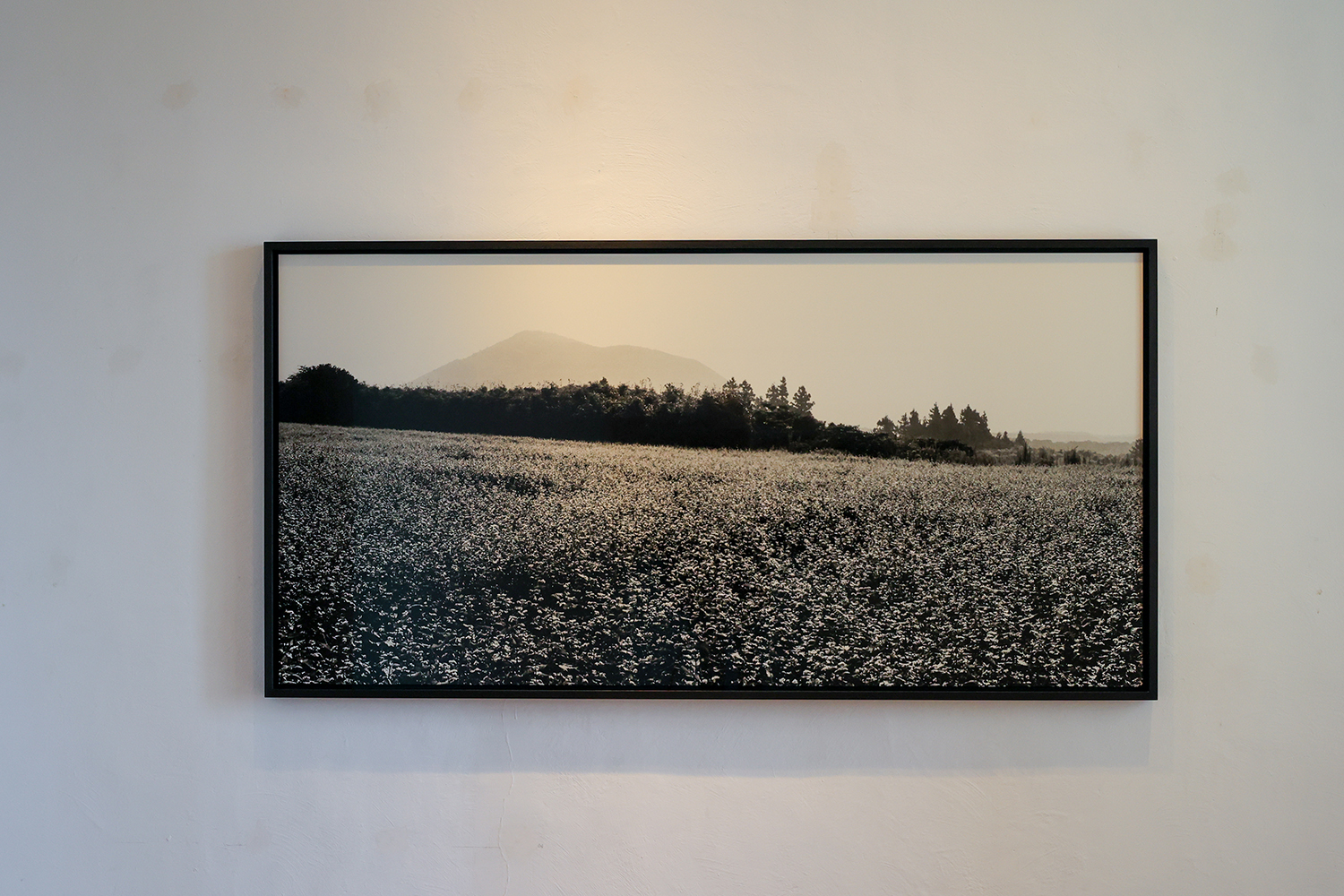
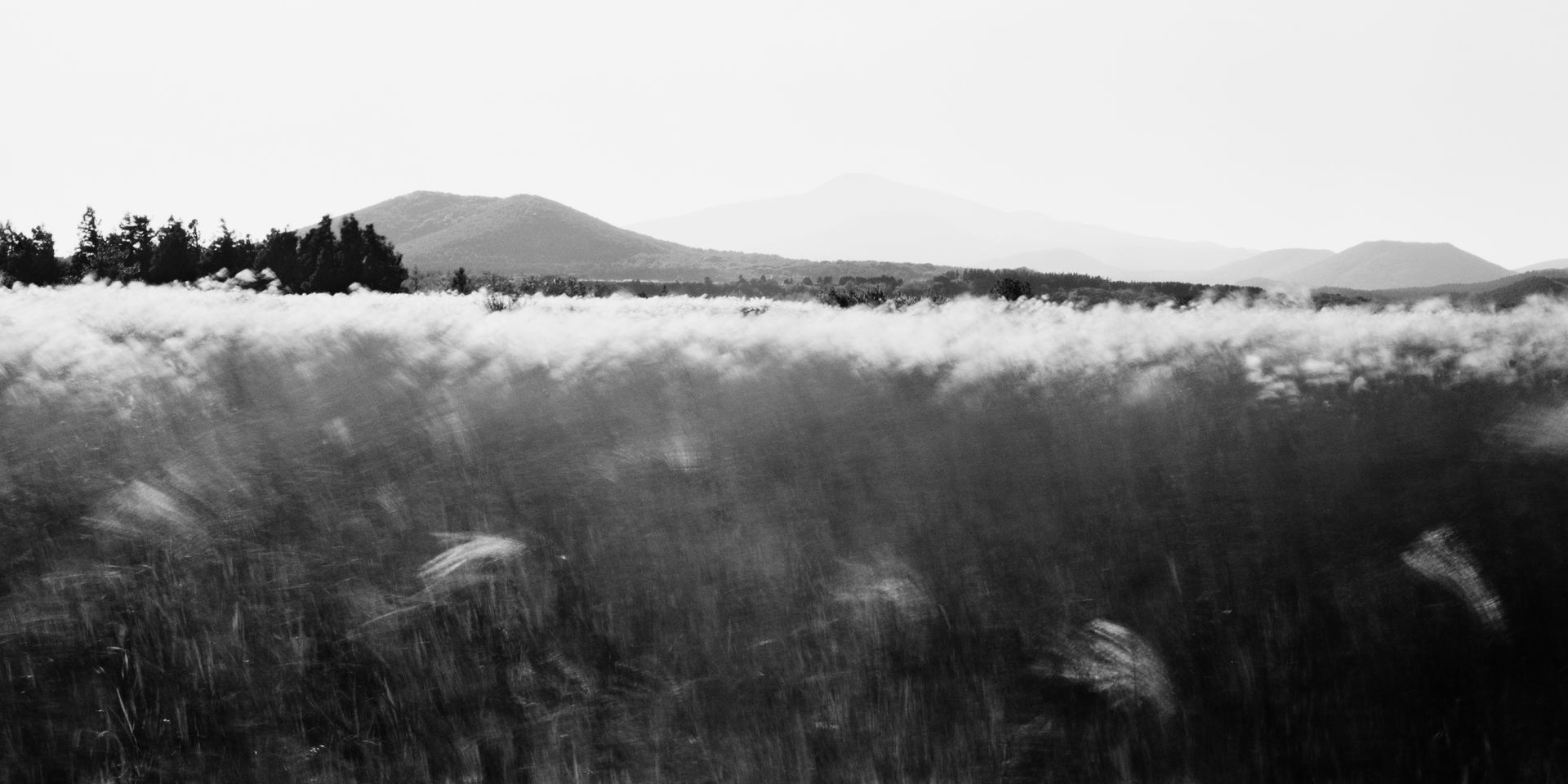
Bae Bien-U has practised the art of photography for over forty years and is undoubtedly the greatest contemporary Korean photographer. Acclaimed across the world, his works speak a universal language, above all expressing the Korean people’s desire to live in harmony with nature, whose movement he photographs in panoramic mode. Devoid of all traces of human presence, his landscapes beckon the mind into a suspended time where meditation is de rigueur. The work is both an invitation to commune with the natural environment and a metaphor where trees – those links between sky and earth, as the artist likes to think of them – might well be ourselves.
Bae Bien-U’s photographs don’t bear witness to given moments or specific events, they seek to capture the essence of whatever it is that transforms places into myths in order to restore their vital energy. The use of black and white and tight framing makes the subject indiscernible. The photographer blurs boundaries. Painting or photography? A style that reconnects the artist with the pictorial practice of his youth. When asked which artists might have inspired him, he answers by mentioning the f/64 group of American photographers founded in 1932, which sought to promote a photographic form independent of pre-existing graphic arts, and the Korean painter Jeong Seon (1676-1759), known for having developed a style distinct from Chinese tradition.
In 1985, Bae Bien-U started on a body of work that focused on immortalising the sacred character of the pine forests along South Korea’s southern coast, trees he describes as “symbols of the Korean people’s soul”. So it was hardly surprising when, on holiday on the Côte d’Azur some 30 years later, he took an interest in their Mediterranean brothers.
Bae Bien-U has become a regular guest at the Domain of Chaumont-sur-Loire. In 2014, visitors discovered his magnificent panoramic black-and-white prints of Pins de Gyeongju, and then, in 2019-2020, the Orums, images of volcanic hills with all the appearance of abstract paintings. Rather different ambiences are on display this year: wide horizons set to provide visitors with a new lease of life as they linger in front of them, fascinated by the hills encircled by mists and clear, dreamlike grasses suspended in time.
BIOGRAPHICAL NOTES

Bae Bien-U was born in Yeosu, South Korea, in 1950. A graduate of Hongik University in Seoul, he trained in traditional painting techniques and design before devoting himself to photography in the 1970s, at a time when the country was yet to recognise it as an artistic discipline. His photographic practice went side by side with teaching activities, including at the Seoul Institute of the Arts from 1981 to 2012. In 1988-1989, a research grant took him to Germany, to the Bielefeld University of Applied Sciences’ Photography & Design Department. His black-and-white analogue photographs, devoid of human presence, brought him fame that spread beyond his homeland. His attachment to his chosen technique and close attention to the printing process have never faltered. Bae Bien-U is regarded as the greatest contemporary Korean photographer.
He is represented by the RX Gallery in Paris and the Axel Vervoordt Gallery in Wijnegem, Belgium.