Artistic approach
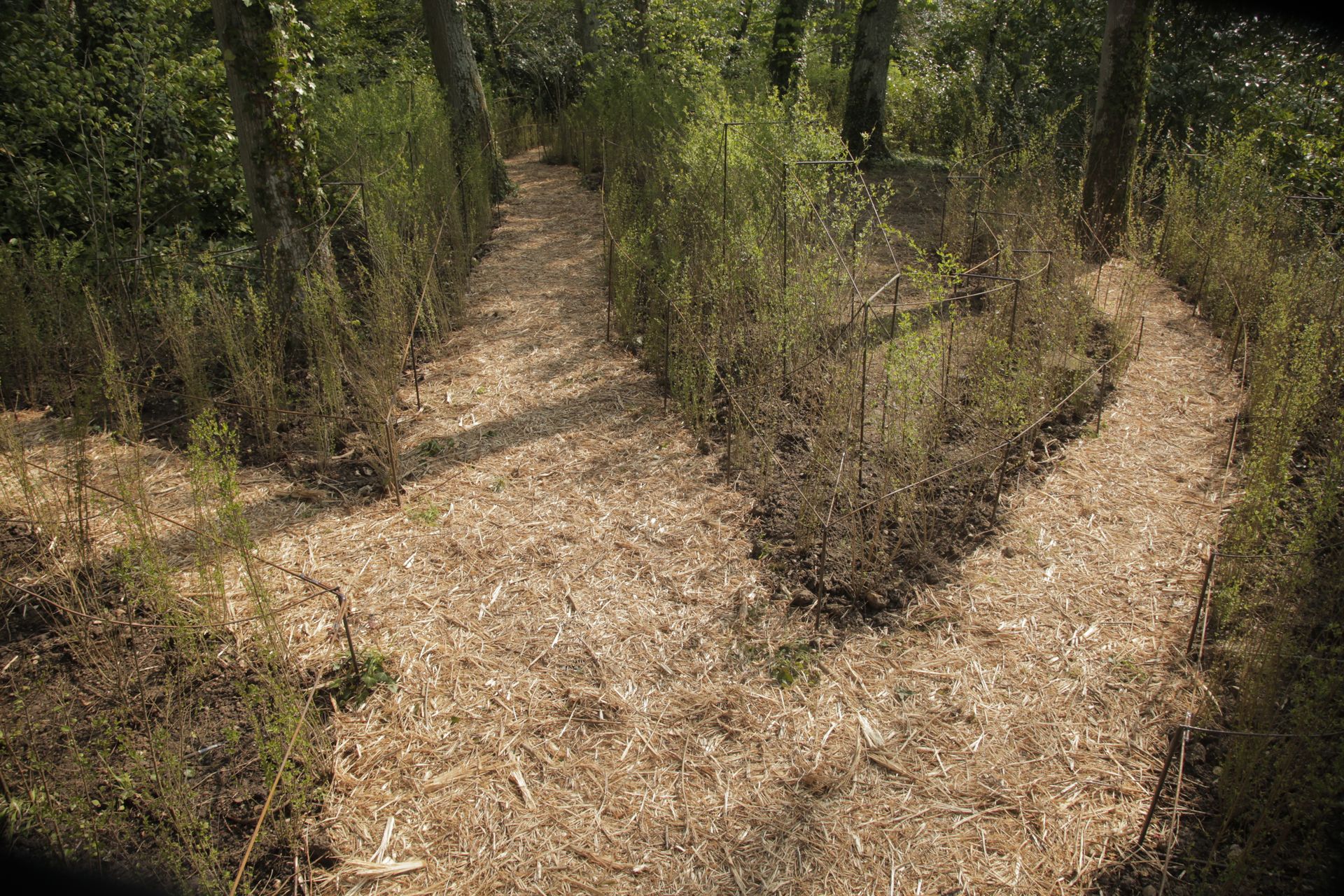
“TRATTENERE 8 ANNI DI CRESCITA (CONTINUERÀ A CRESCERE TRANNE CHE IN QUEL PUNTO), 2004-2012”
Giuseppe Penone is one of our greatest living artists. His work focuses on nature, which provides him with a profound and unique source of inspiration, being particularly fascinated by trees, which he sees as embodying its mystery and power more completely than any other of its components. He loves their branches, their leaves, their prickles – he studies them, from the shoots that spring from their stumps to coppices and whole plantations. His work is a love song to the beauty of trees. A tireless observer of forests, he understands and reconstitutes the messages, buried forces and energies inscribed in wood, invisible to the naked eye. The themes he tackles pose questions on nature and humankind, as well as on time through the transformation of matter and the movement, imprint and beauty of forms. The materials he uses include wood, marble, plant resin and bronze.
“Trees are fluid materials, which can be shaped. The main vector here is time: humankind and trees have different temporalities; in principle, if you took hold of a tree and were steadfast enough not to move for years, the pressure exerted by your hand would modify the tree.”
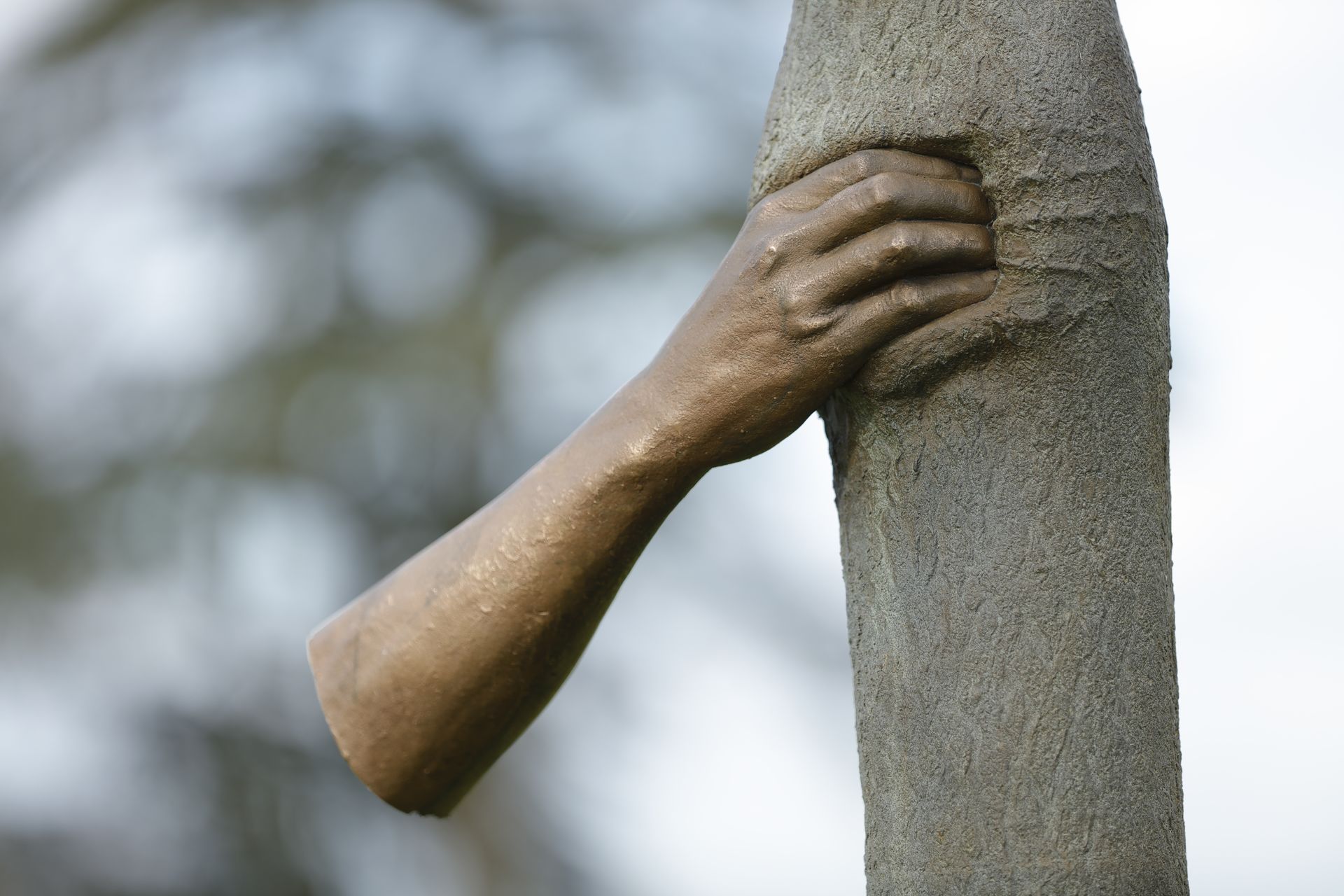
In 2016, the artist produced a new work in bronze, echoing the poetic labyrinth already laid out in the Historical Park. Penone created a bronze mould of his own hand in the act of grasping the trunk of a young tree. The handprint on the tree expresses the link between humankind and the imperturbable force of nature, for “the forest speaks to us of the forest, but in speaking of the forest, it speaks to us of humankind”.
“ARBRE-CHEMIN, 2012”
The themes he tackles pose questions on nature and humankind, as well as on time through the transformation of matter and the movement, imprint and beauty of forms. The materials he uses include wood, marble, plant resin and bronze.
The artist has created a permanent garden entitled Arbre-chemin (Tree-Road), laid out in the midst of a copse of trees. Although he took a good look around the Historical Park and could well have opted for another site, it was a secret copse, not far from the Water Tower, that attracted him – a forgotten copse, hidden away beneath unpruned laurel trees, in which no one had set foot for years. Penone has created a subtly poetic pathway there, as if he were in search of a forgotten secret engraved on the linden and chestnut trees, and which he alone could decipher before leaving his own mark in stone or bronze there. The traces he has left have given this place back its visibility, its memory and a future, a relationship with the time it had lost. Through the succession of small features he has included – stone fragments and bronze sculptures – he “sows ideas, thoughts, works yet to come.”
Chaumont-sur-Loire’s secret wood was awaiting metamorphoses, which Penone’s Arbre-chemin has succeeded in providing. “The work is not a tool for making magic, it is magic itself… Poetry is the revelation of something extraordinary.”
Along the pathways of the grounds, deep within a secluded copse, Giuseppe Penone has laid out a secret garden, a subtle, poetic itinerary. Through small elements, fragments of stone, bronze sculptures, he has “sewn ideas, thoughts and projects to come”. These are surprises, memories etched into the trunk of a lime tree, in a copse and on the Domaine’s outstanding trees as if they “were grafts” that he would help to transform, thereby making the forest active and fertile and giving it a voice. For “the forest speaks to us of the forest, but in speaking of the forest it speaks to us of humankind”.
BIOGRAPHICAL NOTES
Giuseppe PENONE
ITALY
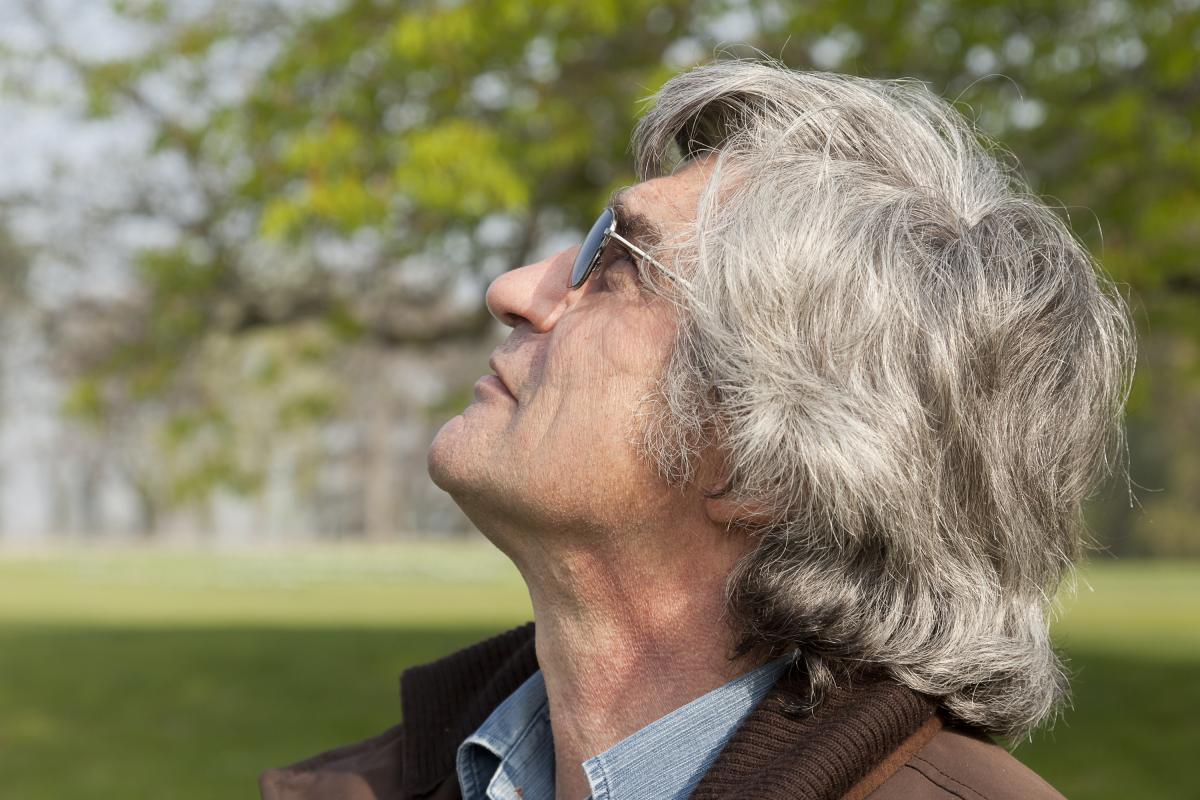
Giuseppe Penone was born on 3 April 1947 in Garessio, Italy, into a family of farmers and merchants. He taught at the National Fine Arts School in Paris from 1997 to 2012. He now splits his time living and working in France and Italy.
In the late 1960s, he joined the Land Art and Arte Povera movements which advocated an anti-establishment, anti-modern way of thinking. Like other artists involved in the Arte Povera movement, he was one of the emblematic figures of Italian art in the 1960s.
In 2004, his work was showcased in a major retrospective at the Centre Pompidou in Paris, and then in the gardens of Château de Versailles in the summer of 2013, where his project Penone Versailles proved hugely popular. From November 2014 to February 2015, he presented a sweeping monographic exhibition at the museum of Grenoble.