Artistic approach
In 1967, Haus-Rucker-Co, of which Klaus Pinter was one of the three founders, suspended from a window of a block of flats in Vienna a sphere altering the vision that its residents had of their city and the world to come. This symbolised breaking away, the Secession for Haus-Rucker-Co.
The spheres that the artist has created over time have continued to shake up the usual way of seeing things, forcing beholders to probe history and architecture. At the Pantheon in 2002, “the spheres show much more of what is hidden, and indirectly unveil the luminous centre of traditional architecture… Thanks to his spheres, Pinter restores the historical link that has been lost between the beholder and the sky, by deliberately destroying it and leaving it open to reflection in this way,” writes Thomas Zaunschirm. A symbol of the senses heightened, ubiquity, imaginary potential, hope, the sphere is just as capable of enhancing the idealistic tradition alluded to by Plato as the metaphor of aesthetic thought described by Jacques Derrida in La vérité en peinture (Truth in painting).
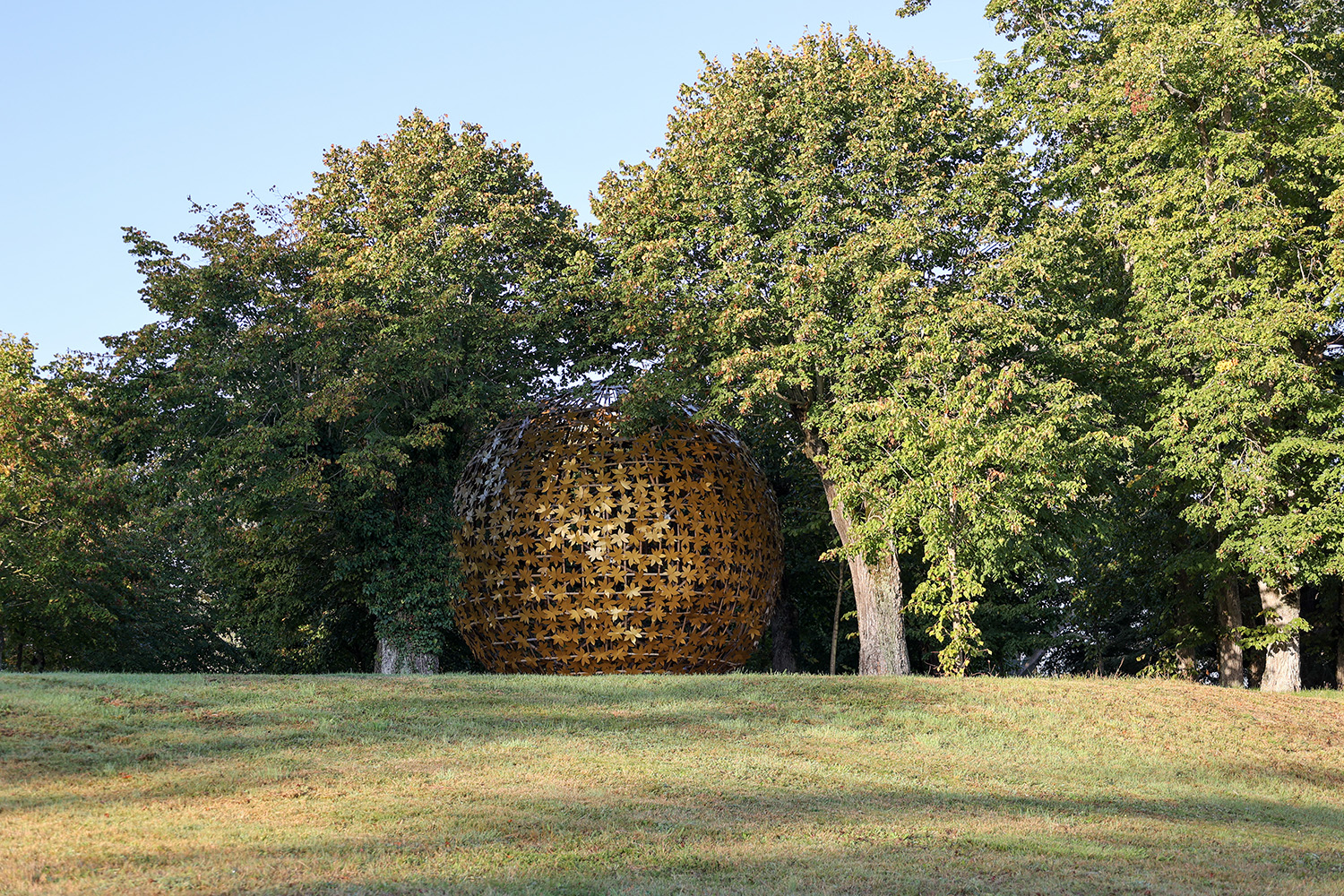
Installed in the Stables Canopy since 2018, in 2023 Klaus Pinter’s bamboo sphere forms part of the historic gardens, taking its place within lush landscape architecture. The lime trees on the walk provide this monumental work with a green setting, where its thousands of golden flowers play with the leaves of two-hundred-year-old trees, catching the light and vagaries of the sky.
BIOGRAPHICAL NOTES
Klaus PINTER
AUSTRIA
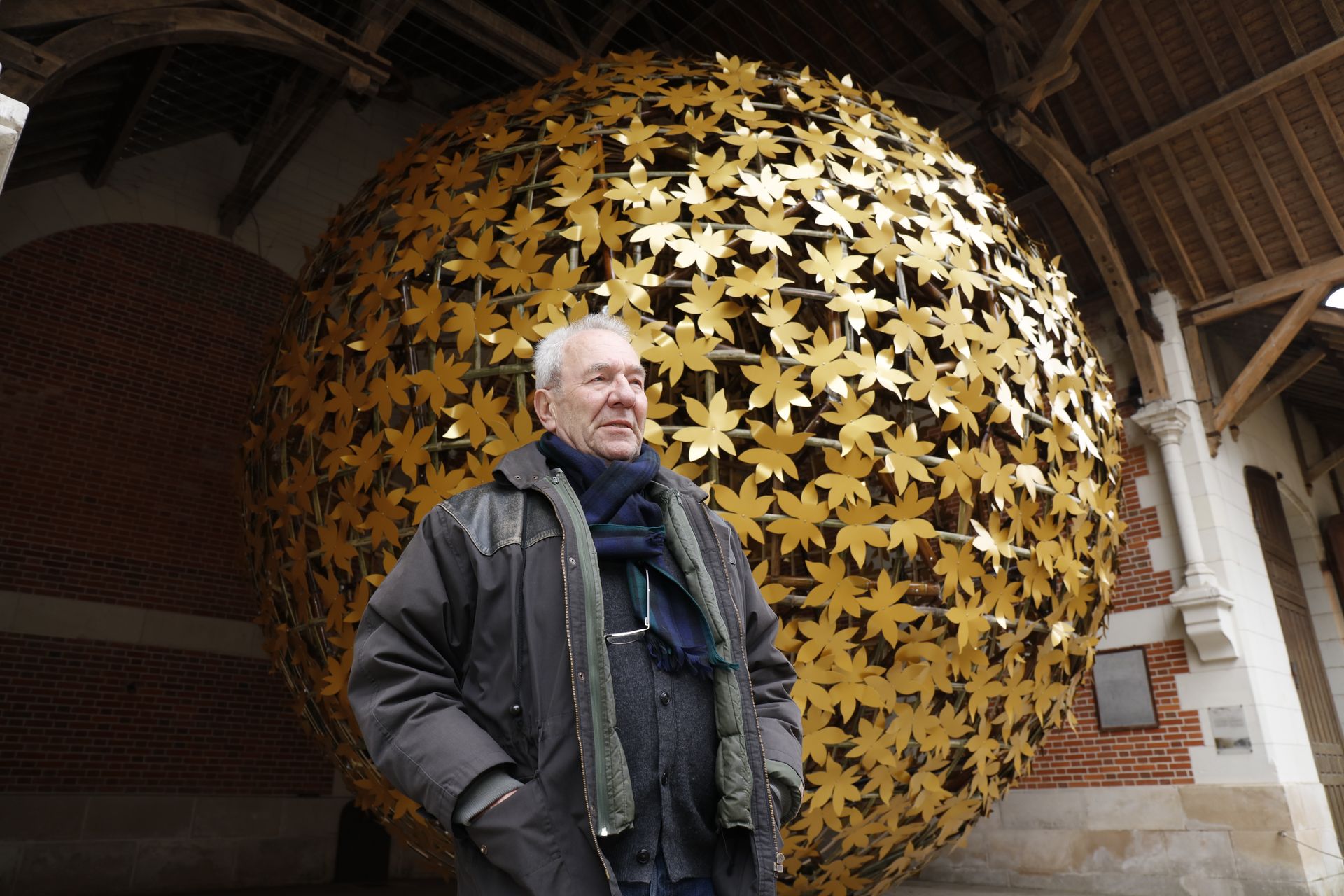
Born in 1940 in Schärding (Austria), Klaus Pinter was one of the founding members of Haus-Rucker-Co (Vienna, Düsseldorf) and Haus-Rucker-Inc (NYC). After seven years in New York, a few years in Belgrade and then stints in Bonn and Paris, Klaus Pinter now lives and works on Ile d’Oléron and in Vienna. By founding the Haus-Rucker-Co Group in 1967 in Vienna, he set himself apart from the Fine Arts, striking out as a forerunner of installation, setting a showpiece within a given context. In the 1970s he was a leading light on the radical Austrian art scene.
Casting a severely critical eye over the notion of progress and industrialisation and their consequences on the environment, Pinter’s research, with Haus-Rucker, bears on experiments of a new relationship with the body. Through his unwavering focus on the architecture of historical venues, museums or sites, the artist prompts us to give thought to the notions of space, symbolism and tradition.
KLAUS PINTER