Artistic approach
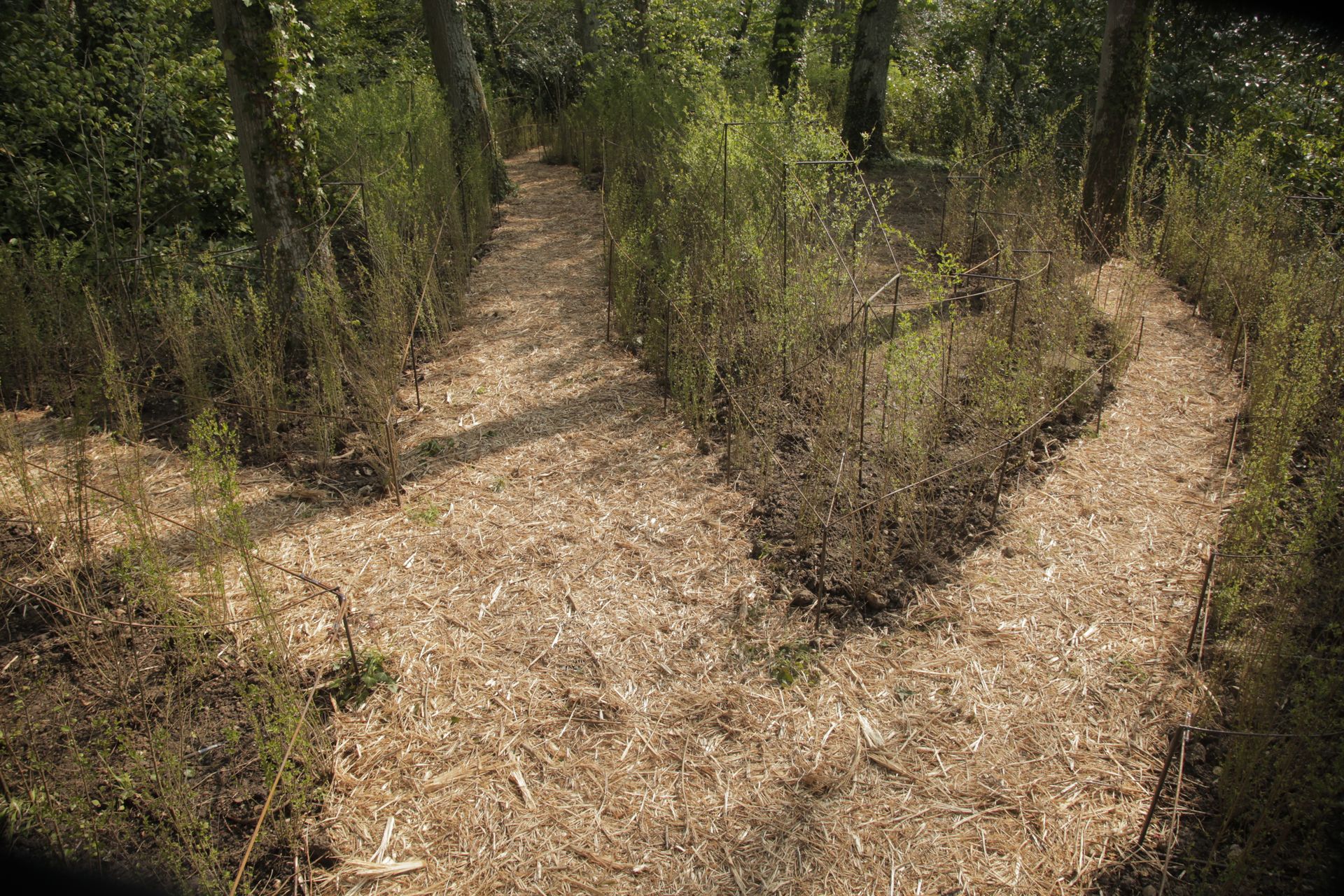
“Although he walked all the way around the Park and could have gone for any other spot, it was a secret copse not far from the water tower that caught Giuseppe Penone’s eye in Chaumont-sur-Loire – a forgotten copse hidden under the bay laurels that was no longer pruned and where no one had ventured for a very long time. Intuition of where to go from here, search for trees and possible routes to take, immersion in and immediate grasp of the place, observation of stumps and moss, ivy and lichen, stones and branches… all perceptible elements of creation in movement and its mysteries – we have been made privy to such moments in his creation process: when an idea springs to mind, or when searching for tracks or for possible areas for inscribing forms or objects in nature. As if the artist was on the look-out for a forgotten secret in this undergrowth, etched on the lime or chestnut trees, which he alone has been able to decipher before leaving his own mark upon it in stone or bronze. Penone’s secret affinities with this copse and the prints that he will leave there will restore its visibility, bring back its memory and give it a future once again – a connection with the time it had lost. A tree,” says Penone, is a fluid matter that can be shaped. The main vector is time: man has a different temporality from a tree’s; in principle, if we took hold of a tree and stood firm enough so as not to move for years on end – the constant pressure exerted by our hand would change the tree. Metamorphosis awaits the secret wood of Chaumont-sur-Loire, in the form of Penone’s “pathway tree”. A piece of work is not a magic wand – it embodies magic itself.... Poetry is the revelation of something quite extraordinary.”
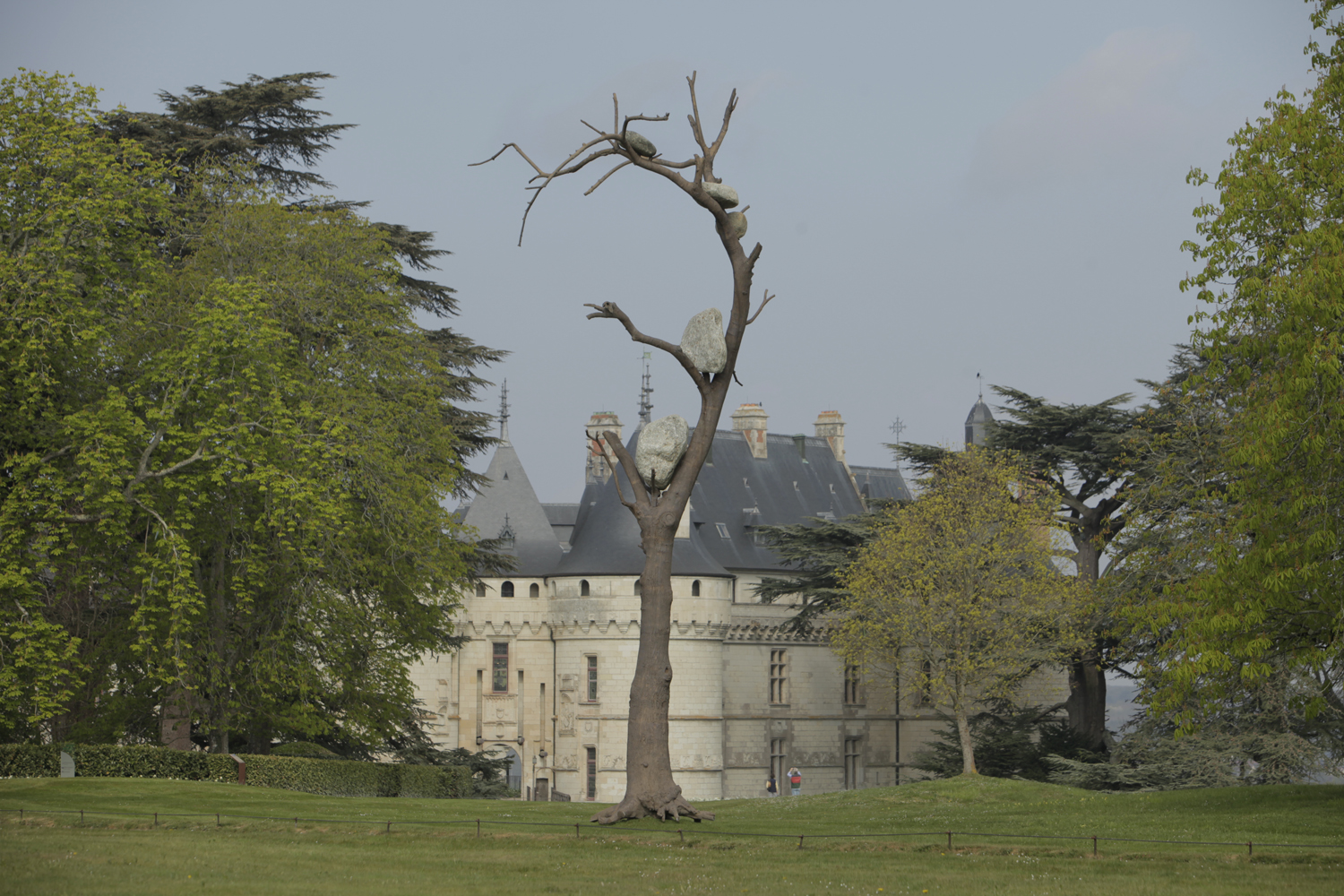
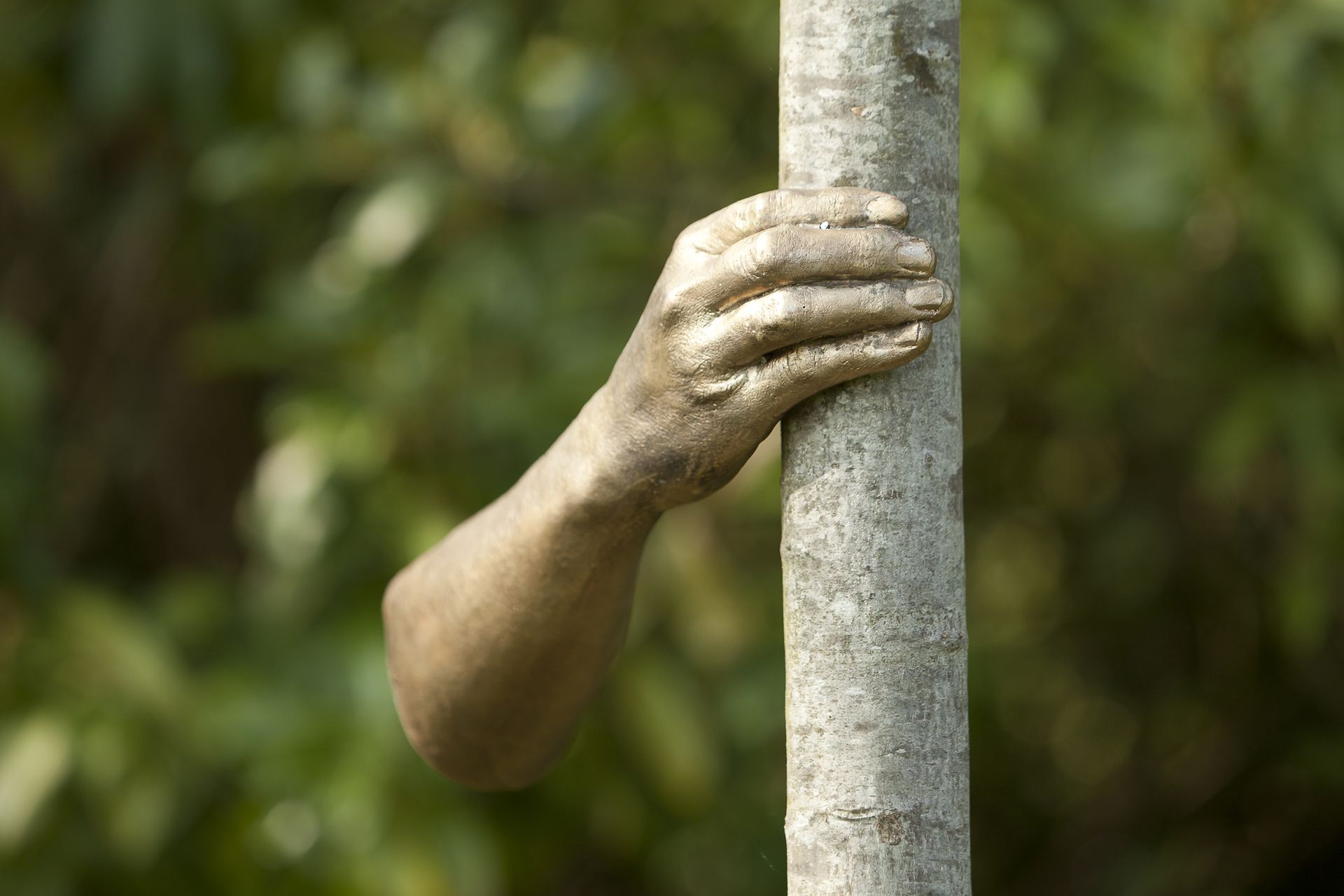
Along the pathways of the grounds, in the heart of a hidden copse, Guiseppe Penone weaves a subtle and poetic itinerary. Using small components, stone fragments and bronze sculptures, he “sows ideas, thoughts and works to come”. These surprising finds – souvenirs abandoned in the trunk of a lime tree, in a copse, or on one of the Domaine’s ‘outstanding trees’ – resemble “grafts” capable of transforming them, making the forest active, fecund, and giving it a voice. For “the forest speaks to us of the forest, but in speaking of the forest it speaks to us of humankind”.
"The garden begins the moment one sets foot in it and advances into its vegetable and mineral realm.
One’s steps settle in the earth, and the minute realities encountered along the way bring the memory of one’s presence.
The shrubs, pushed aside by a force which is not the wind’s, the fallen leaves, the broken twigs, the grass crumpled and trampled underfoot, the animal life, miniscule and invisible, which one’s steps have disturbed bear witness to the passage of humankind and are reminders of its journey.
The perception of all these innumerable little events, the reflection, observation and astonishment that accompany the walker on his way, eyes to the ground and thought suspended, impregnated by the sky, bring the senses into harmony…
From this moment, the memory of humankind is implanted in this place.
To carry out the systematic organisation of this memory, to provide it with structure, to wish to make a ritual of this journey, to make it repeat itself – this is what gives rise to the garden.
The garden recalls and reoffers this astonishment, these sensations provoked by the original action, the wonder of the colours, of the soil, of the sky reflected on the grass, of the shadow of branches cast on the ground, unveiling the moods of the earth and their unending flow.
When one lifts one’s eyes, the sky projects images absorbed by the earth, and earthbound thoughts rest on a horizon written in trees and shrubs by the centuries-old work of humankind.
The infinite expanse of blades of grass in a meadow, the scent of moss, the dust of branches, leaves crushed underfoot, the all-encompassing light interrupted by the boughs of trees, by the flight of birds and by insects, are the carpet on which life itself rests.
The manner in which the plant community making up the garden is organised along the way reflects the culture, society and economy which created it.
The microcosm formed around a life spent entirely in communion with a restricted space reflects the secrets, anxieties and hopes, as well as the resignation to the passage of time, or the acceptance of its passage, linked to the incessant changes of light on the ground.
The genesis of the garden resides in the mystery and order of the reality that surrounds us, in the magic of life and the astonishment which it arouses in revealing itself.
The garden’s compass must be defined in order to mark the spot and give it its own identity.
Definition leads to exclusion, but it is through exclusion that the worth of the mysterious, the sacred and the enchanted is born.
It is by means of these limits that the idea of genius loci is concentrated, assembling secret forces that enable organisation of the living. From it arise the idea and concept of the sacred wood, the natural temple.
To move through the garden is always to make an initiatory journey, to experience a revelation which accentuates once more that atavistic loss of direction felt when one advances through the undergrowth, in the forest, the sense that one has lost track of all landmarks and that attention is concentrated on this or that detail, on sudden unexpected apparitions, on sounds, bursts of light, and on shadows.
Only someone who is prepared to experience osmosis with things, with the landscape, can perceive such an initiation.
When you enter the labyrinth of gardens, it is easy to lose yourself in shapes, colours and scents, in the sounds coming from its soils and its waters; the best thing to do is never find yourself again.” Extract from Respirer l’Ombre by Giuseppe Penone.
Biographical notes
Giuseppe PENONE
ITALY

Born in Garessio, in the Italian Piedmont, in 1947, Giuseppe Penone now lives and works in Turin and Paris, where he teaches at the Ecole Nationale Supérieure des Beaux-Arts. Nourished in childhood by luxuriant nature, he has kept the profound sensitivity apparent in the exhibitions devoted to his work since 1968. Examining the bond between humankind and nature, he rapidly asserted himself as one of the leading lights of the Arte Povera movement, launched in 1967 by the critic Germano Celant. From such avant-garde palaces as the Städtische Museum in Leverkusen to such temples of contemporary art as the MOMA in New York and the Georges Pompidou Centre in Paris, Giuseppe Penone rapidly cleared a path to recognition that extends well beyond borders. Whether intimate, monumental, fragile or permanent, his work takes on unique form at the Domaine de Chaumont-sur-Loire.