Le jardin
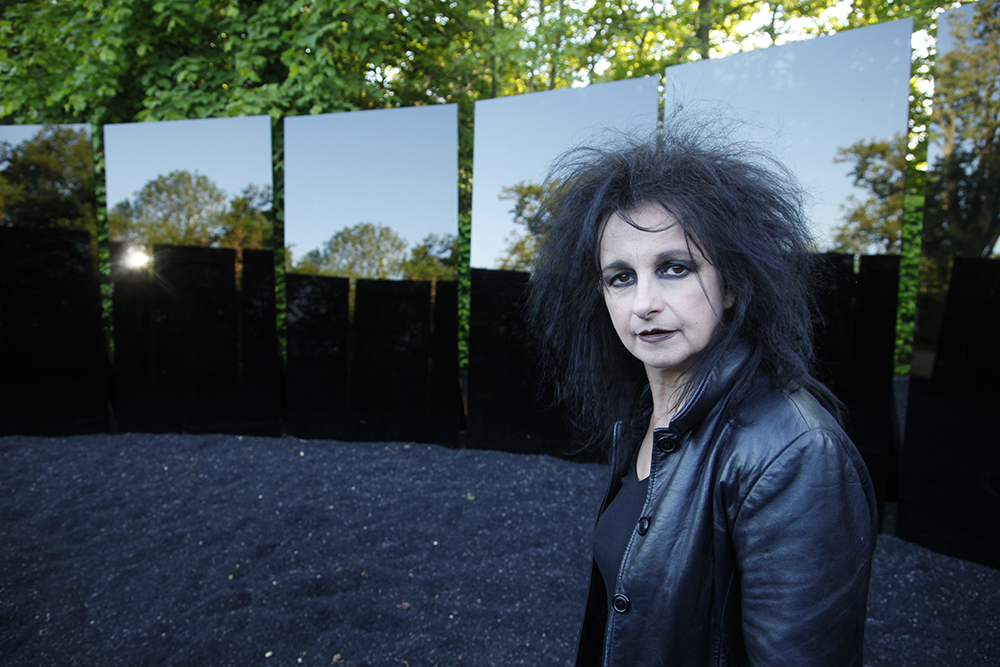
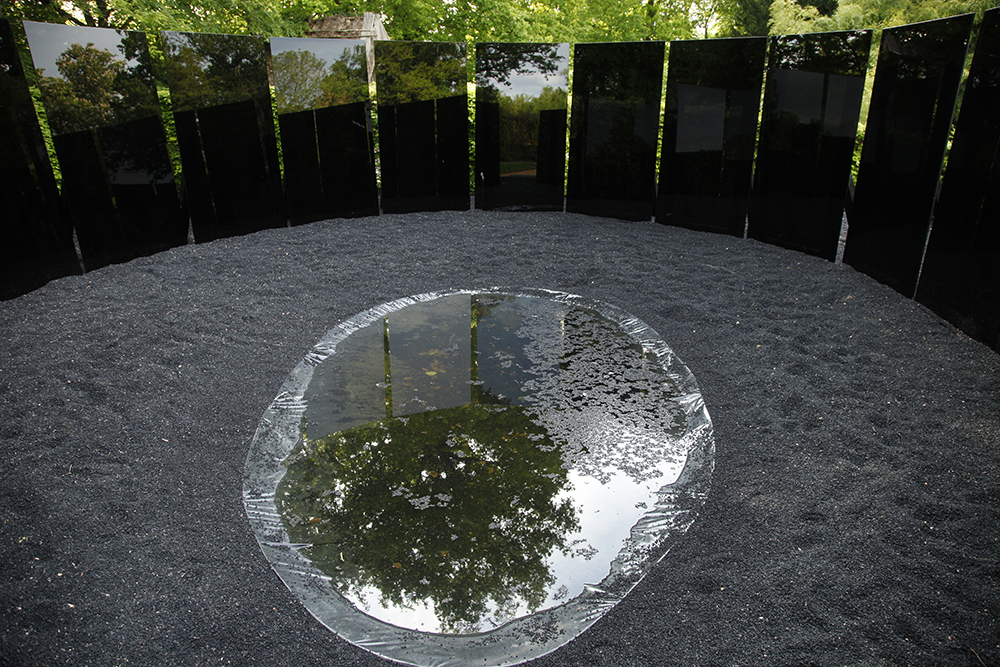
The ultimate garden challenge, since no plant is ever really completely black, and yet, black can be light, as Soulages says, and Matisse always maintained that “black is a colour”. This garden installation simulates space, which draws the visitor into a physical virtuality. Whereas in choreography the body dances to describe space, here, in this garden, space dances for the body. This garden installation is simple. It is similar to the chamber of curiosities, but this time outdoors. Whether it is raining, cloudy or sunny, the rain, clouds and sun reflected, in the mirrors and water feature, strengthen the overall effect and make it more dynamic. A border of black metallic mirrors, that are not entirely reflective, draws the boundaries of this oval garden. The absence of corners, the non-vertical mirrors, inclined in an irregular fashion, set on an easel at the back, reflect and reduce the reflections while distorting them, all the while absorbing them into the blackness. The ground is dark, made of fine tyre shavings, absorbent underfoot, covering the gently worked surface and dipping down to a central plant planted with Black Ophiopogon. The mirror boundary forms a chicane at the entrance immersing the visitor, whether alone in a group, in this black kaleidoscope.
DESIGNERS
Dans le trou noir, le passage de l’horizon est l’aspiration à la libération de la matière. Libération dans la matière.
Dématérialisation.
Immatérialité.
Mais densité maximum.
Apesanteur/pesanteur.
Lorsque l’espace fuit, le temps file et l’esprit est libéré.
Dans le trou noir seul l’esprit s’échappe.
Défi ultime du jardin, puisque qu’aucune plante n’est jamais totalement ni vraiment noire. Et pourtant, le noir peut être lumière, comme le dit Soulages, et Matisse a toujours affirmé que « le noir est une couleur ». Ce jardin-installation est un simulateur d’espace qui attire le visiteur dans une virtualité physique. Si dans une chorégraphie le corps danse pour décrire l’espace, ici, dans ce jardin l’espace danse pour le corps. Ce jardin-installation est simple. Il s’apparente au cabinet de curiosité, mais cette fois en extérieur. Qu’il pleuve, qu’il fasse gris ou beau, la pluie, les nuages comme le soleil, en se mirant dans les glaces et la pièce d’eau, vont renforcer les effets et les rendre dynamiques. Une limite de glaces noires métallisées, sans être tout à fait miroir redessine les limites du jardin en ovale. L’absence d’angles, les glaces non verticales, inclinées de manière non régulières, posées sur chevalet à l’arrière, reflètent et démultiplient, tout en les absorbant dans le noir, les réflexions avec distorsion. Un sol noir, fait de fins copeaux de pneus, absorbant sous les pieds, recouvre la surface doucement travaillée et creusée jusqu’à une partie centrale végétale plantée d’ophiopogons noirs. La limite des glaces fait chicane à l’entrée pour immerger le visiteur, seul ou en groupe, dans ce kaléidoscope noir.
Concepteurs