Artistic approach
Awarded the 2015 Venice Biennale’s Golden Lion for Lifetime Achievement and the 2017 Praemium Imperiale in Tokyo, El Anatsui is known for his wooden sculptures and complex assemblages of recycled materials. In the late 1970s, he gave precedence to using glass shards and pieces of broken ceramic. Two decades later, he shaped his first pieces of “fabric” from “poor materials”.
El Anatsui is inspired by the human traditions of recycling and finding new uses for old used objects, and he has skillfully turned this into the mainspring of the creative process. His works reflect upon global trade and the destruction and transformation of materials - symbols of the events faced by the African continent.
CIRE PERDUE, 2019
“Why boats, why barques? For me, the barque symbolises departure, it’s what serves to transport human beings, ideals and materials. It sacrifices itself, so to speak, in order to transport human beings and goods of all kinds. The work is called Cire perdue, like a lost work, a lost life. The boat sacrifices itself by carrying human beings and goods: it’s usually horizontal, but here it’s used vertically. These are dead boats, standing on their ends in order to be celebrated. A glorification of those who have sacrificed their lives, an elevation skywards in an extraordinary sculpture. The boat is sacrificed, just as the wax is lost when you pour the bronze. Energy is lost so as to enable something else to exist. It is the emergence of new things that is celebrated here. The boat has a bronze spinal column. The boats are being converted into bronze, with the basin at the top to enable distribution of the wax.” El Anatsui
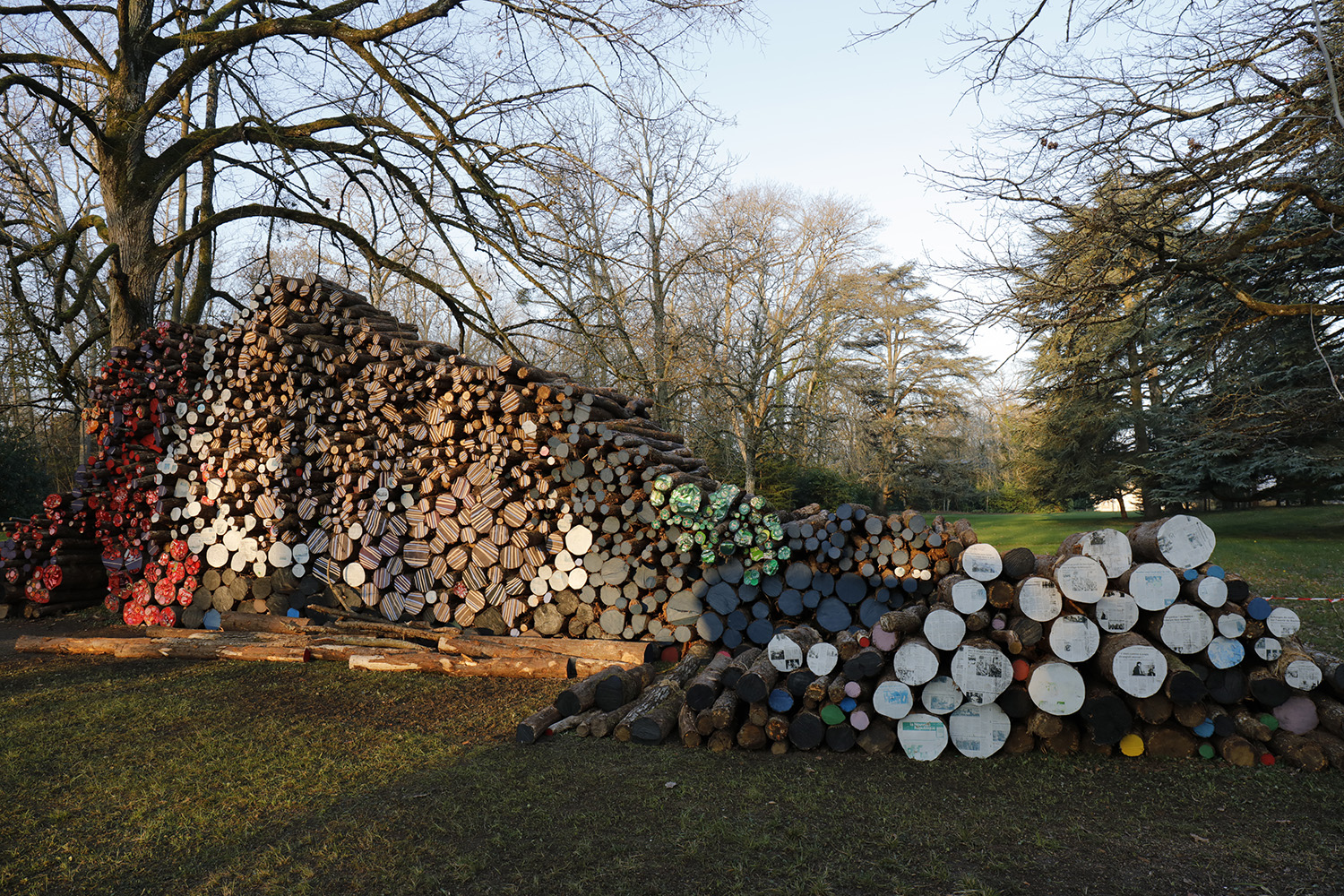
UGWU, 2016
The great Ghanaian artist El Anatsui has designed an extraordinary hill made from logs, scrap materials and an array of printing plates in sparkling colours at the heart of the Historic Grounds.
XiXe, 2015
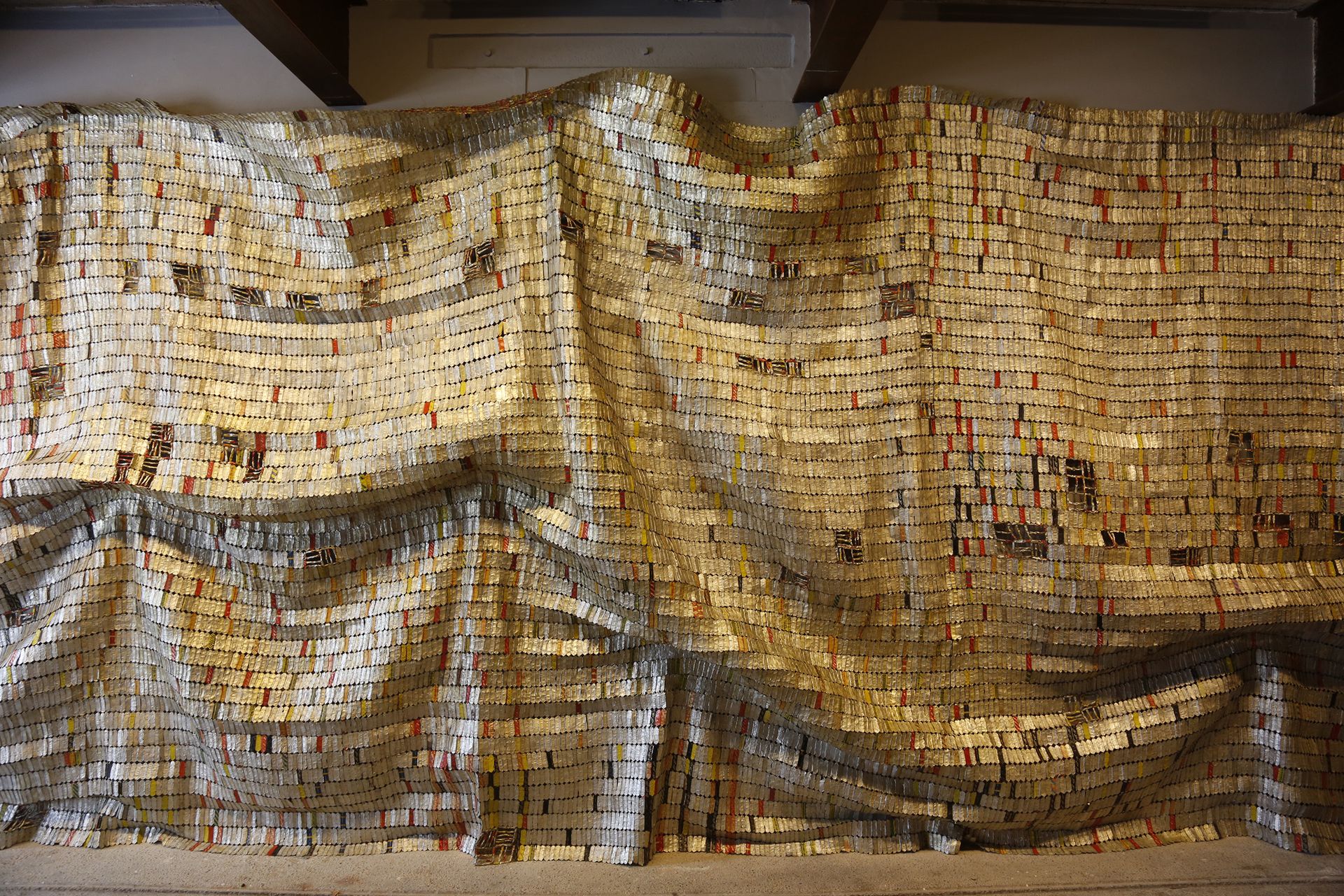
The monumental mural installations and flooring sculptures created by El Anatsui, are composed of “scrap materials”: labels, aluminium bottle-tops, crushed, flattened-out tin cans and sheet metal offcuts. Works in bright, shimmering colours draw inspiration from Kente fabrics, the garments decorated with symbolic motifs worn by Ghanaian chiefs.
BIOGRAPHICAL NOTES
EL ANATSUI
GHANA

El Anatsui was born in Anyako, Ghana, in 1944. He lives and works in Nsukka, Nigeria. Graduating from the Kwame Nkrumah University of Science and Technology in Kumasi, Ghana (1969), he rounded off his classical training with an apprenticeship in the ancient techniques of the Ashanti culture, embracing engravings, ceramics and pottery for example. In the 1970s, he joined the group of Nigerian artists the Nsukka School associated with the University of Nigeria where he taught from 1975 to 2011.
In 1990, he was one of five artists selected to represent Africa at the 44th Venice Biennale.
In 2013, he won the prestigious Charles Wollaston Award for his piece TSIATSIA - searching for connection. This gigantic shimmering wall work, woven together from scrap materials, covered the whole façade of Burlington House during the 2013 summer exhibition of the Royal Academy of Arts in London (Royal Academy’s 245th Summer Exhibition).
In 2014, El Anatsui was elected as an Honorary Academician at the Royal Academy of Arts in London.
In 2015 he was awarded the Golden Lion at the Venice Biennale for Lifetime Achievement.
In 2017, the artist was awarded the highly prestigious Praemium Imperiale in the sculpture category.