Artistic approach
Axel Cassel was a passionate observer of nature. His method involved watching the movement of water in rivers, the cracking of dry earth and the positioning of leaves on a branch. From this he created series of sculptures in the form of leaves, seeds, spinning tops and diabolos, assemblages of small cups in homage to the Chinese poet Li Po, vortices, scrolls and billowing smoke. He also created installations.
Most of his works are wooden sculptures, bronzes and sculptures in plaster and terracotta.
A peerless engraver, he illustrated around forty collectors’ books, including several by Michel Butor and Fernando Arrabal.
Like the American collector Michael C Rockefeller, he undertook a long voyage to Papua New Guinea and Irian Jaya in 1984 and 1986. He then visited a number of other countries, including Java, Bali, Burkina Faso, Nepal, India, Togo, Benin and Tanzania.
He liked tribal art and surrounded himself with African and Oceanic sculpture. A lover of jazz, he organised concerts at his home in Normandy and a festival in Paris. Several musicians have created and dedicated work to Axel Cassel.
At the beginning of the 1980s, he created a series of performances – his “archéologies imaginaires” – on the building site of Les Halles in Paris. This event was filmed by the Centre National d’Art et de Culture Georges Pompidou in Paris (Installation Urbaine, 1982, Centre Georges Pompidou).
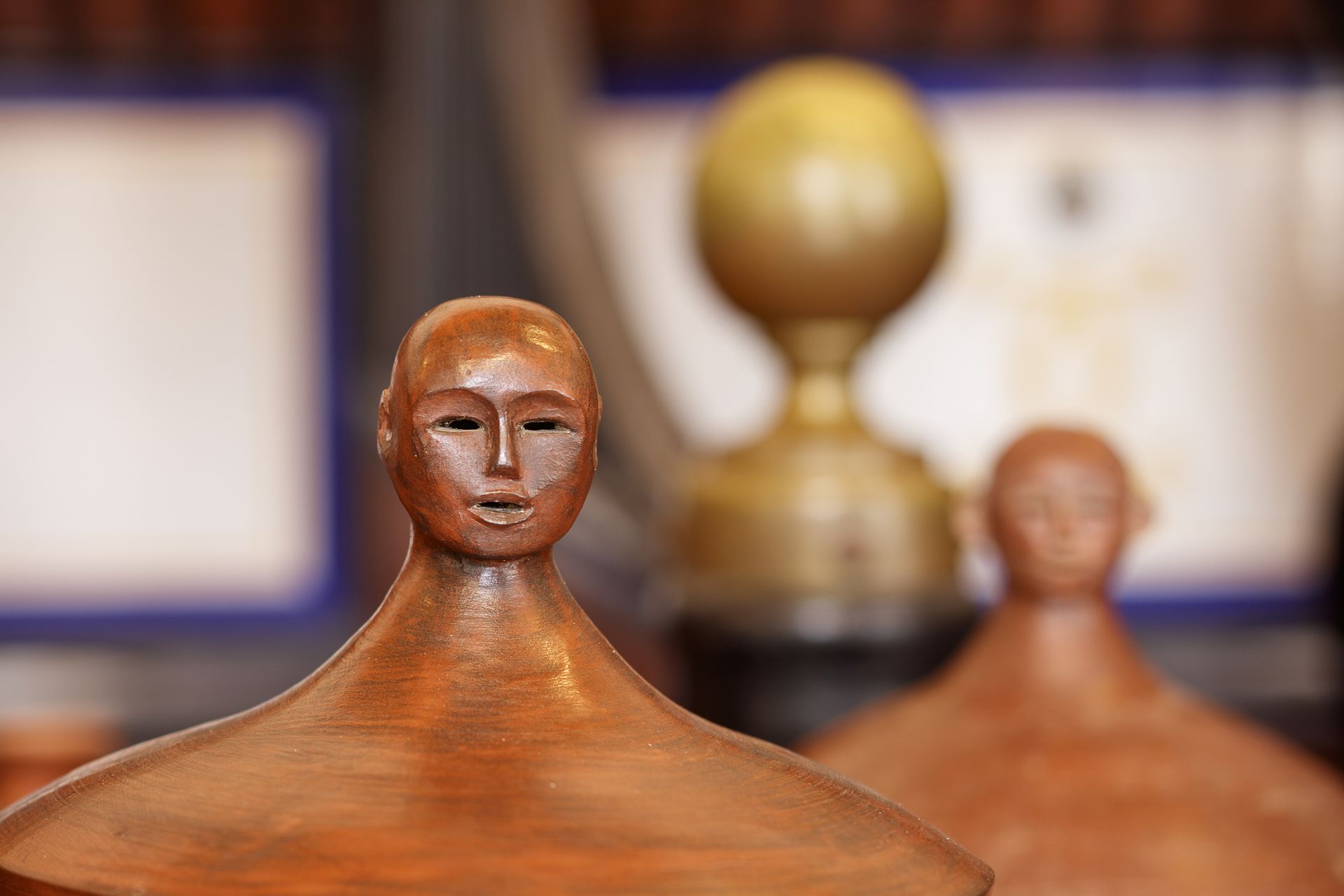
In 1984, his first painted sculptures of unfired clay and mixed media were shown for the first time at the La Hune gallery. His work inspired by African and oceanic art was then exhibited at the Albert Loeb gallery. At that time he incorporated crude elements from building sites into his work.
From the 1990s, when he moved to the countryside, botanical forms became more and more common in his sculpture, and were combined with the human figure.
Some of his work derives from the observation of movement, such as the series Diabolos and Toupies in terracotta, and later, Vortex. His final works derived from the observation of clouds of smoke and the idea of solidifying the ephemeral (Cloud, Petite usine et volutes, 2011-2013).
His style evolved continually. In his view, a cycle of work on a particular subject should generally last for an average of two years, otherwise it would become repetitive. It was essential to change in order to avoid boredom.
Axel Cassel’s style may have been inspired by Alberto Giacometti, although you cannot really compare his sculptures with L’Homme qui marche, as Olivier Céna has noted. It was the elongated aspect of his earliest work that suggested this comparison.
Alex Cassel was above all a travelling sculptor who absorbed the methods of the Asmat sculptors of Papua New Guinea in 1984 and 1986, and transformed them into his own personal style. It was during these voyages that he caught malaria, a title that Michel Butor gave to one of the many works that he wrote in collaboration with the sculptor.
His favourite material was wood, especially iroko. Few books have been written about his life and work, but there are a great many exhibition catalogues. Cassel’s sculptures have been exhibited in many galleries and museums. A private man, he was friends with Gérard Barrière (deceased in 2010) and Michel Butor (deceased in 2016).
BIOGRAPHICAL NOTES
Axel CASSEL
GERMANY
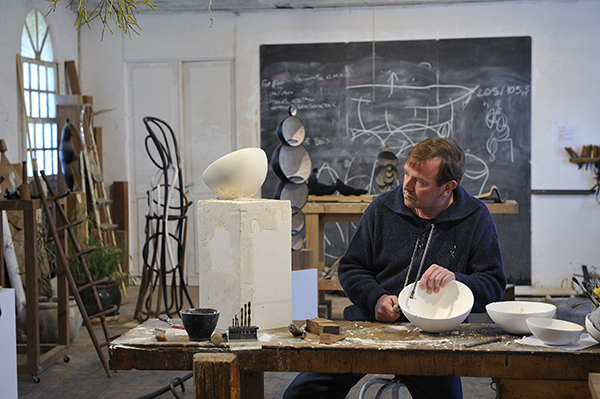
Axel Cassel was born in Germany in 1955 and grew up in the south of France. After studying law at the Sorbonne, he enrolled at the École Supérieure des Beaux-Arts in Paris. He started out as a painter and engraver and effectively taught himself to sculpt wood and bronze, which soon became his main activity. His sculpture remained linked to nature and the human figure. He worked in wood, clay, plaster and bronze.
He had deep admiration for the works of Constantin Brancusi, Hans Arp and Henry Moore and this influenced his work. Equally fascinated by tribal art, he was a great voyager. From New Guinea to Java, Bali to Burkina Faso, Togo to Benin, Nepal to India, he sought out contact with local sculptors and fed on their ideas and practices.
From 1984 his work was shown at the FIAC international contemporary art fair. In 1987, he married the Franco-Polish artist Malgorzata Paszko, with whom he would have three children: Félix (1989), Nils (1991) and Clara (1995). In 1990, he left Paris and set up two workshops in Normandy. As a friend of Michel Butor, he worked with him on several volumes including Malaria (1985), Regards entre les branches (2001) and Bosquets de cèdres (2015). A lover of nature, he never stopped observing its forms and deriving work from them. He died in Lisieux in 2015 as he was preparing the exhibition Mouvements immobiles at the Espace Culturel les Dominicaines in Pont-l’Évêque. This exhibition included canvases and sculptures, pieces that had been modelled and then carved into the shape of billows of cloud and smoke, and his final series on the theme of the femme-coquillage (woman-shell).
AXEL CASSEL