The garden
DESIGNERS
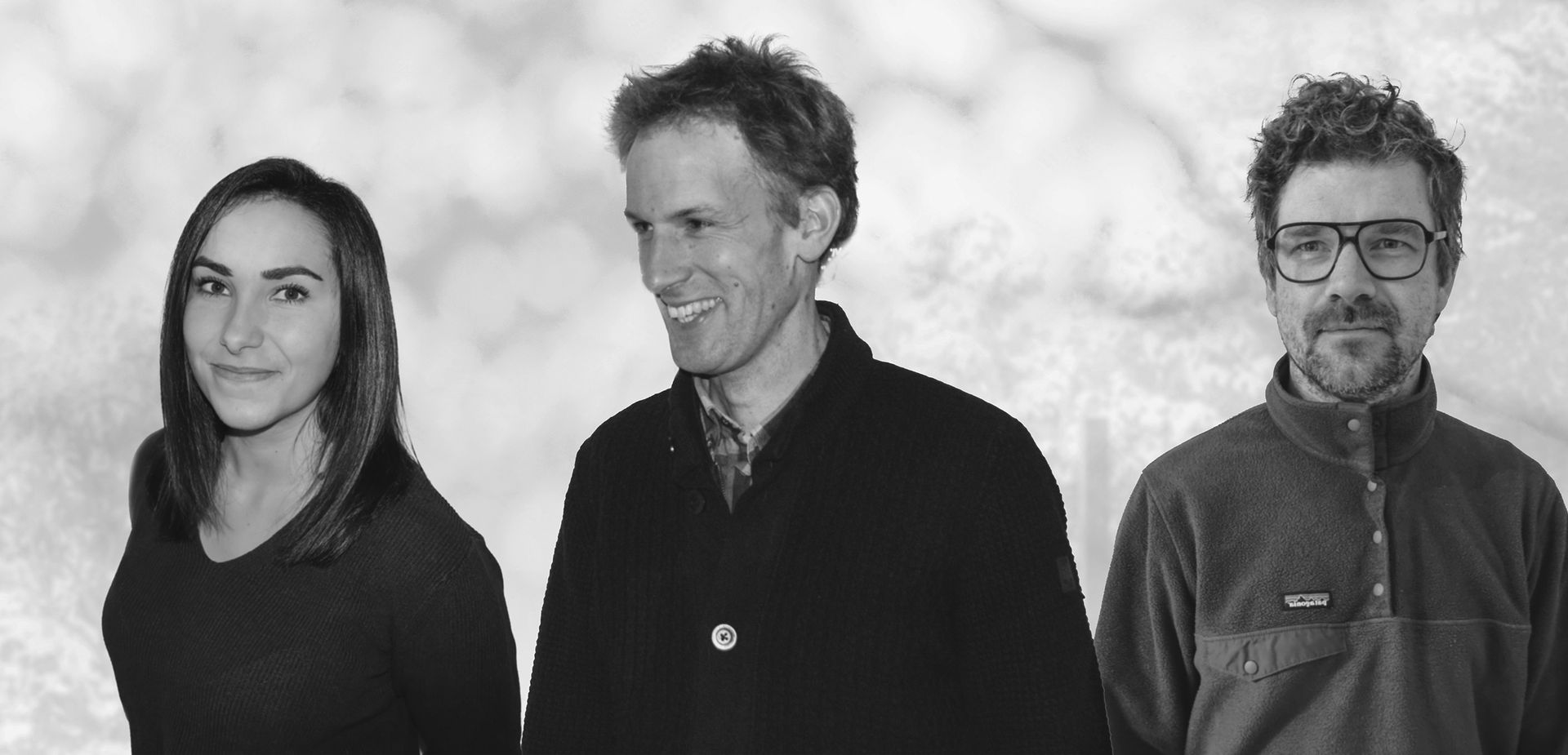
Twenty years ago, just after graduating in landscape architecture from the Haute École Charlemagne institute of higher education in Gembloux, Belgium, Alexandre Vandiest opened his own landscape design studio. He had been passionate about nature since his early childhood and also enrolled on a training course to become a nature guide with the Belgian association of naturalists. A few years later, his fascination with the living world also led him to discover beekeeping. He works on projects of all shapes and sizes. He is just as passionate about tiny gardens he likes to call “microcosms” as the development of vast public and private spaces. Whatever the scale of his work, his priority is always to minimise the impact of humans on the natural environment. The style of his creations has become more refined over time to leave an increasing amount of space for the living and for the spontaneity of nature. With that in mind, he makes differentiated management a priority in the design of our green spaces and the living world all around us. His passion is to ensure all living beings exist alongside one another in harmony. His studio is in southern Belgium and he works all over Belgium, Luxembourg and in the Grand-Est region of France.
Elisa Lopes Vieira is a designer of outdoor spaces for private individuals and is originally from Nantes. Her interest in plants and architecture naturally led her to specialist studies in the field of landscape. After gaining a vocational qualification in landscaping at the Lycée Agricole Le Fresne, she continued her studies at the Institut Agro Rennes-Angers and graduated with a diploma in landscape engineering. During the course of her studies, she specialised in life sciences and technologies, also broadening her knowledge in economic and social sciences and humanities. She worked as a research officer for five years on the coast of Vendée for a landscaping company and gained some valuable experience in high-end projects. She developed extensive all-round expertise within the profession, in terms of creativity, the design of outdoor spaces, as well as communication skills, techniques and the creation of structures. More recently, she embarked on a new adventure by creating her own design office, MUDA. She assists private individuals in designing their outdoor living spaces and offers advice on the choice of plants. Each project is unique and requires reflection and extensive research to make sure the shapes, materials, textures and light provide a coherent, harmonious space, while using resources sparingly. She uses simple techniques, where the practical aspect of the space goes hand-in-hand with nature, and makes sure to remain relevant to the environmental challenges of the future.
François Crucifix was born in the Semois valley where he came across the landscapes of the Ardennes and the natural species found in the rivers and forests there. He tried his hand at watercolour at first, and soon experimented with a variety of media. This is where his artistic education began, and he then went on to discover multidisciplinary techniques at the Académie des Beaux-Arts in Vresse-sur-Semois. In Saint-Luc Liège, he studied comic strips, illustration and began engraving, animation and computer graphics. He never stops experimenting with techniques, whatever his level of expertise. He graduated in plastic and visual arts and space. With his diploma under his belt, he got involved in the family business and in car sales where he could work on fine-tuning his sales technique. In the absence of art, it was his travels that would feed his curiosity and guide his family life. He grew tired of the car sales industry and so put both his sales experience and artistic flair to good use in founding François Crucifix Graphics, a company specialised in landscape illustration. Inspired by the natural chaos caused by anything that grows, François Crucifix Graphics merges its clients’ landscape and architectural projects with a spontaneous environment using wild and dynamic 3D images. His fascination for wide-open spaces led him to create Tandem Studio in Fruita Colorado with his wife, and they create illustrations of projects for their American and European clients, using images of spectacular, inspiring environments.


