Artistic approach
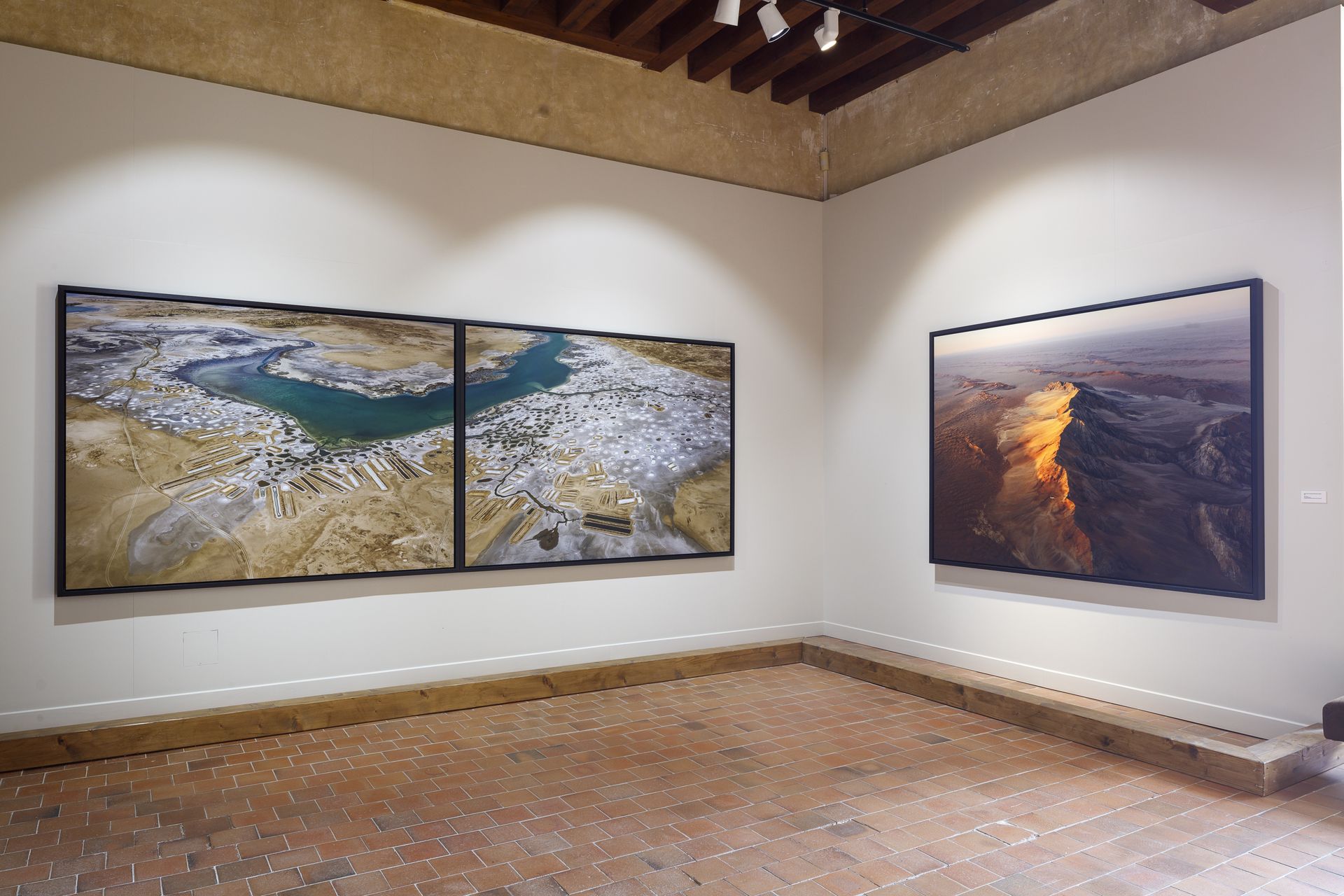
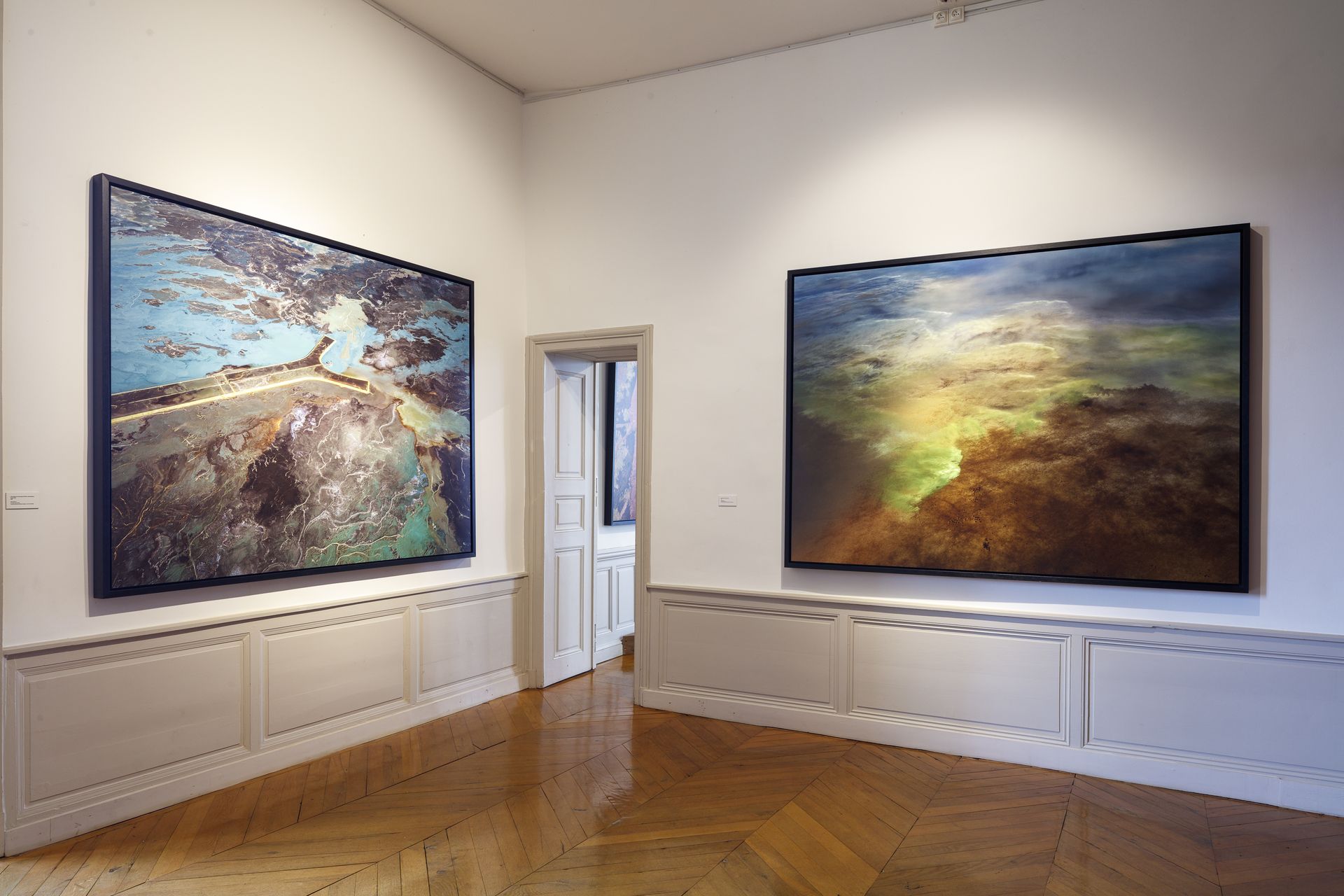
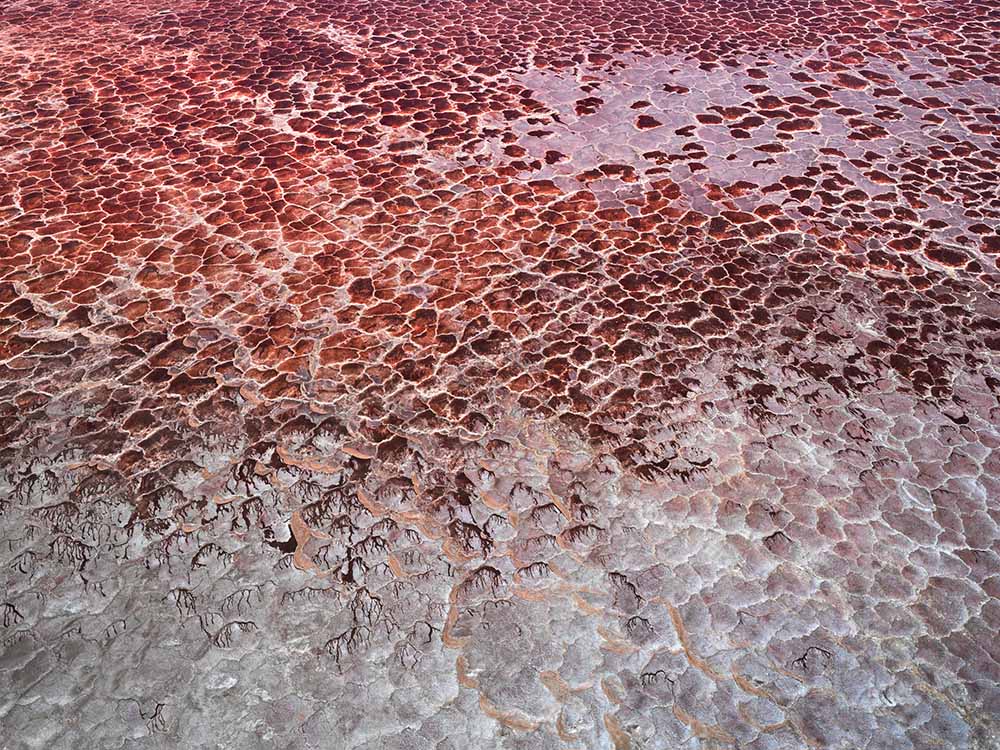
“We come from nature. There is an importance to [having] a certain reverence for what nature is because we are connected to it... If we destroy nature, we destroy ourselves”, says Edward Burtynsky as a prelude to any artistic process. The photographs presented at the Domain of Chaumont-sur-Loire are typical examples of the artist’s oeuvre, which he dedicates to protecting the environment. Since his beginnings as a miner, labourer and photographer, he has turned his lens to “industrial landscapes” scarred by human activity, including factories, quarries and oil fields. When viewed from above, these sites all share a breathtaking beauty, yet the artist’s intent is clear. If his photographs are undeniably endowed with great aesthetic qualities - bright colours, harmonious shapes verging on abstraction, and immense formats that draw the gaze into a profusion of minute details captured in high definition - his primary aim is not to please. Instead, his work is rooted in exacting ethical standards and aesthetic criteria. Here, beauty is a wake-up call. “Through art, human beings can be made to be much more aware of the impact of their actions,” explains the artist.
Burtynsky is driven by the conviction that the wounds inflicted on Earth are the result of ignorance and that this ignorance separates people from reality and locks them into artificial, inward-looking worlds. However, Burtynsky believes that the knowledge that we are linked to damaged ecosystems as well as to those who are directly affected by them can lead to a change in our view and consequently our actions. The artist does not take an accusatory stance. It is instead more that of an educator. “I like to work on large formats and wide, flat areas. When you stand in front of them, you can feel a kind of physical, sensory experience. You have the sense that you are soaring dizzily above the landscape and are developing a special relationship with the place depicted. Many people say that these images are awful. That is true. They depict disaster. But so are our cities and the buildings we live in. What you are seeing is our everyday life! I want to show you that these worlds are our reality. You cannot live in a city or buy a car without extracting copper or iron, or without creating plastic. Everything is so closely connected. That is what I want to talk about.”
The term ‘anthropocene’ comes from the Greek anthropos, ‘human being’, and kainos, meaning ‘new’. It was coined in the early 1990s by chemist and Nobel Prize laureate Paul Crutzen, and refers to the period following the Holocene, as human activities began to have a marked and lasting impact on Earth, particularly on geological strata. The concept has been a topic of predilection for Burtynsky since he first worked in quarries, which reveal the cross-sections of previous epochs and the marks left by the recent boom in human activity, inspiring the artist to seek out similar marks across the planet. Edward Burtynsky is strongly attached to Chaumont-Photo-sur-Loire and his participation in the festival, for the third time, is testimony to his desire to share his ecological concerns with the widest audience possible. The artist’s spectacular views of Africa show that no region of the world is spared and underline the urgent need to move from awareness to action.
BIOGRAPHICAL NOTES

Edward Burtynsky was born in 1955 in St. Catharines in the Great Lakes region of Canada. His father worked at General Motors and the young Burtynsky grew up in an industrial world. As a teenager, he discovered the unspoilt natural world, the wilderness. “This experience left a lasting mark which has always influenced how I respond to landscape”, he wrote in Anthropocene (Steidl, 2018). Burtynsky began his career in the mines and in the factories of Ford and General Motors, a world that inspired his early photographs, which were of quarries. In 1982, he obtained a degree in photography and later founded Toronto Image Works (TIW), in 1985. His passion became his work. As a photographer, his primary aim was to show the realities on which we all depend, but which most people ignore. His ‘industrial landscapes’ started out as “a great way to reconnect to these worlds”. At the turn of the millennium, reading and listening to others proved to be a catalyst, in that the fundamental question raised by these places was that of the consequences of human activity on the planet. From that moment on, his photography served an ecological purpose. Since then, Burtynsky’s projects have allowed him to reach a wide audience: TIW has become an important training and exhibition centre, his 3D printing company Thing2Think, created in 2014, produces breathtaking images and, since 2015, the multidisciplinary Anthropocene project, which he founded with two filmmakers, combines photography, lectures and immersive exhibitions. His work has found its place in collections in over 60 museums throughout the world.
Edward Burtynsky is represented by Nicholas Metivier Gallery, Toronto (Canada).