Artistic approach
Clark and Pougnaud are Parisians linked to the north-eastern coast of the United States either by their family origins or by having lived there. A ‘Season in Eden’ is the result of this ‘artistic retreat’ and is no less rich in hallucinogenic visions than the poem Eden , while paying homage to the nature on their doorstep, does not depart from Clark and Pougnaud’s typical taste for art and artifice. References are made to the history of painting (
Hommage à Edward Hopper , 2000), to film ( Dorothy La Poupée (1935). Baudelaire’s
If Eden can be found in the in-between time between night and day for Clark and Pougnaud, it is perhaps because their retreat in the midst of the countryside has immersed them in a ‘silence’ which just cannot be experienced in the city. Yet, with interfering noise no longer present, it is the chorus of small voices from the natural world which begin to enchant the ear, just as it starts to soothe the Child’s ear at the end of the lyrical fantasy by Colette and Maurice Ravel, L’Enfant et les Sortilèges (1925). Clark and Pougnaud know this and reassure us with the words, “Emptiness is full of promise, absence is the expectation of a return, silence is a soothing whisper, and the wonderful hides beneath banality.”
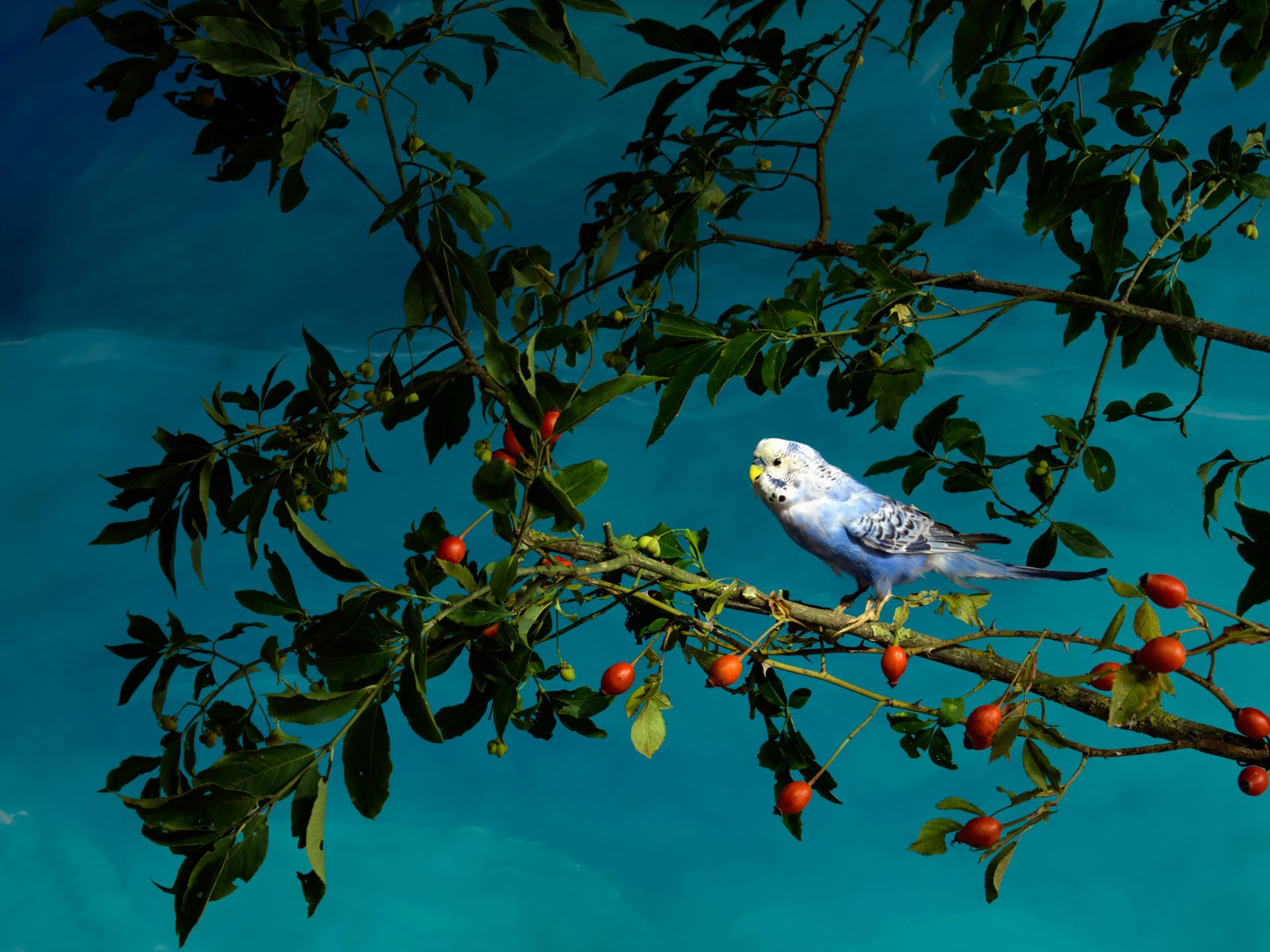
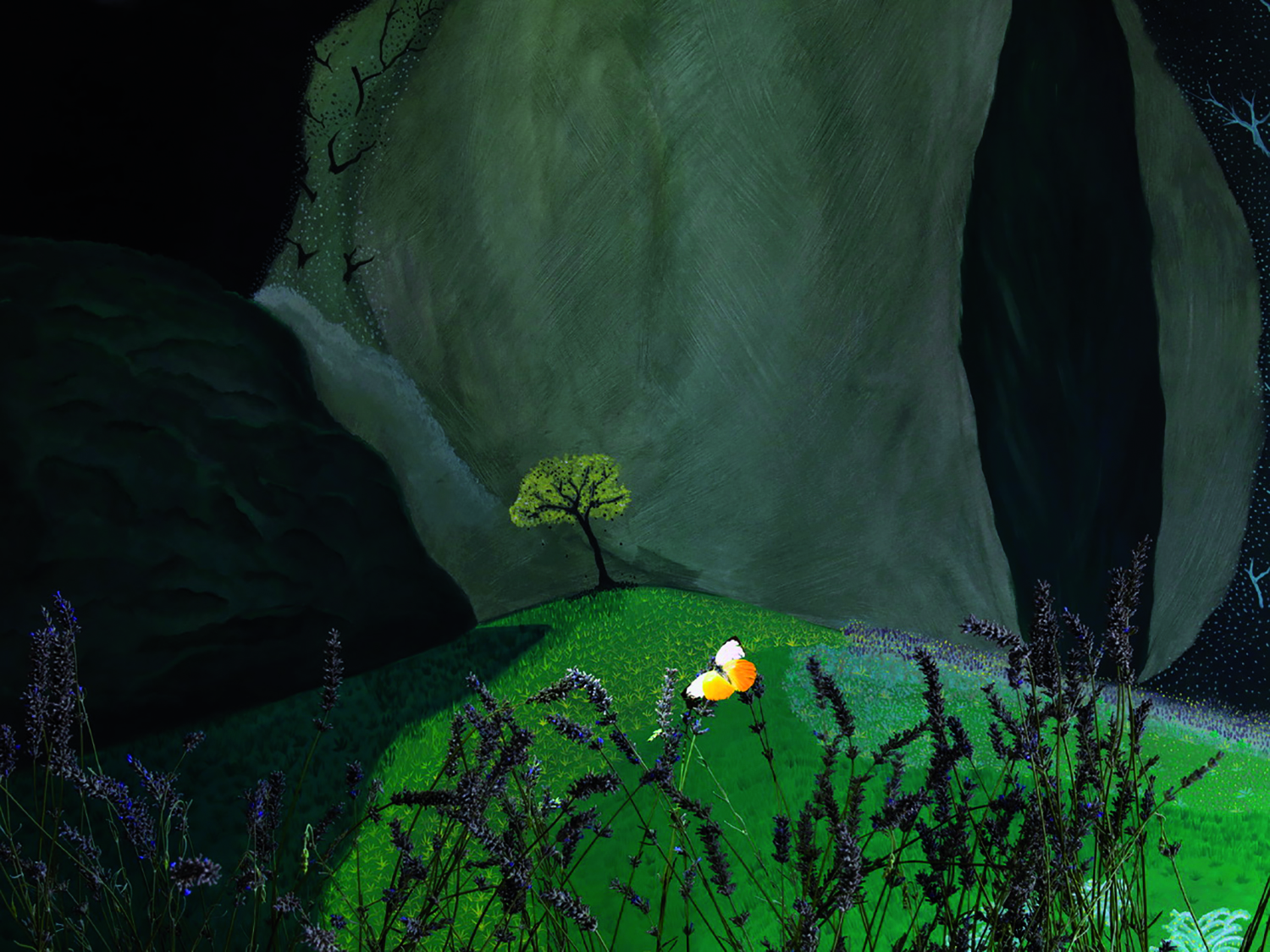
The illuminated shadow in which these visions are bathed invites us to immerse ourselves in them, just like in a play being acted out on stage. Clark and Pougnaud’s technique is, on the face of it, theatrical. She is a painter, he is a photographer and they set up their images just like you would set up a film or opera set. In previous series, and in Hommage à Edward Hopper in particular, the process began by building models at a 1:12 scale in which figures were placed. In this series, the first step was the canvas painted by Pougnaud. After having had time to dry, the canvas was photographed against a backdrop of still life freshly gathered from the kitchen garden. The light, which at first seems artificial, turns out to be natural on closer inspection. It is the backdrop which seems to plunge the image into a second night. This is always the time when dreaming occurs. The titles of the images also invite you into reverie. ‘Wild oats’ (folle avoine) or ‘Umbelliferae’ (ombellifères) could well be the names of fairies escaped from Titania’s entourage in A Midsummer Night’s Dream by Shakespeare and could be imagined chatting with Peaseblossom and Mustardseed.
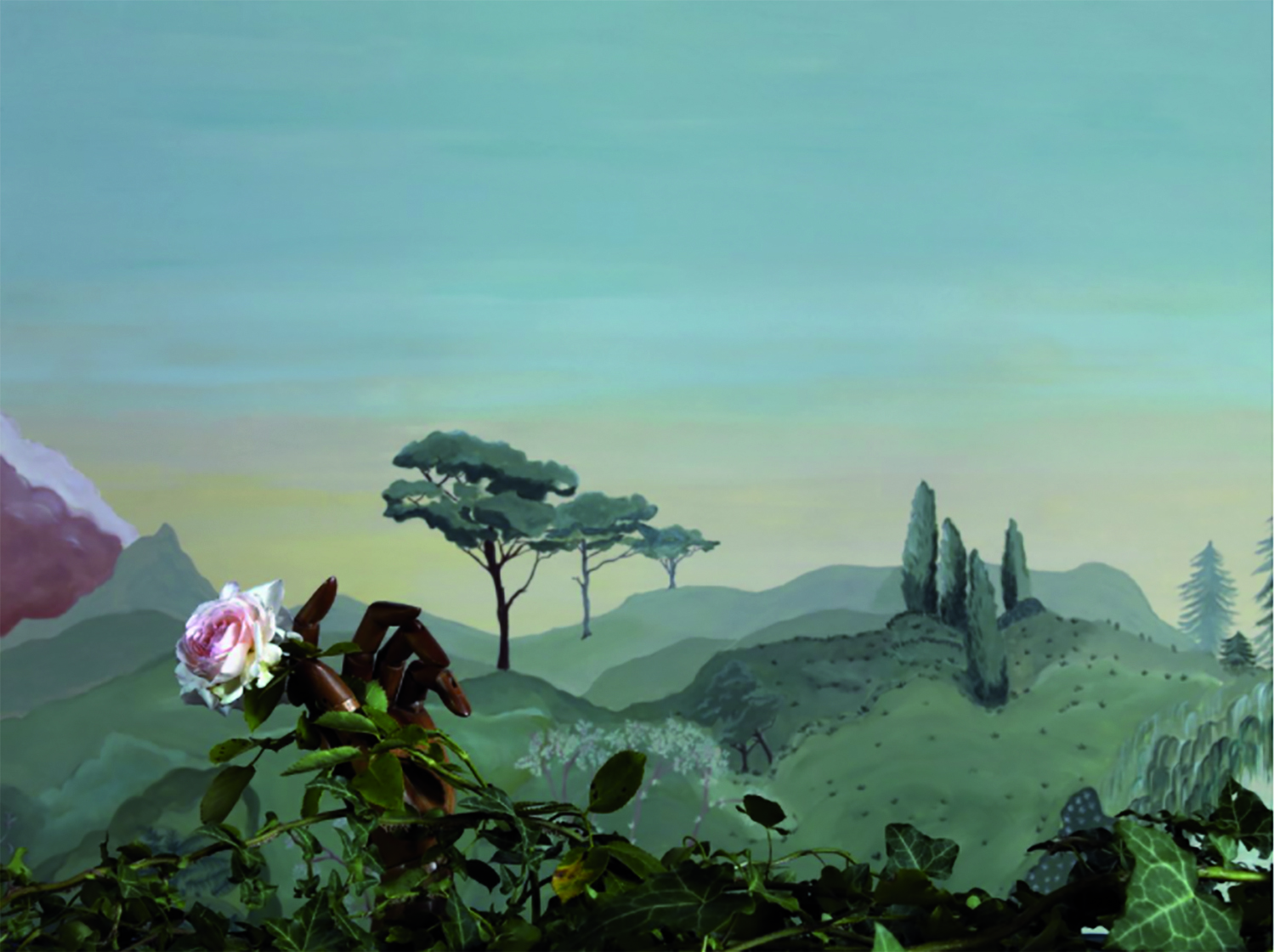
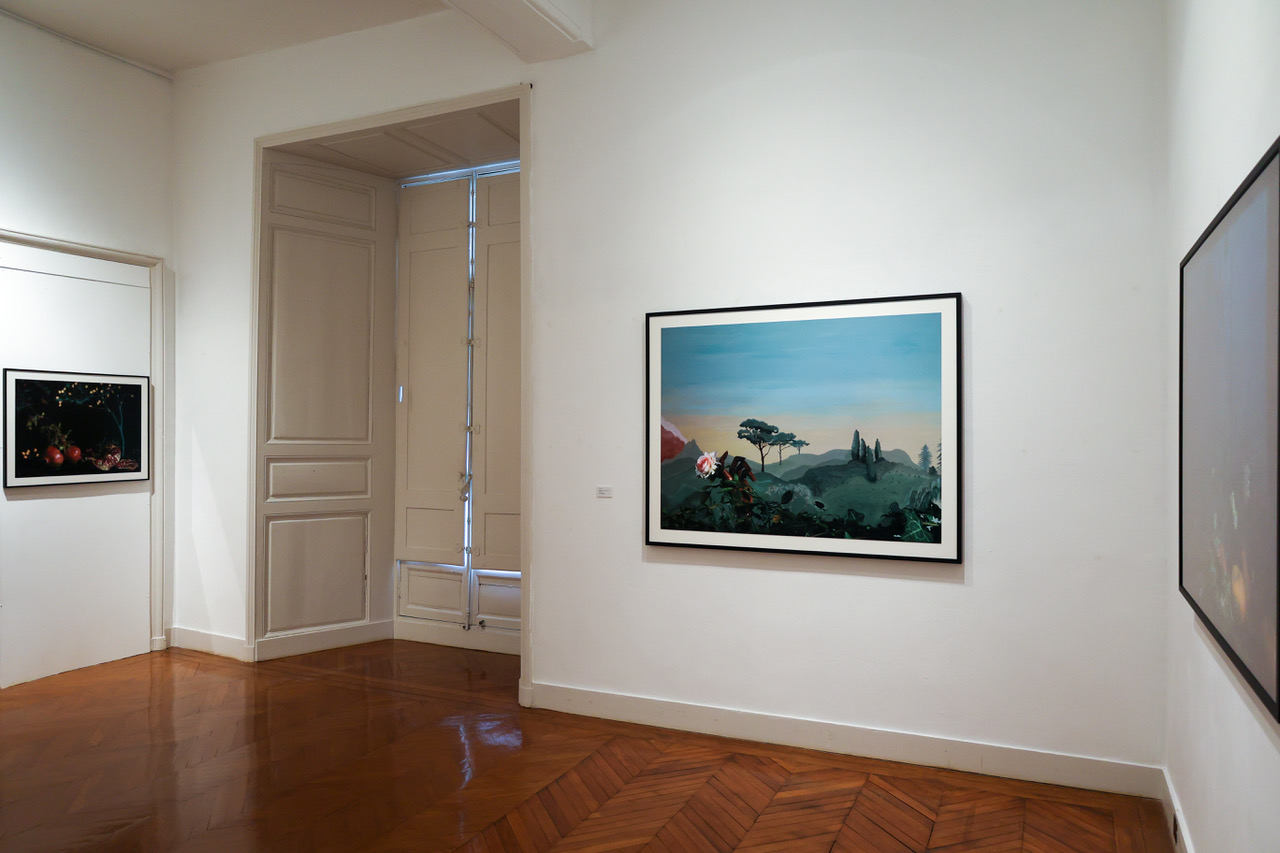
A tribute to the nature on their doorstep, Eden does not break with the taste for art characteristic of Clark and Pougnaud. Tributes to the history of painting (Hommage à Edward Hopper, 2000), of cinema (Dorothy, 2000), of painting and cinema (Lost in meditation, 2009): their work is an echo chamber of culture, mixing classical and pop without preconceptions. Witness here "La Rose", in which one recognises, among other things: the opening motif of Madame Leprince de Beaumont’s Beauty and the Beast (1757), revived in cinema by Jean Cocteau (1946) and then by the Disney studios: the father’s hand picking the rose; the bluish horizon of the Renaissance painters; or again the articulated hand of an artist’s mannequin, heightening the sense of the uncanny through the memory of Hans Bellmer’s La Poupée (1935). At the end, Baudelaire’s Harmonie du soir returns (The Flowers of Evil, 1857): "Now comes the time when, trembling on its stem, / Each flower breathes out its scent like a censer; / Sounds and perfumes turn in the evening air; / Melancholy waltz and languid vertigo!" As if confirming the duo’s words: "There is often a misunderstanding about our photographs: the apparent melancholy is in fact the source of our happiness."
th BIOGRAPHICAL NOTES

Virginie Pougnaud, born in 1962 and Christophe Clark, born in 1963, are the two figures behind the partnership of Clark and Pougnaud, which was formed in 1998. Both come from an artistic background. Clark's lineage is in photography, whereas Pougnaud’s is in theatre. She also has a history of female painters in her family. The art of set painting seems to come naturally to Pougnaud, who designs and produces the models photographed by Clark for their series. In the year 2000, their first series Hommage à Edward Hopper was an instant success. It was followed by an exhibition at the Maison Européenne de la Photographie (MEP), an award from the HP foundation and a special mention for the Arcimboldo prize. They received an award from the HSBC Foundation for Photography in 2006. Their work has been exhibited at several museums, including the Museum of Modern and Contemporary Art in Strasbourg, the Musée des Beaux-Arts in Rouen and the Maison Photographique in Lille. Clark and Pougnaud craft their images and combine multiple influences - both pictorial and cinematographic. Patience and taking time are the watchwords of their creative process. Each year, a series is created in their studio, which usually goes through the same three stages. First is the set design, with the construction of models and the painting of sets, which are then photographed. This is followed by shots being taken of the figures who will inhabit most of the series. Finally, the figures are inserted into the set using both digital and traditional techniques. Clark and Pougnaud have adhered unwaveringly to their vision (which is neither backward-looking nor full of new technology) and this has made them sought-after photographers and precious dream-makers.
Clark and Pougnaud are represented by Galerie XII, in Paris.