Artistic approach
Michael Kenna photographs “from life”, as the impressionists used to paint. His eye absorbed by the landscape’s ongoing emergence, he rejects the term “take”, emphasising the “give” aspects instead, what is so generously provided, sometimes slowly but always surely. “It’s part of the photographer’s job to see more intensely than most people. He must have and keep in him something of the receptivity of the child who looks at the world for the first time or the traveller who enters a strange land… They have in them a capacity for wonder…”, asserted the English photographer Bill Brandt (1904-1983), whose eye was a major influence on Michael Kenna’s career from the outset. Not only were there his photographs, there were also his choices as curator. What Brandt had done, Kenna did not need to do again. The path had been mapped out but the destination was unknown. He decided to approach photography in the guise of a tireless wanderer. Michael Kenna is a landscape photographer.
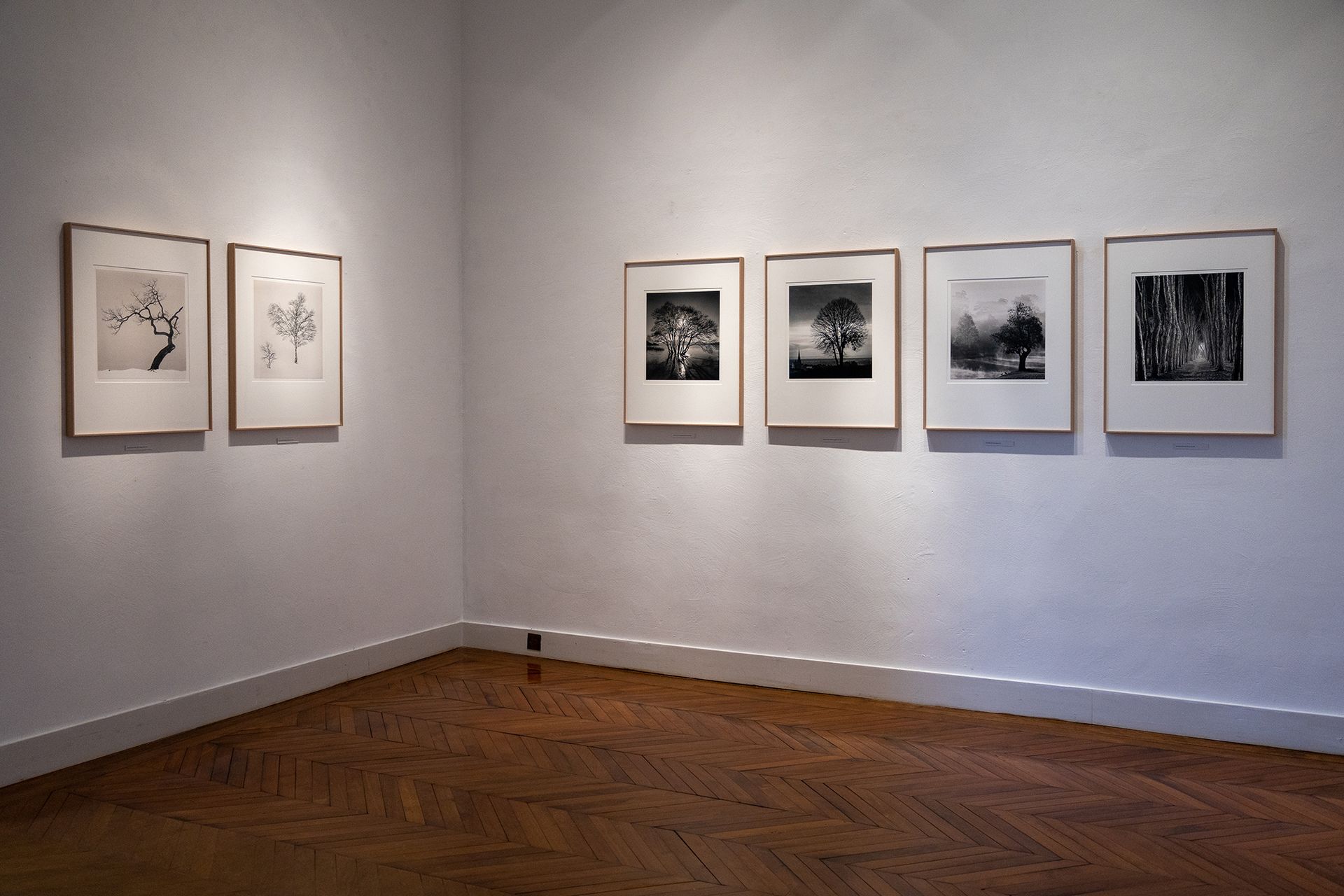
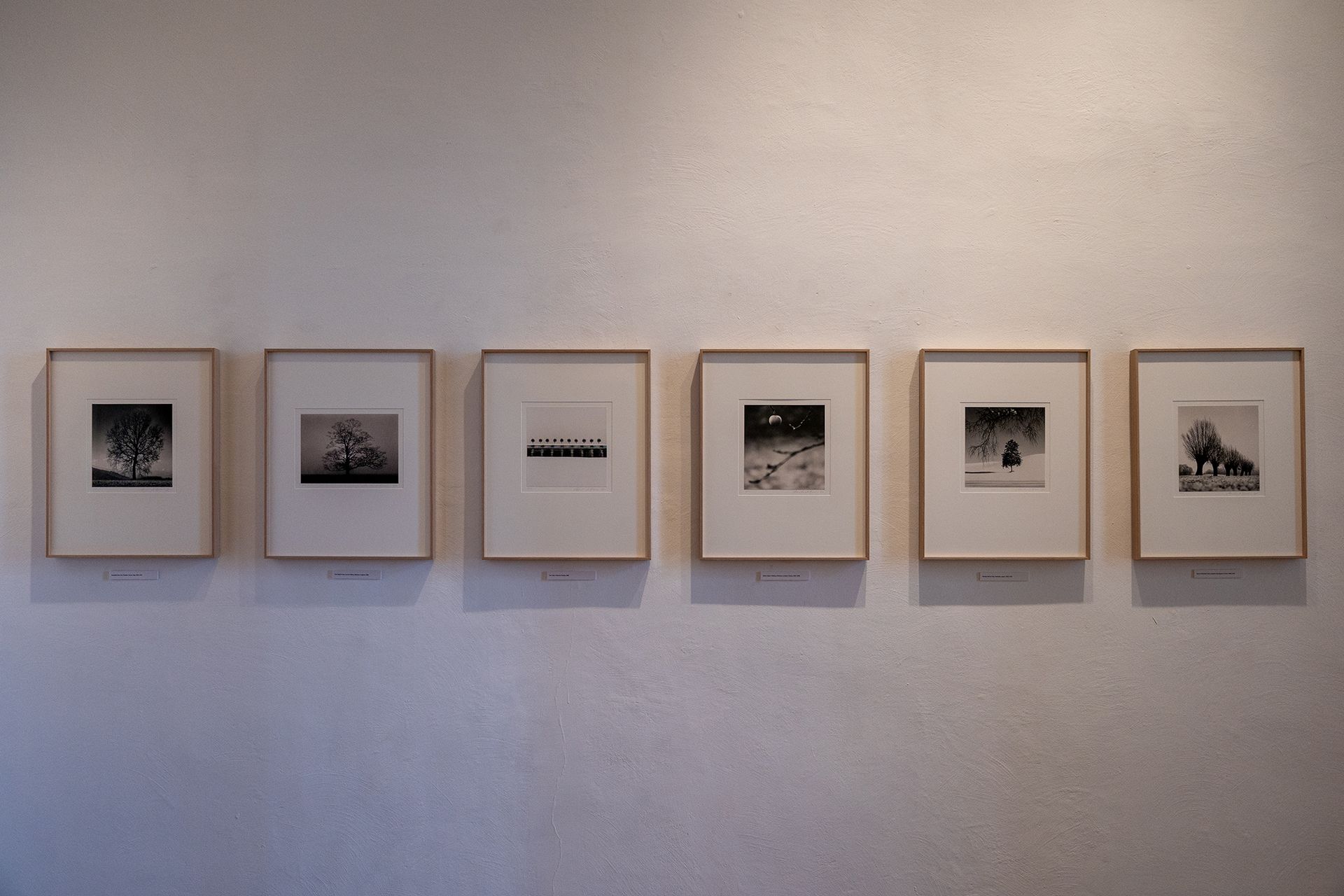
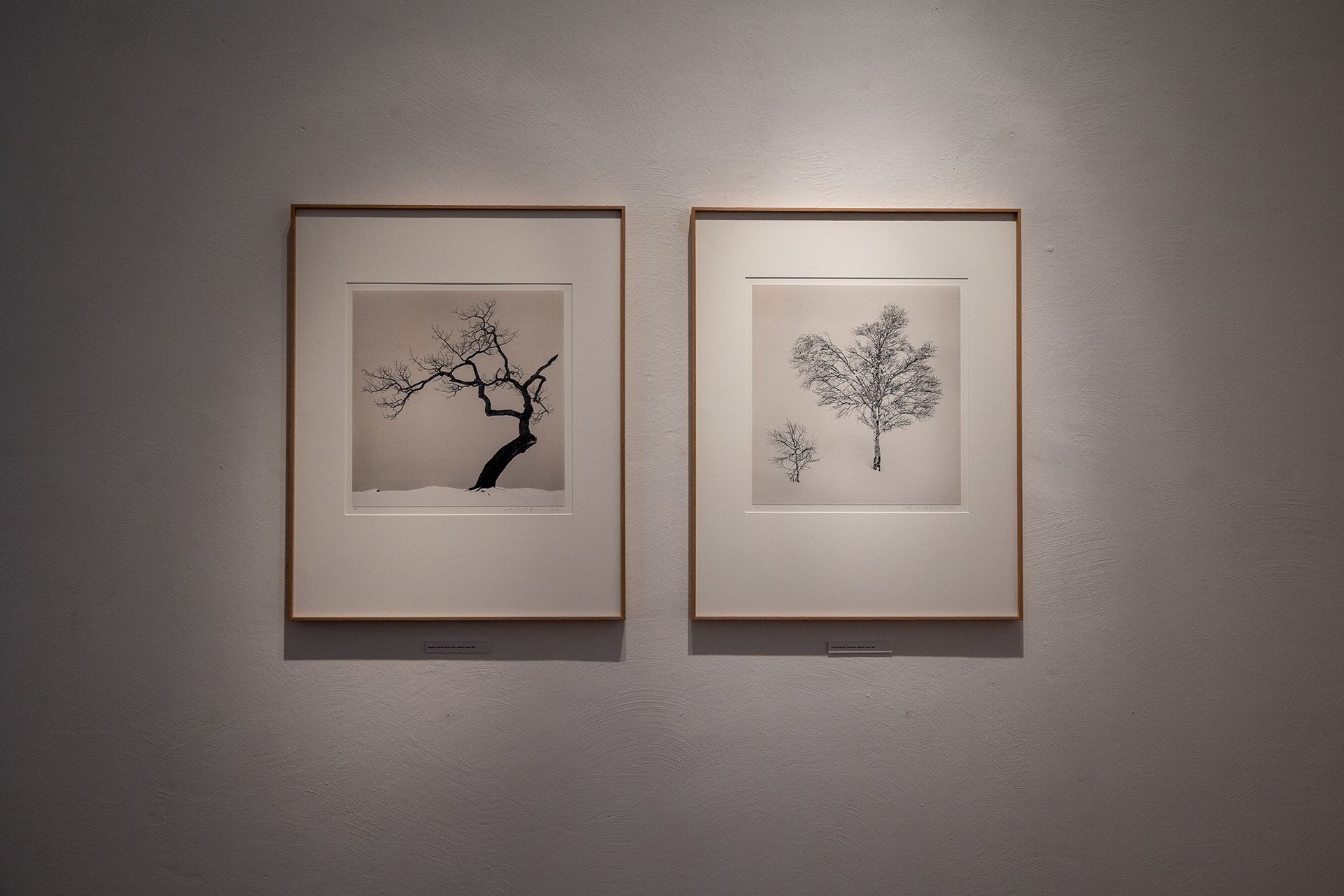
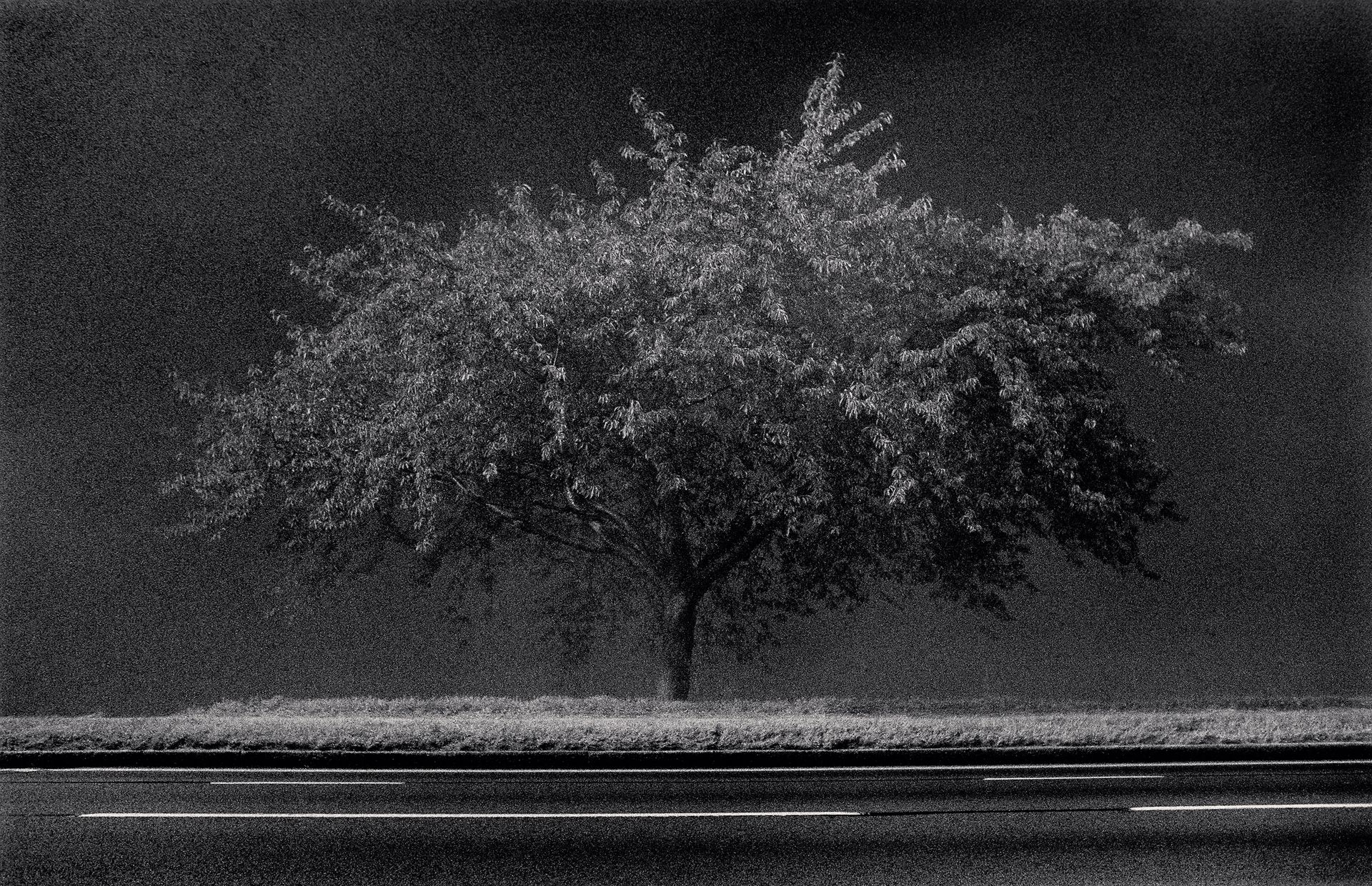
The photographs on exhibition at Chaumont-sur-Loire focus on trees. As always, they are small format and black-and-white. With Michael Kenna, the spectacular is never the result of visual shock, but rather of familiarisation. Seeing is not enough, you have to immerse yourself in the photographed space, look at it. “The artist’s tree is not the forester’s or woodcutter’s tree, but in Kenna’s photographs, its variety – in the botanical sense of the word – as willow, oak or pine is always identifiable and is never reduced to a stylised shape. If it is captured in isolation, the landscape and its dynamics revolve around it. If grouped together in a copse, it creates hazy impressions in shades of pearlescent grey, complex graphics with delicate transitions, and plays visual games with atmospheric variations. It addresses the wind and makes it visible; it is reflected in the water, which it connects to the sky, the relief of its boughs slices into the snow; its shadow intensifies it; it highlights the appeal of light effects: it makes the photographic space intelligible. Its presence directs and soothes the eye”, comments Anne Biroleau, curator of the retrospective that the BnF devoted to Michael Kenna in 2009-2010.
For the photographer, the tree calibrates the landscape that he strives to bring into being. For landscape is not nature but a human construct, the part that the human eye encompasses. Stretched out on the grass with his lens pointing at his model, Michael Kenna does nothing in a hurry. “I like to get to know a tree intimately … I spend a good deal of time walking around it, I try to make its acquaintance. In fact, it’s as if I were talking to it.” Exposure times are lengthy. For several minutes or even hours, the camera can stay focused on the subject’s hereafter, its essence rather than is appearance. If Kenna had been born in the 19th century, he would probably have wished to explore the aether, the world soul that Pythagoras believed existed. He also permeates his images with an unreal atmosphere that seems to turn any tree into a genius loci. Each photograph bears witness to an unforgettable encounter and the promise of reunions. For Michael Kenna likes to return to “his” tree as often as possible.
Ghostly in the moonlight, abstract in the vastness of the snow, hieratic in the midst of the mists..., photographed at daybreak or first light, at dusk or nightfall, the being of sap and branches fills the frame in its own fashion. Sometimes Kenna lingers over one of its attributes, sometimes he idealises its entirety. His extraordinary mastery of light makes each of his images a fiction and every tree the harbinger of an epic tale of living things. In Michael Kenna’s body of work, time densifies and memory becomes a material in its own right. The scene’s picturesqueness fades away in the face of the beauty and power of nature. And although Michael Kenna addresses nature as a photographer, it is as a painter that he brings a part of reality to light. His skies, his stretches of water, his mists and his mountains place him firmly in the English aesthetic tradition. Impossible not to think of Constable and Turner, or revisit Ruskin’s writings. What is perhaps most astonishing of all is the way in which he is able to depict a natural element not as a fixed, inanimate object but rather as a salient sign, with its own story, its own past and future. Possibly a way of implying that art exists in nature as much as in human hands.
BIOGRAPHICAL NOTES

Michael Kenna is a landscape photographer with an international reputation. Born in 1953 in Widnes, a little industrial town in the north of England, he developed an interest in art at an early age. He enrolled at the Banbury School of Art in 1972, and went on to study photography (advertising, fashion and photo reports) at the London College of Printing, from which he graduated in 1976. The previous year, a visit to the collective exhibition “The Land” at London’s Victoria and Albert Museum had a significant influence on his future career. The selection of works chosen by the photojournalist Bill Brandt came as a revelation to the young photographer. Alongside the great classics, Eugène Atget, Ansel Adams, Aaron Siskind, Alfred Stieglitz and Paul Strand, young artists of the day such as Mario Giacomelli, Gianni Berengo Gardin and Emmet Gowin were also featured, as well as anonymous prints and scientific and documentary images, which further broadened the way he approached landscape. Kenna moved to the United States in 1977, continuing with personal work on the same theme, much influenced by Brandt, and carrying out commissioned works at the same time. For over 10 years, he worked as assistant and photographic printmaker to the highly regarded and demanding photographer Ruth Bernhard (1905-2006), who taught him a great deal.
Staying clear of prevailing fashions and trends, Michael Kenna has built up an extraordinary corpus devoted to the depiction of landscapes – scenes that require up-close investigation due to the choice of small format. Heir to England’s aesthetic and photographic traditions, he has spent almost 50 years creating a body of work based on black-and-white analogue film, making the prints himself. Often taken at dawn or in the middle of the night, his photographs mainly focus on the interaction between natural landscapes and landscapes where human beings have left their mark. Due to very long exposure times, which may last up to 10 hours, they often reveal details unsuspected by the naked eye. A great traveller, the photographer likes to return time and time again. The two countries he has photographed most are France and Japan.
Michael Kenna’s work has been exhibited and published throughout the world: almost 500 solo and over 400 group exhibitions have been devoted to him; 75 volumes and catalogues have been published; 110 museums include Michael Kenna’s photographs in their permanent collections. In France, the Bibliothèque nationale de France devoted a major retrospective to him in 2009.
The Carnavalet Museum presented a selection of his Paris landscapes in 2014. In 2021, the Museum of National Resistance in Champigny-sur-Marne exhibited 82 prints, most of them unpublished, from a work begun 15 years previously when he set off to photographs the sites of Nazi camps. With almost 7000 photographs of more than 20 camps and killing centres, Michael Kenna developed an apposite and deeply moving project that long remained unknown to anyone outside his immediate circle. In 2000, he selected and printed 301 photographs, which went on to be presented at a number of exhibitions and conferences and in the context of various publications. Michael Kenna donated them to France in 2001. Between 2011 and 2021, continuing along the same path, the photographer gave the Museum of National Resistance all the remaining negatives and original prints from this commemorative work, which he had decided never to commercialise.
Michael Kenna is represented in France by the Galerie Camera Obscura/Paris.