Artistic approach
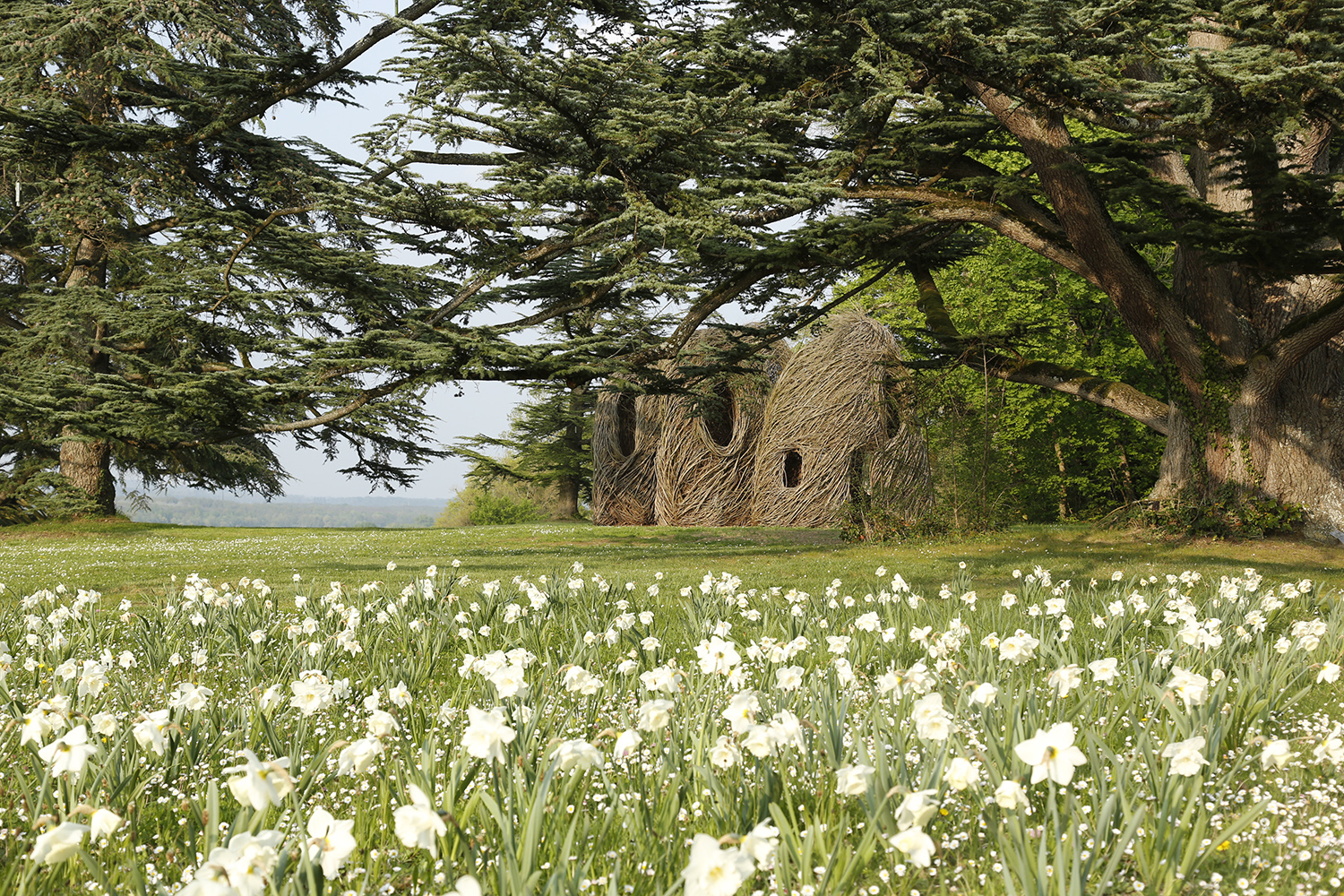
In the Historic Grounds, Patrick Dougherty has designed forms that are at once airy and plant-like. Monumental and deeply inspired by their setting, they call out to visitors at the twists and turns of the copses, beckoning with their half-natural, half-architectural allure.
Their curved partitions are fashioned from the delicate branches of plaited willows, creating a dreamlike, between-two-worlds atmosphere in the heart of nature. Without being in any way intrusive, his sculptures assert themselves upon the landscape while never failing to appeal to the imagination. They seem to have been constructed by flocks of birds, set up by ambitious rodents or carried by the wind. By a gesture at once discreet and wide-ranging, the artist involves the onlooker in a game, coaxing him to dream the world that surrounds him while reflecting on the nature which lives in it.
BIOGRAPHICAL NOTES
Patrick DOUGHERTY
USA

Patrick Dougherty spent his childhood in the American state of North Carolina, whose natural landscapes, covered in young trees with supple, sculptural branches, forged his imagination. In 1982, as an adult armed with a degree in Fine Arts, he launched himself into the creation of works halfway between sculpture and architecture. Although some of these works resemble Land Art, the artist nevertheless seems uncategorisable. On show at such sites as the Frederik Meijer Gardens and Sculpture Park in Grand Rapids, or in the open air, his works are to be found all over the world. Plaiting slender branches, he creates monumental shapes several metres high to serve the dreamlike world of his exhibitions. Each project is imagined in relation to its particular site, embracing, diverting or “aggressing” the context in which it finds itself. His work process therefore begins with gathering detailed knowledge of the chosen space so as to determine the “physical and social qualities” that inspire his initial sketches. The dialogue thus opened is also expressed into the creation of the work, constructed cooperatively as he coerces participants into cutting, plaiting and binding fallen branches. Much attached to his native land, he lives and works in the house he built himself in Chapel Hill.