The garden
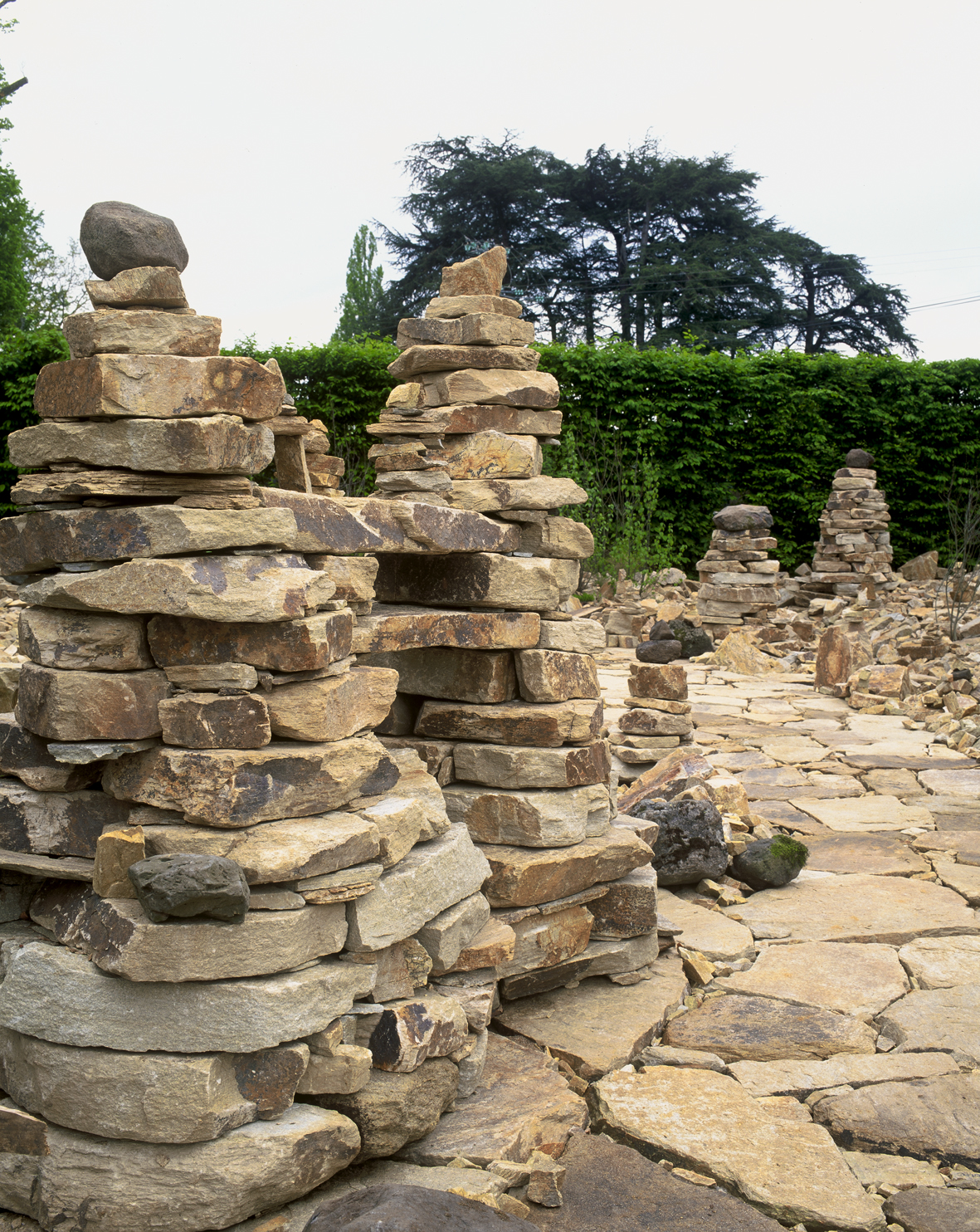
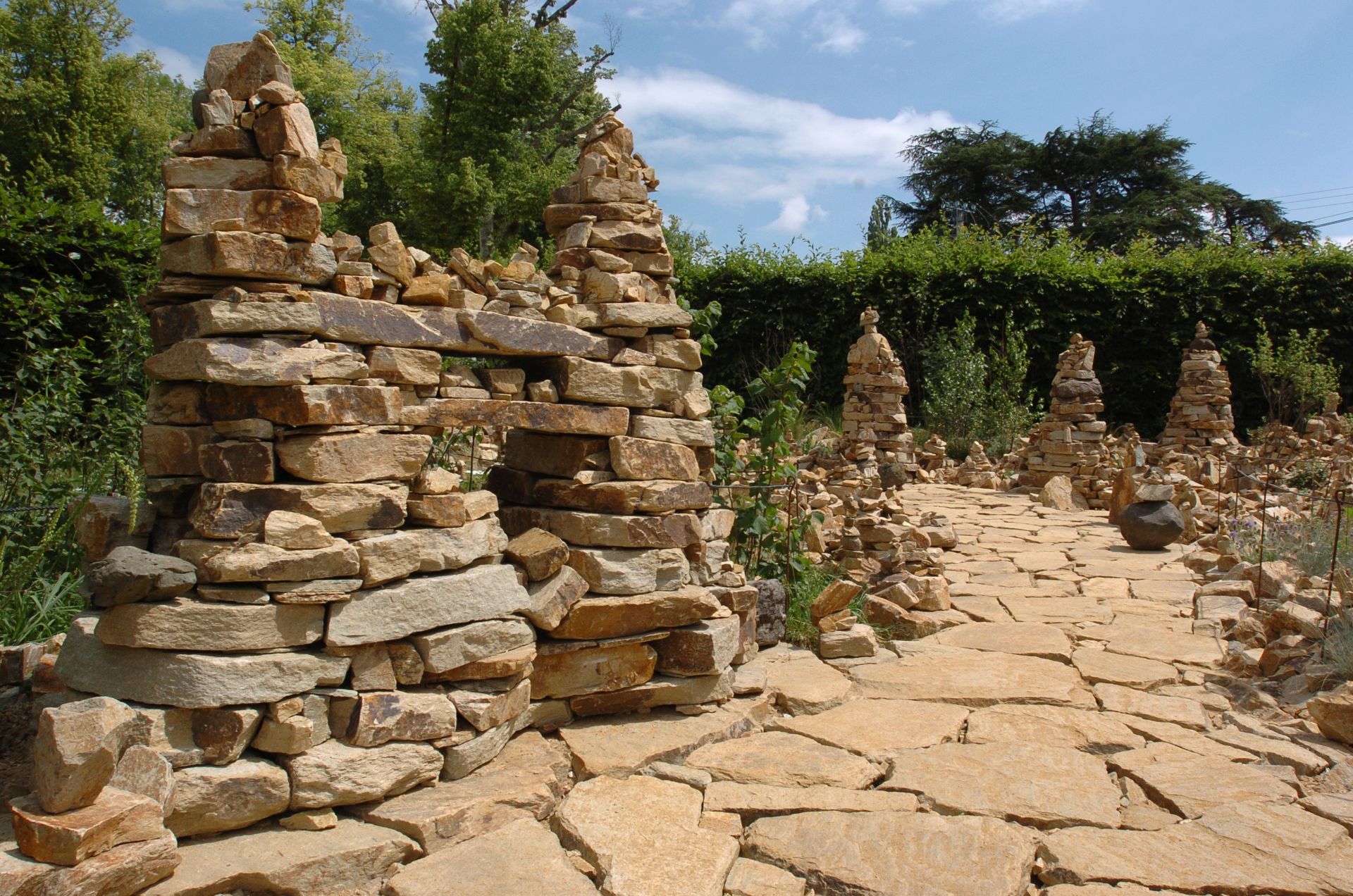
Cairns are found in a great many civilisations. These piles of stones that one comes across in the mountains, often in spectacular or inhospitable places, are the expression of human passage. Through an aesthetic gesture, humankind needs to leave its mark on the landscape, as if to pay tribute to it. The cairn keeps the memory of those who have passed through a place.
The cairn garden belongs to the long tradition of stone gardens, notably that of Chinese gardens.
Here the visitor is invited to take part in the composition of the garden. By leaving their mark, they create the memory of the place. Stones of all shapes, all sizes and all colours are so many different words with which man writes the story of the garden’s memory. These mineral sentences stand next to "word-stones", as if to say the same thing in a different way. The cairn is a variation of language. Visitors thus make the garden space their own in a perpetual recomposition, deciphering the traces of those who have already passed and heralding those still to come. It is a flow of memory that structures this garden.
Over time, this garden will evolve and be transformed by the rain and by the solidity of the stacks; it is free of nostalgia: the materials of the past serve the future with a new creative impetus. Man writes man, man writes the world, and the soil keeps the trace of this intervention in its flesh.
The vegetation of this garden recalls pioneer vegetation. It features young trees no taller than 1.50m (birches, rowans, hazels), whose fragility contrasts with the confidence of the conquering grasses.
DESIGNERS
Marguerite AIME-SINTES, landscape architect, and Damien PROVENDIER, ecologist
FRANCE