THE GARDEN
The notion of the garden as a paradise has been around a long time.
The cloister garden, with its protective walls and perfectly ordered flowerbeds, was intended to capture the heavenly Eden and arrange it on Earth. According to this perception, paradise is a fortress against the unknown, entirely separate from a wild and chaotic exterior.
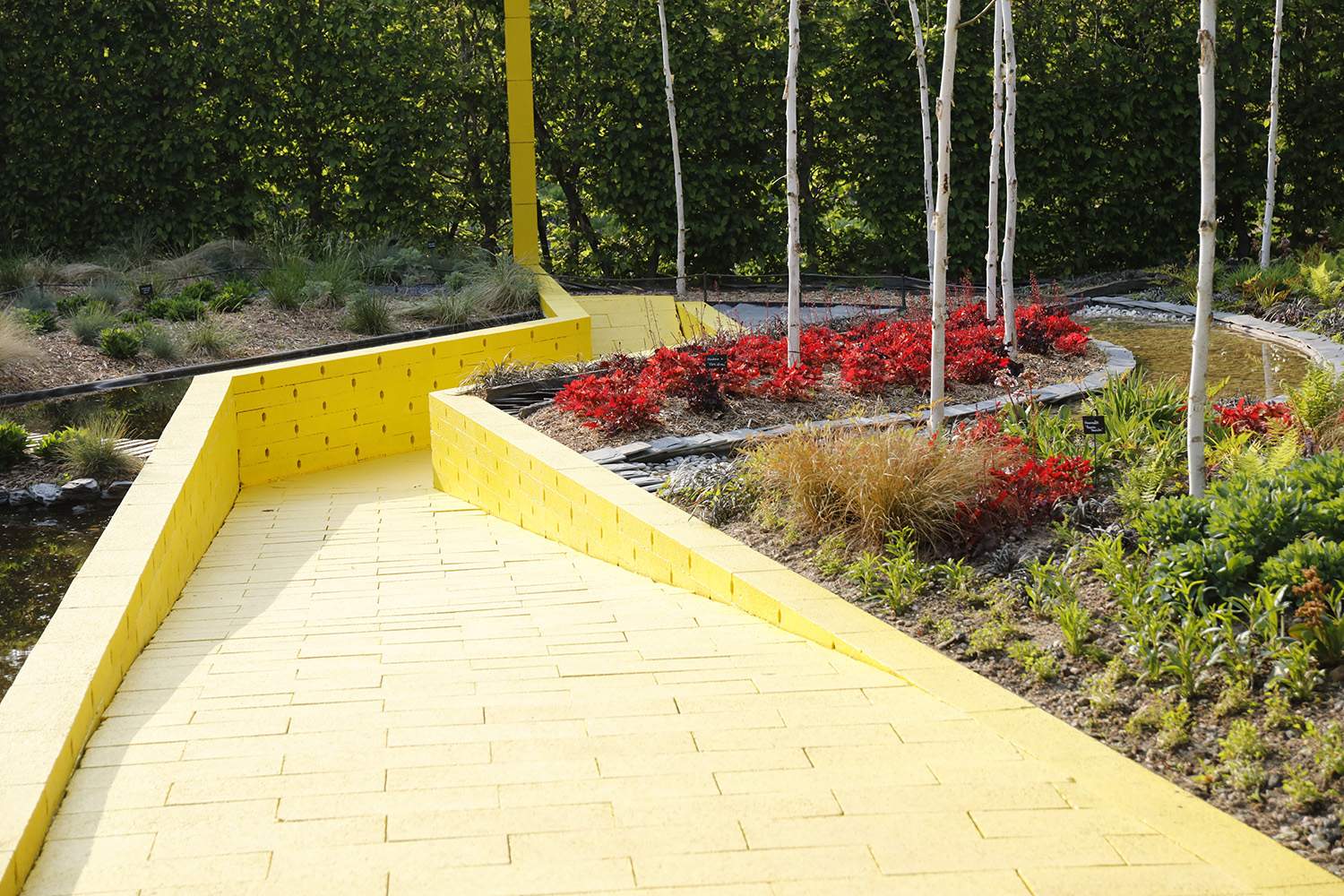
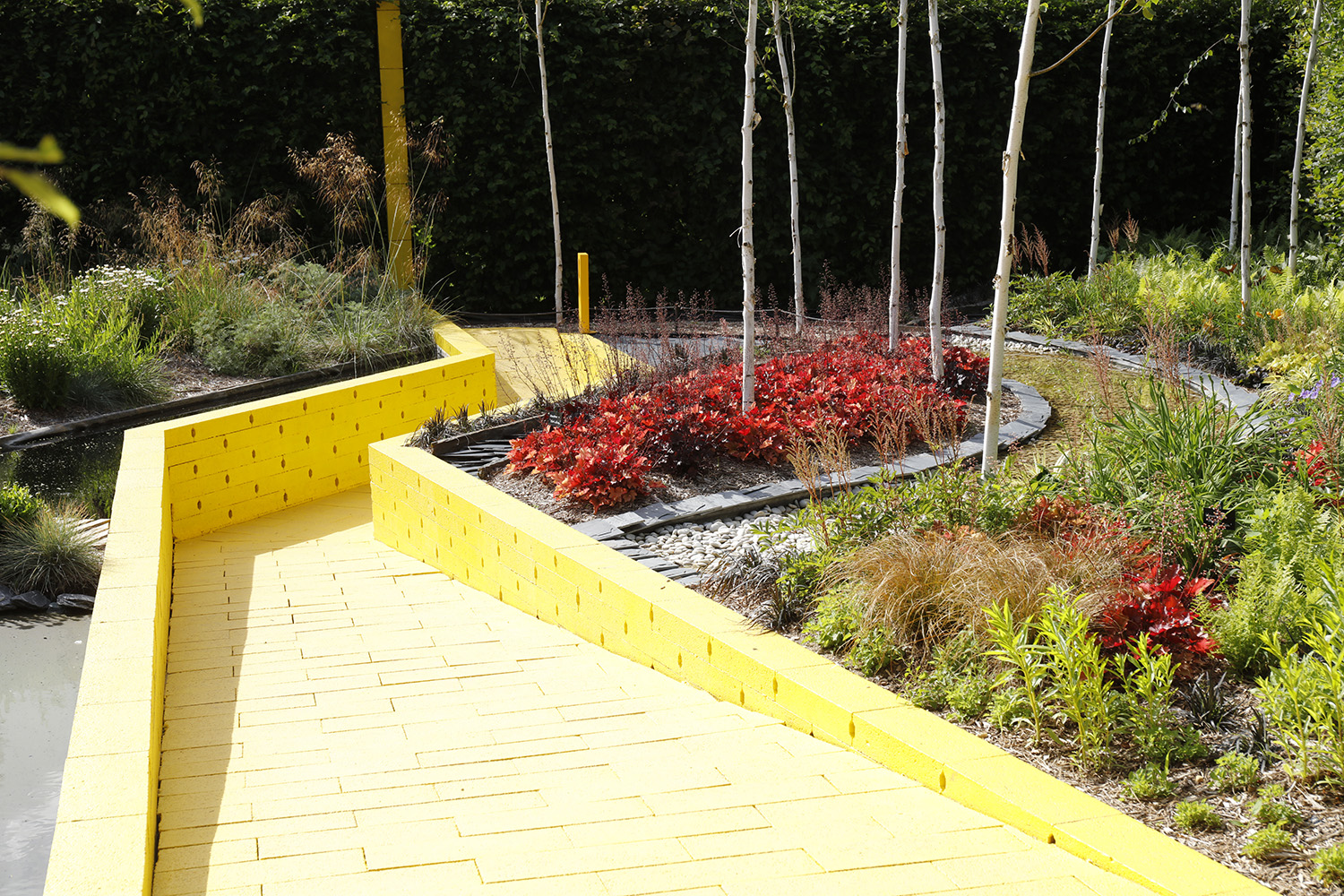
Habiter le mur challenges this. A defensive place which aims to exclude all forms of the unknown, does this do the idea of paradise justice? Doesn’t the definition of paradise correspond more to a threshold than an enclosure? What if it were a choice to make, before the opening of a passage? We would be on the verge of adventure, with all the risks involved in the journey of human existence. Paradise would be found within the wall itself. It can neither be a place of comfort nor of fear.
Habiter le mur supposes that paradise is, on the contrary, a place of consciousness, integration and learning – a place we choose to enter, where we choose to mix, rather than hide ourselves behind walls.
DESIGNERS

Principal founder of Trace, Windy Gay focuses her work on creating aesthetic, resilient and equitable spaces. Her motivation is largely inspired by a desire to connect people’s inner lives with their physical, sensory lives and, in so doing, to awaken empathy through a more integrated point of view. For her, designing international landscapes rich in different perspectives brings about positive change in the world. Windy holds a degree in philosophy with a specialisation in studio art, which she studied at Mills College, and a master’s degree in landscape architecture from the University of New Mexico. She now teaches at the Fay Jones School of Architecture and Design at the University of Arkansas, in Fayetteville, Arkansas. Her teaching and research focus on the relationship between drawing and thinking, and on the importance of empathy in education and in the practice of landscape architecture. She is also interested in the potential inherent in creating drawings and diagrams that blend analogue and digital media, as well as still and moving images, to help us develop more imaginative and innovative solutions for our built environments.
Justin Tucker loves coming up with new ideas and making new places, particularly for and with other human beings. A teacher, maker and designer, as well as an optimistic problem-solver, he has led, taught and collaborated on a number of exciting design-build projects and workshops close to home and on the international stage. Recent destinations include Norway, Estonia, Venice and Haiti. He particularly enjoys working on projects whose scale places him close to the human body and where experience can best be explored. At times the tedious side of his work is taken up by too many management tasks, but creative work and, even more, the joy of spending time with his wife and children keep him going. Given some free time, you may find him out walking in nature with them, busy gathering little treasures in the Ozark Mountains near their home in Fayetteville, Arkansas. He spends most of his working time as a fabrication specialist at the Fay Jones School of Architecture and Design of the University of Arkansas, where he is also coordinator of design exhibitions. In addition, he teaches a course in Design, Thinking and Building that he created for the New School, a local independent primary and secondary school. His knowledge comes from a Bachelor of Architecture completed at the Fay Jones School, as well as almost 20 years’ experience in all in building construction management, landscape construction, woodworking, architectural design and prototyping, not forgetting a whole childhood spent making and breaking things.
Beau Burris is a landscape architecture student at the Fay Jones School of Architecture and Design at the University of Arkansas. During his studies he has completed a wide variety of projects at different scales, but what he likes best is designing the things people come into closest contact with – the small subtleties of what we see and touch. The holder of an Arkansas Governor's Scholarship, he is currently President of the student chapter of the American Society of Landscape Architects. His interest lies particularly in the representation of the built and natural environment, in the challenge of graphic innovation that comes with each new project, and in pushing the limits of materials' capacity to convey landscape to a wide variety of audiences.
Dallas Myers is originally from Oklahoma, in the middle of the farming region of the US. He is finishing up school at the University of Arkansas and graduating in May 2019 with a degree in landscape architecture studies and a minor in Interior design. Following graduation, he will be starting a landscape design and contracting business while designing and making furniture. These two specific fields have grown to interest him as he found a deep love to create beautiful and compelling designs. Along with these fields came the opportunity to focus on material details. Each material holds a certain tactility that resonates with the individual, and his passion is to orchestrate that experience. He hopes to continue to pursue this outside of his education and following.