ARTISTIC APPROACH
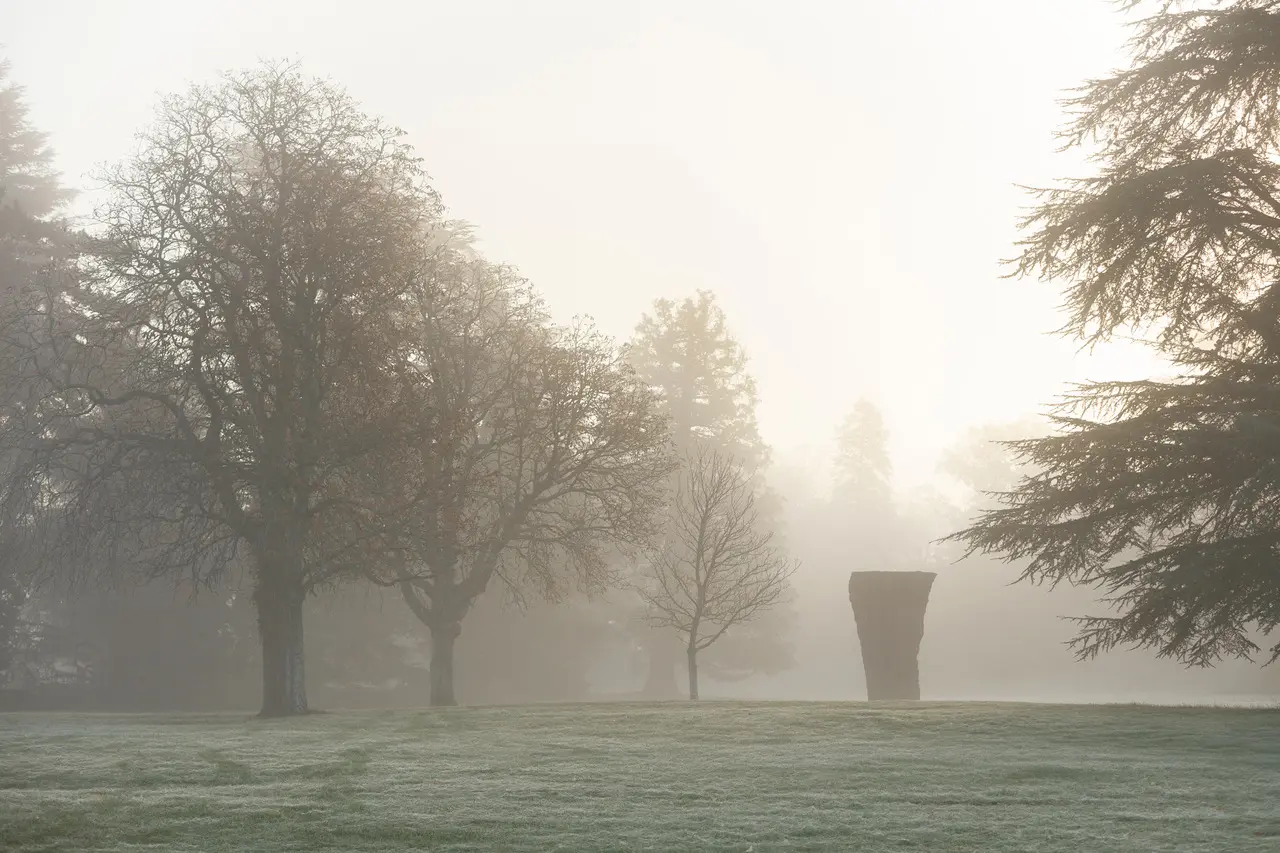
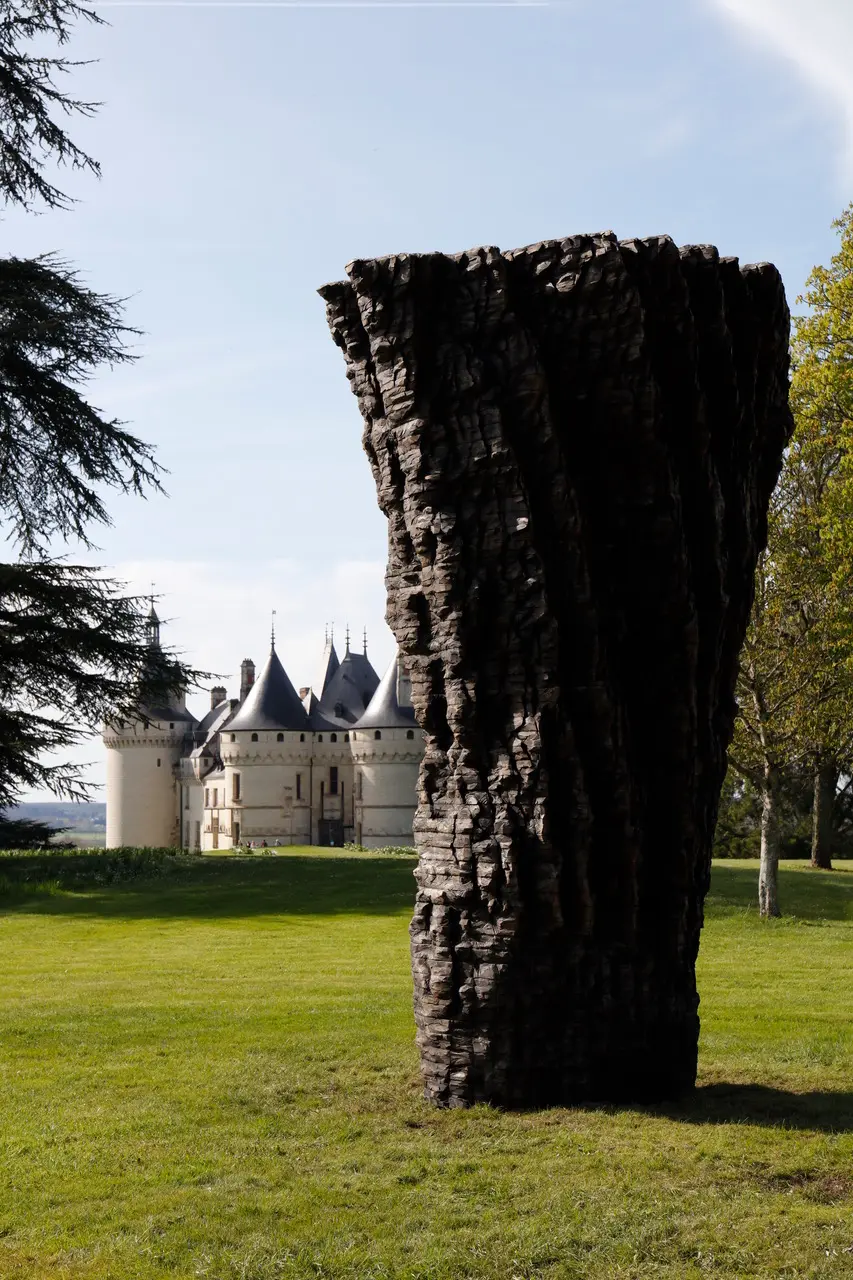
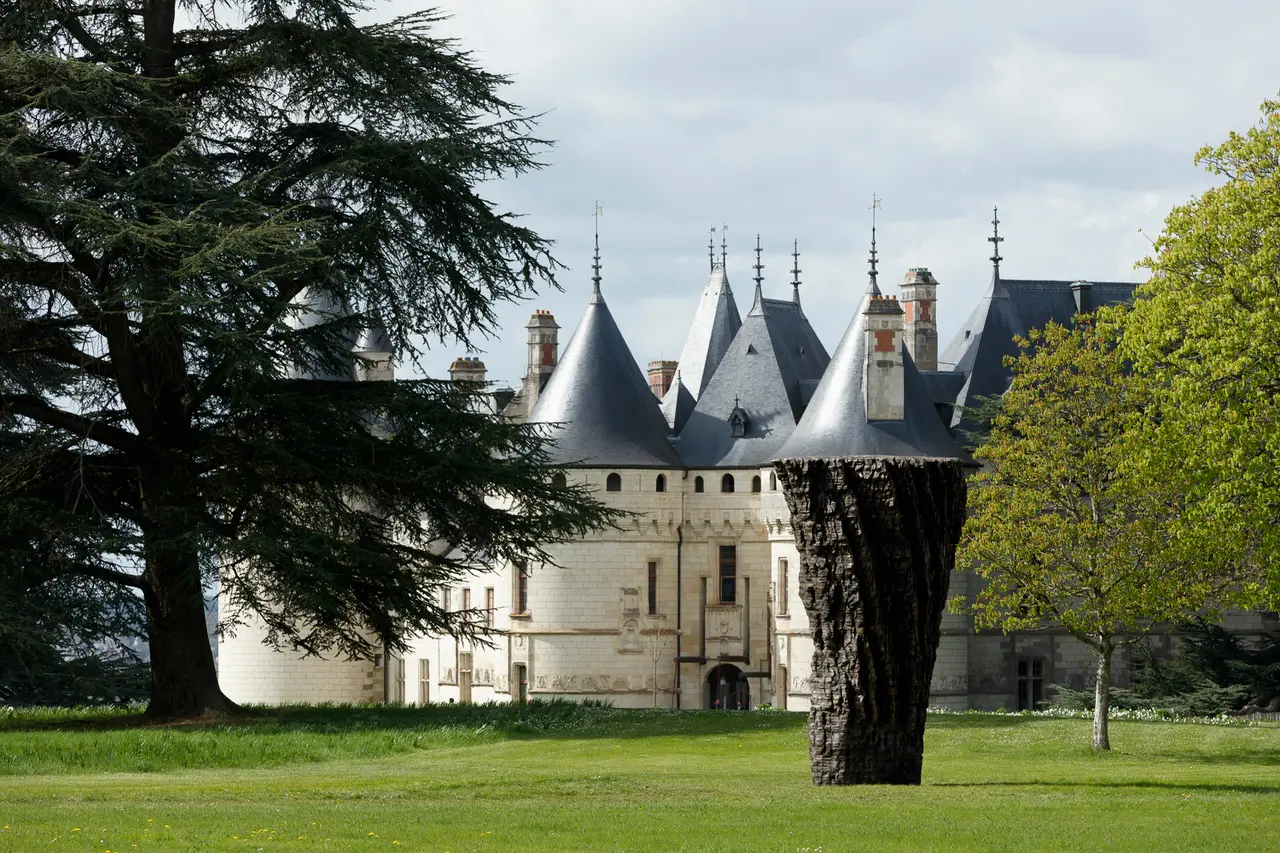
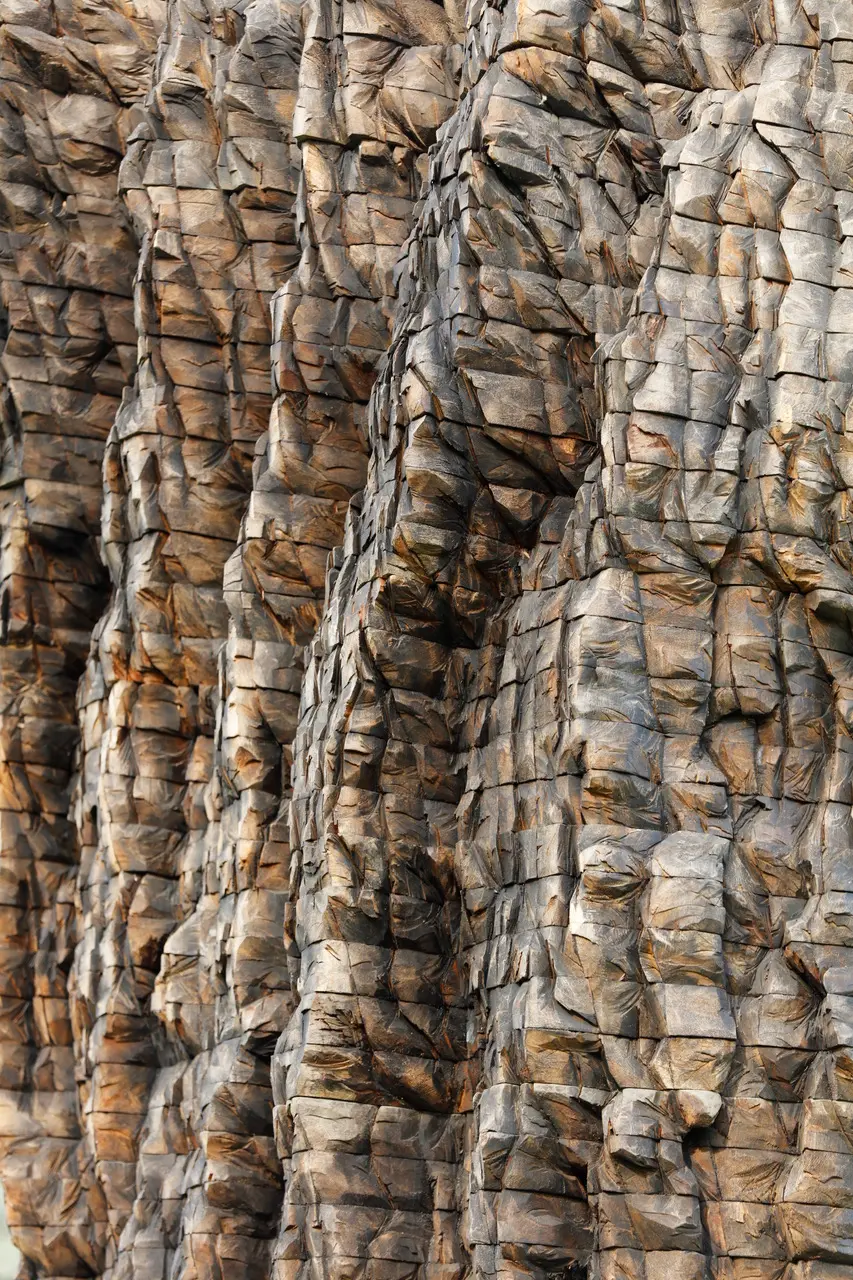
In the Historic Grounds, Anastazia gives cedar wood a monumental presence. The hollows, raised forms and irregularities of its surface bear the marks of handwork. Its abstract forms evoke an organic world, somewhere between landscape, architecture and the body.
Ursula von Rydingsvard constructs her sculptures from cedar beams, which she gradually carves, assembles and glues together. Layering these elements creates complex volumes whose surfaces appear folded, hollowed out or eroded. Powdered graphite, rubbed onto the wood, darkens its tones and accentuates the variations in relief.
In her work, forms can recall bowls, vessels, tools or walls. These familiar objects become starting points for a personal sculptural language, in which traces of human gesture meet the forms and forces of nature. The power of the volumes is matched by meticulous attention to the material and its details.
This relationship with wood also has an intimate dimension. The artist associated this material with the barracks in which she had lived as a child in post-war refugee camps, as well as with her family’s rural Polish background. These memories imbue her sculptures with emotional intensity, as sensations, memory and bodily experience take shape in the material.
BIOGRAPHICAL NOTES
Ursula VON RYDINGSVARD
GERMANY
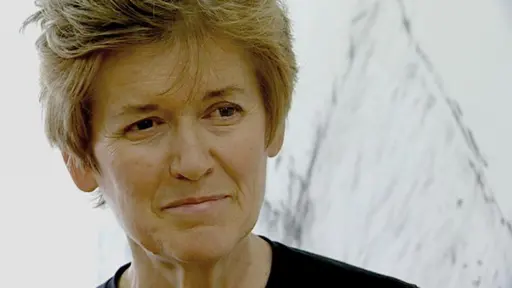
A major figure in contemporary sculpture, Ursula von Rydingsvard was born in Deensen, Germany, in 1942 and died in 2026. After a childhood marked by war and life in camps for displaced persons, she emigrated with her family to the United States in 1950. She studied at the University of Miami, then at Columbia University, graduating in 1975.
Her work has been shown in numerous exhibitions, notably at the Storm King Art Center in 1992 and the Yorkshire Sculpture Park in 2014. In 2015, the latter organised a presentation of her sculptures in Venice as part of an official collateral event of the 56th Biennale.
Her career was marked by numerous distinctions: fellowships from the National Endowment for the Arts in 1979 and 1986 and the John Simon Guggenheim Foundation in 1983, an award from the American Academy of Arts and Letters in 1994, followed by the Joan Mitchell Award in 1997. Her exhibitions also received awards from the US section of the International Association of Art Critics in 1992 and 2000.
In 2014, the International Sculpture Center presented her with its Lifetime Achievement Award, honouring her career as a whole and her contribution to contemporary sculpture.
Her work is represented in the collections of institutions including the Metropolitan Museum of Art, the Museum of Modern Art and the Whitney Museum of American Art.