ARTISTIC APPROACH
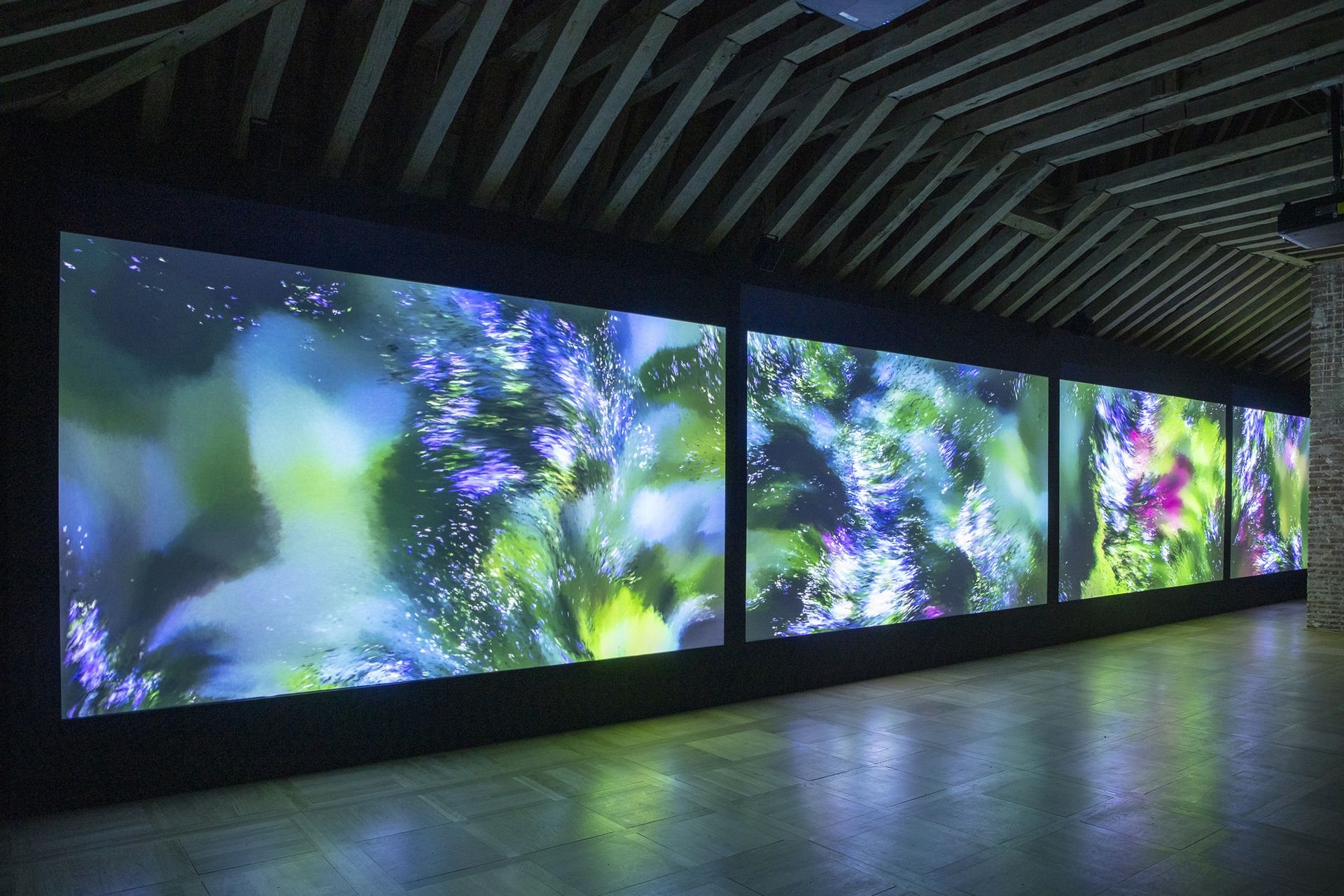
Quayola’s global creations were specially commissioned by the Domain and financed by the Centre-Loire-Valley Region to inaugurate a new gallery in the Château’s East wing after significant work was carried out to restore the floors and lighten the structural load. This new 300 sq.m. area has never been open to the public before.2 n’avait jamais été ouvert à la visite.
Quayola’s incredible mastery of digital techniques and expansive base of pictorial knowledge allow him to continually fluctuate between art and nature, painting and vegetation.
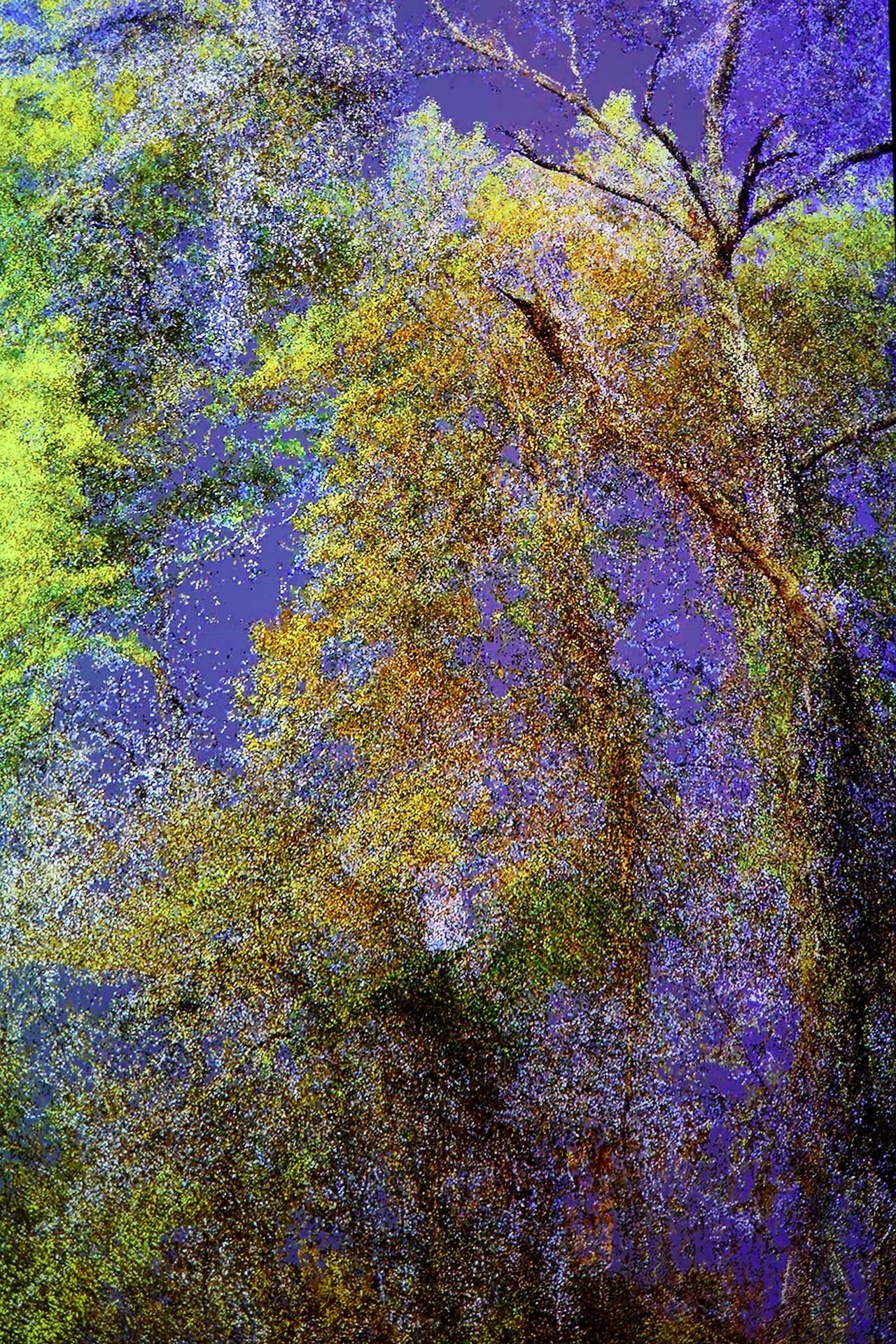
The landscapes serve as a point of departure – a pretext to shape an inner motion and vision. Through the misuse of image-analysis and manipulation algorithms, he challenges the photographic image and proposes alternative modes of vision and synthesis. Familiar landscapes – filmed in Ultra-High-Definition – is shown with meticulous attention to details and to the anthropomorphic shapes of the trees. Then, through the use of custom-software, the detailed texture of the foliage is reduced to two-dimensional masses of volume veering towards abstraction. As the outlines of trees and shrubs get blurred, nature becomes dense and almost impenetrable. The resulting compositions remain, suggestively, suspended between representation and abstraction, between the depth of the natural scenery and the surface of the screen. In contrast to this vision, raw data-visualisations of colour and motion information follow in sequence the contemplative digital paintings to remind us what really lies beneath the surface. He pays homage to the modern tradition of Western art that takes landscape as a point of departure towards abstraction, reducing the complexity of the world into new alternative synthesis.
Quayola uses the digital arts to immerse us in a fascinating Impressionist atmosphere, referencing the later works of Claude Monet. The series’ repetitive style lays the groundwork for abstraction while investigating the way in which we observe, study, and synthesise nature.
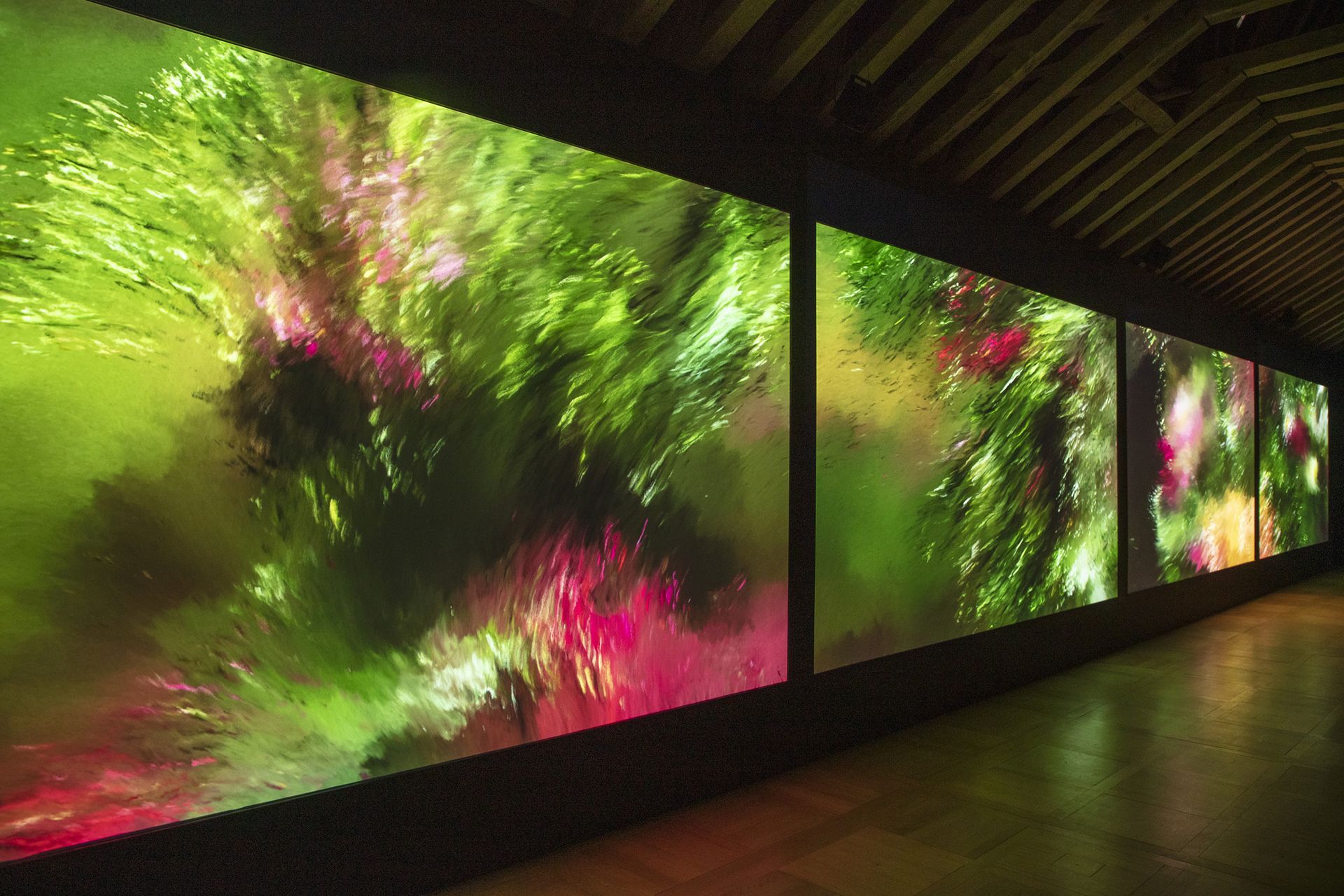
Quayola has re-created conditions similar to classic impressionist landscape paintings, but has done so using sophisticated technological apparatus to capture the delicate nuances of reality that lie beyond the reach of our senses. Here, natural landscapes are observed and analysed through the eyes of the machine before being recreated using new visual synthesis methods.
Evening Effects
Effets de Soir (Evening Effects) are the luminous, chromatic effects perceptible at dawn or dusk, when light and shadow, warm and cold colours merge into each other. From Monet to van Gogh, a good many painters have attempted to transpose this impression onto canvas, developing a specific painting technique in the process. Quayola confronts their legacy by modelling his evening effects, combining natural and artificial stimuli. His Effets de Soir is a video work based on photographs of floral compositions taken at night, lit by artificial lights and reflectors. The very high-resolution images, taken in Château de Chaumont-sur-Loire’s lush gardens, become the source from which Quayola crafts his computational pictures, visual and audio sequences in which he experiments with compositional and rhythmic dynamics. The botanical compositions’ frontal planes, dark canvases scattered with patches of colour, are deconstructed into geometries and colours. Sentimental human perceptions of the natural world are replaced by the meticulous objective perceptions of a machine that “sees” and “recognises” nature using software programmed to decompose and analyse its components. Visualisations of analytic and debugging processes intersperse videos of pictorial nature generated by calculation algorithms. Painting becomes analytic; it does not reproduce the world or how it is felt, but is reworked and recoded. In Quayola’s works, “thought”, the machine’s “mindset”, becomes painting. The dynamics of composition, brushstrokes, rhythms and flows, are manifestations of the software’s structure. The algorithms develop organic dynamics and processes in a fascinating similitude between the natural world and the computer world. As Jérôme Neutres puts it, “In the two realms of nature and digitisation, we find a generative process that follows its own independent logic and enables reality to constantly evolve. By creating an artificial nature that is actually close to the natural world, Quayola has invented a new form of impressionism”.
Pointillism
BIOGRAPHICAL NOTES
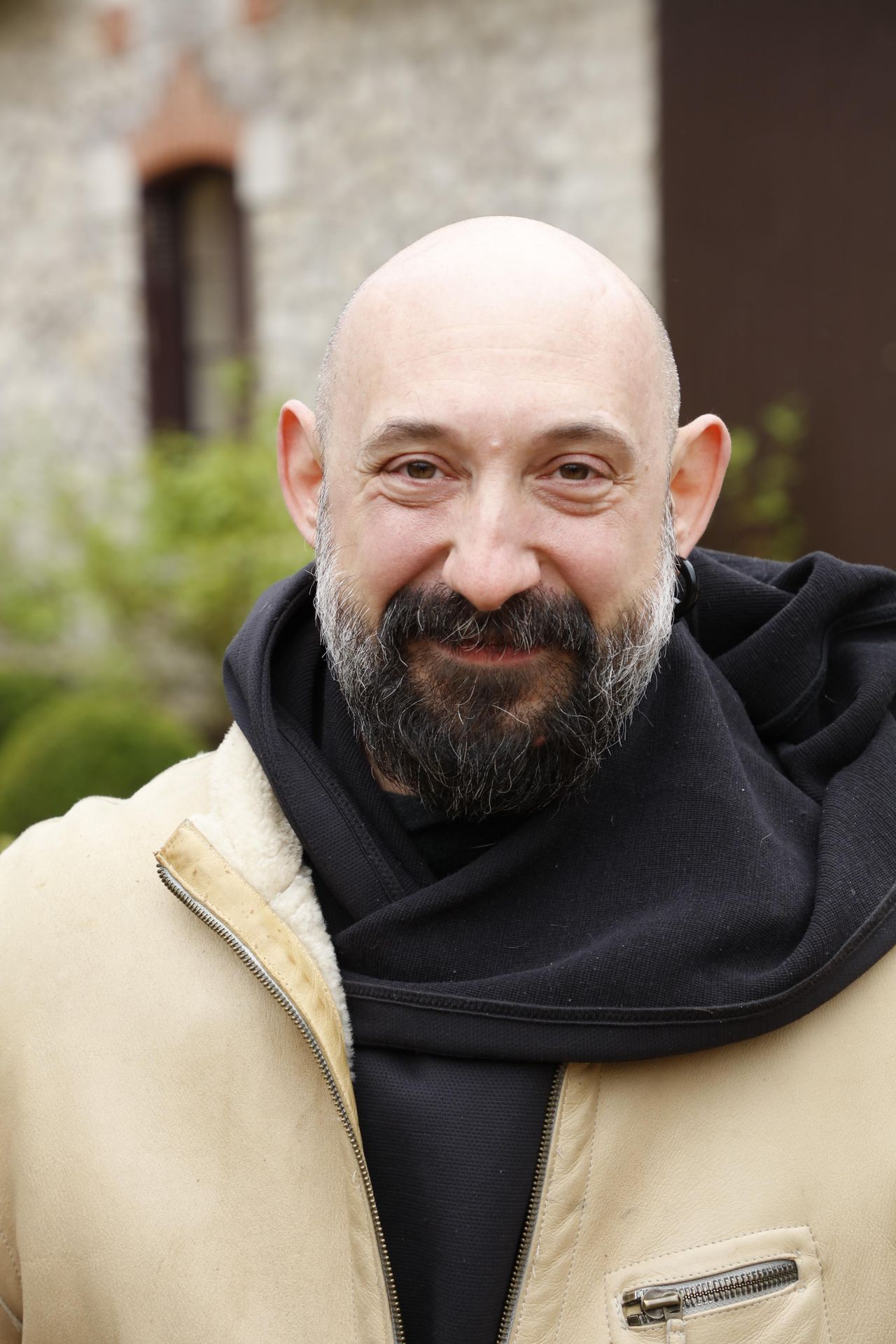
Quayola was born in Rome in 1982, but quickly chose to distance himself from the historic iconography of Italy’s capital by settling in London when he was just 19 years old. There he sought out new subjects, a new language, and a new means of expression. He earned his degree in art from the University of London in 2005. His experimentations continued, and he received a Golden Nica at the Prix Ars Electronica in Linz, Austria, in 2013.
Regarded for his enigmatic video installations, Quayola creates hybrid spaces of animated painting and sculpture. Engaging a practice of audio-visual performance, drawing, photography and software programming, he explores a fine boundary located between the real and artificial.
Thanks to special commissions from public institutions, he has benefited from unusual access to the art and architecture of many European churches, theatres, and museums, such as Notre-Dame in Paris and the Vatican. He uses videos to explore and create a dialogue on archives, collage, intellectual property, and the appreciation of objects, inspired by the launch of the Google Art Project which offers unprecedented access to the surface of paintings. Indeed, the logic of a painting appears as we look at it, as though we were digging something out from under the image to bring it to light.
Also a frequent collaborator on musical projects, Quayola has worked with composers, orchestras and musicians including Ensemble Intercontemporain, Vanessa Wagner, Mira Calix, Plaid, Matthias Kispert and the National Orchestra of Bordeaux-Aquitaine.
His piece Jardins d’Été, which was first unveiled at Chaumont-sur-Loire in 2017, is the fruit of his summer 2016 residency at the Domain, during which the artist was able to immerse himself in the château’s gardens.
In 2018, he participated in the second edition of Chaumont-Photo-sur-Loire with a series of previously unreleased images created during his residency. The series is made of large-scale, high-definition black and white photographic prints which deconstruct and then recompose one of trees first seen by visitors when they arrive on the grounds. The black background emphasises the airy quality of his work, on top of the scientific investigation and data collection that go into it.
The following year, Quayola exhibited Asymmetric Archaeology Gazing Machines in Shanghai, a work which reinvents the past and rediscovers nature from the machine’s perspective. In 2020, he participated in several group exhibitions in China, France, and Italy, with one of his installations in particular taking its place at the heart of the Arte Sella open-air museum. Asymmetric Archaeology Gazing Machines