ARTISTIC APPROACH
The artworks of Olga Kisseleva do not exist just to be admired, but because they question the role of mankind in its environment. In 2012, a tree inspired the artist to enter the world of BioArt, an artistic practice that works with the living. She offered to create a tribute to the ancient elm tree in Biscarrosse that had been killed by Dutch elm disease. This tribute would not take the form of a monument, instead she would grow a new elm from the sprouts of the dead tree, working with several laboratories to do so. Biopresence was the beginning of a long-term project that led Olga Kisseleva from Kazakhstan to Australia, via Brazil, Japan and Israel. Her plans for one tree have now transformed into projects involving many more: EDEN ( initiera un travail au long cours qui amènera Olga Kisseleva du Kazakhstan en Australie en passant par le Brésil, le Japon ou encore Israël.
Her plans for one tree have now transformed into projects involving many more: EDEN (Ethics and Durability for an Ecology of Nature). For each project, the data collected is analysed and a study of the biological, historic, sociological and cultural environment of the trees in question is carried out. Olga Kisseleva considers them to be living beings, just like humans, capable of remembering events, communicating with one another, helping each other in problem-solving, etc. Her artworks reveal the life buried at the core of trees. They guide us along the paths once taken by Buddha or Baba Yaga, leaving the visitor speechless at the foot of the Auschwitz birch trees or Babi Yar poplar trees.
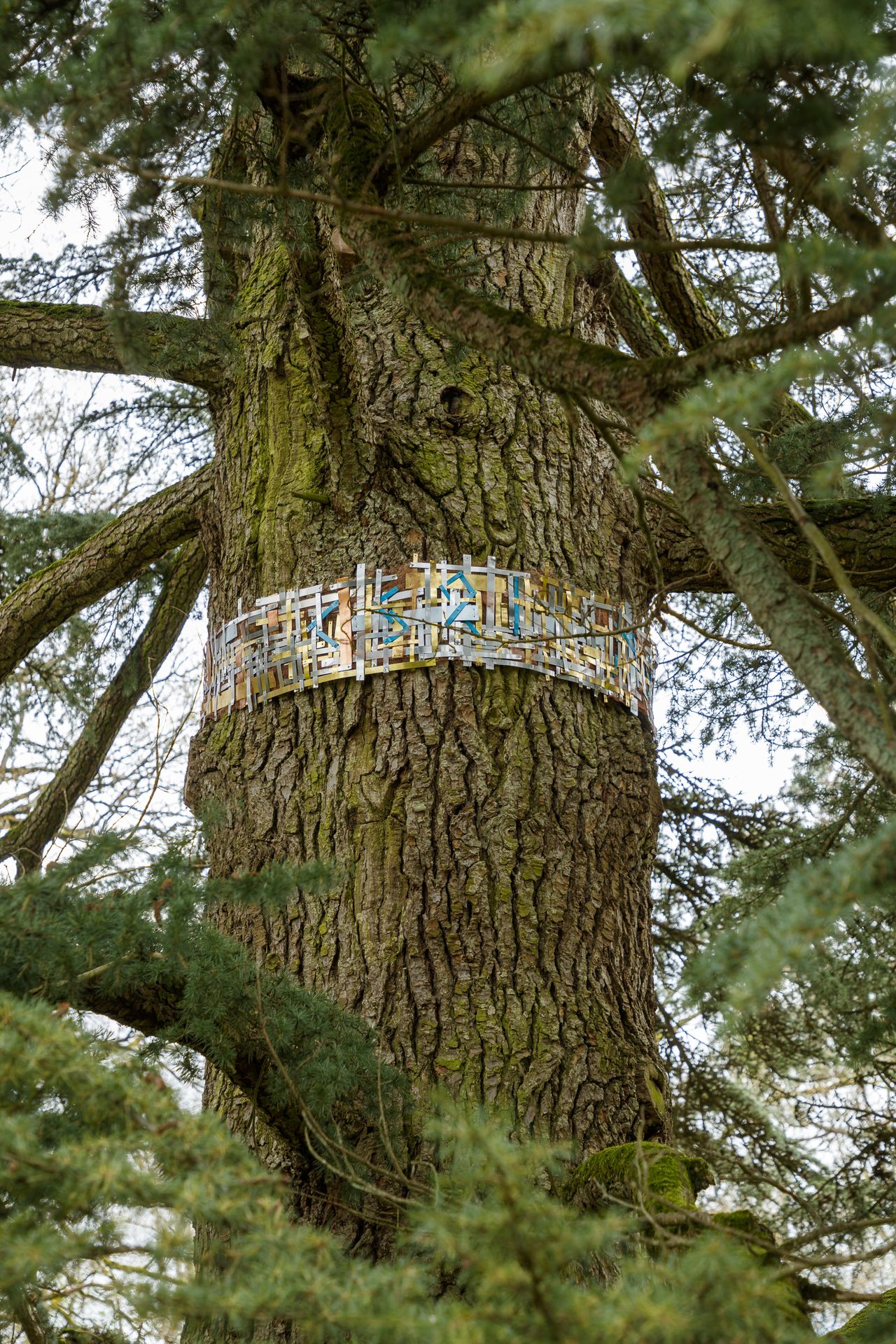
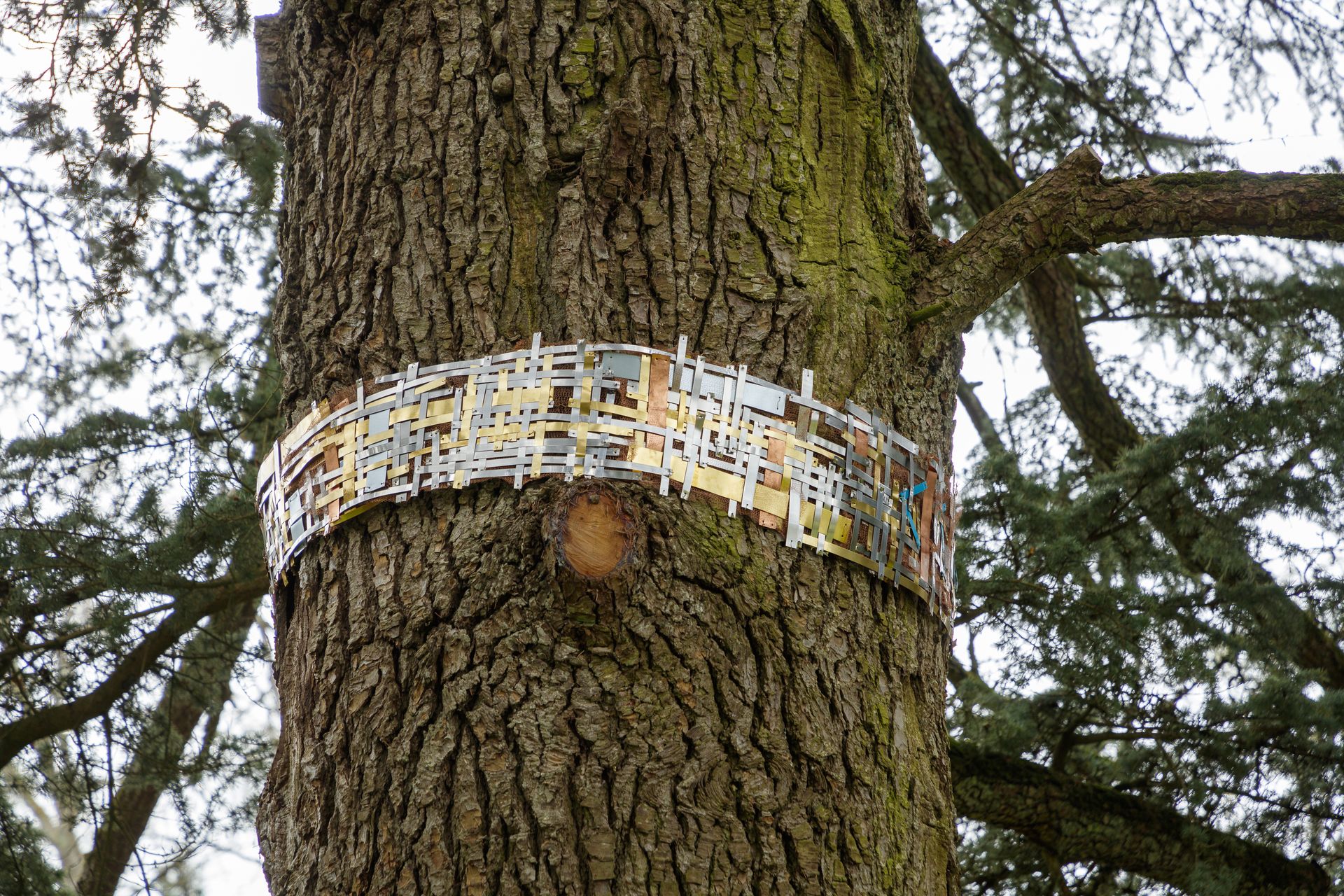
Armille
is a chance to admire the language of trees. Much like a strange, mysterious jewel, the piece is wrapped around one of the iconic trees in the Historic Grounds. A magnificent gift for the latter’s 140 th year.
BIOGRAPHICAL NOTES
Not wishing to favour any contemporary language, we opted for the runic script once used for communication by the peoples of northern Eurasia, notably the Vikings and the Japanese.
The whole is woven in a jeweller’s aesthetic, interlacing the messages received from the Estate’s tree, treated as pink, beige and grey horizontal lines, with those of the Japanese cedar in the form of vertical lines. The diagonals of the runic letters contrast with the rhythms of the graphic transcription through their turquoise blue colour.
This precious sculpture is ultimately created directly by the tree that bears it." Olga Kisseleva
BIOGRAPHICAL NOTES
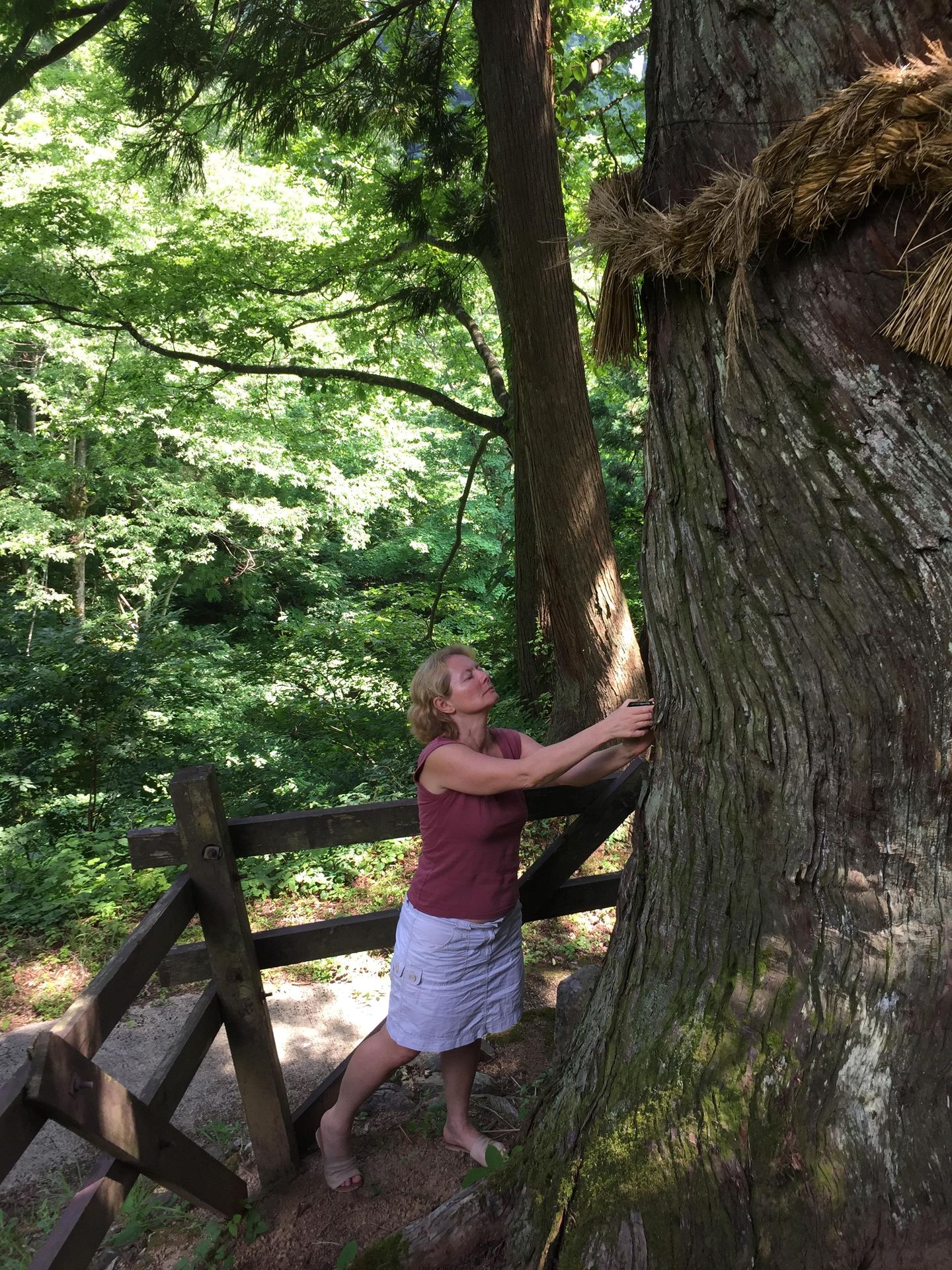
Olga Kisseleva was born in 1965 in Saint Petersburg. She graduated from the Vera Mukhina Institute of Applied Arts in 1988 and then continued her studies in art at the State Hermitage Museum and in physics at Leningrad State University. In the early 1990s, she left to go and study in the United States, at the University of California (Berkeley) and Columbia University (New York). In 1996, she did her PhD thesis entitled Le Cyberart, comme outil de dialogue avec le spectateur (Cyberart as a tool for dialogue with the viewer), in St. Petersburg. She was granted a Fullbright scholarship in 2000 and joined a team of creators working on developing digital technology in the United States. She was then invited to the Sorbonne University and taught there for 20 years.
Olga Kisseleva is internationally renowned and plays a pioneering role in the search for and research into emerging forms of creation.
Olga Kisseleva is represented by the contemporary art gallery (Lugano), the Alexandra de Viveiros gallery (Paris), the BAG gallery (Bordeaux), the Elga Wimmer gallery (New York) and the Artwin gallery (Moscow).