ARTISTIC APPROACH
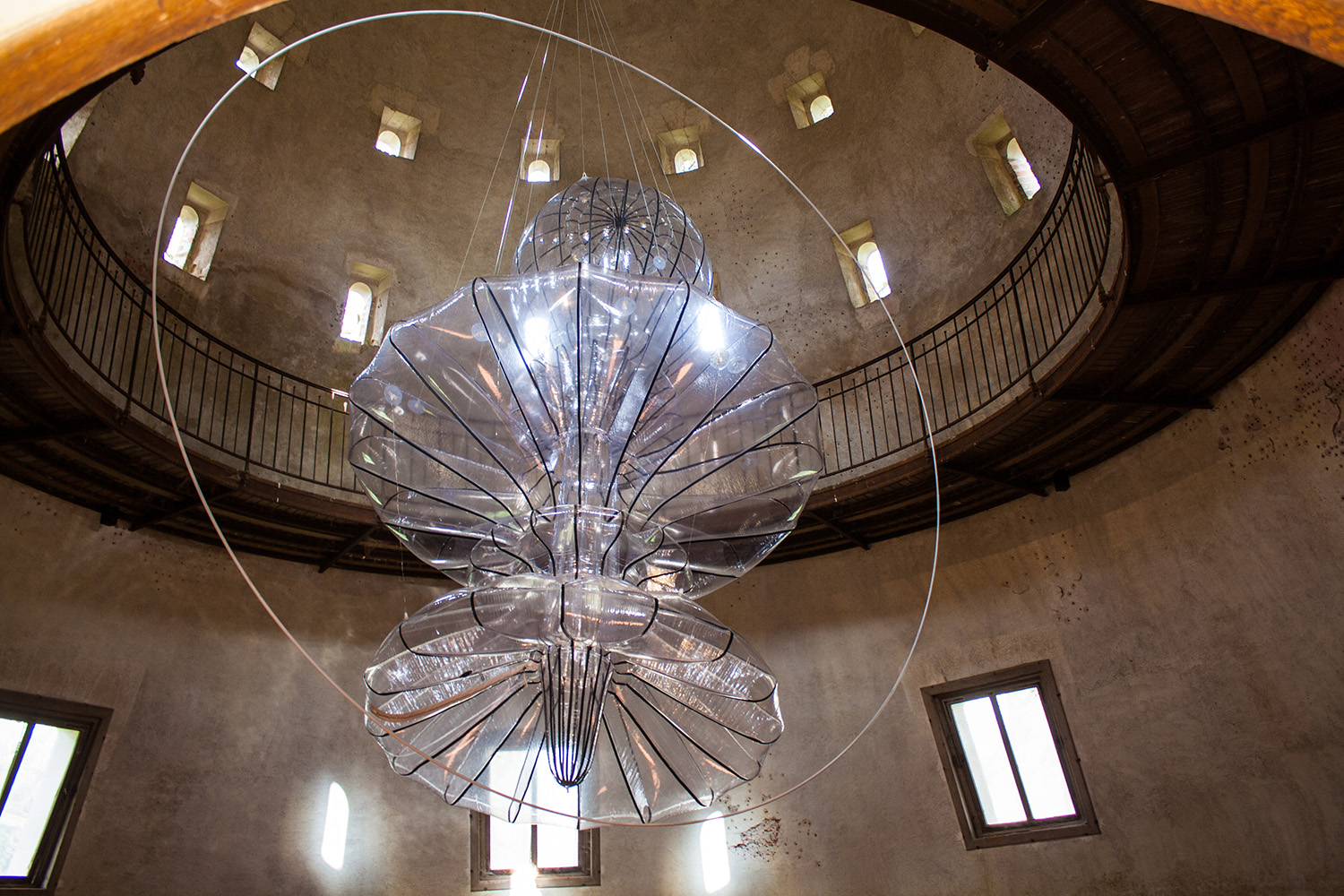
A unique and inspired artist, Klaus Pinter is still exploring the potential of inflatable structures with unwavering passion – ever since 1967. Polyphonic compositions made up of antagonistic materials and ornamental motifs, they illustrate the artist’s desire to steer clear of attraction through fluidity, plasticity and buoyancy and to free himself from flat surfaces in favour of the surrounding architecture. His approach is as original as his installations which, for forty years, have been floating unfettered by fashion. These “pneumatic” installations, or “ephemerides of modernity” as Yves Kobry refers to them, must be understood in the etymological sense, in other words, they are endowed with the breath of life, a soul, not simply because they are transformed by a thought, but because they fly over and sometimes collide with history and culture. Combining the precision and meticulousness of an architect with a poet’s imagination, the work of Klaus Pinter is at once disconcerting and fascinating.
In Chaumont-sur-Loire, Pinter is presenting an extraordinary ring set with golden magnolias in the Stables Canopy and installing a sublime levitating structure in the Riding School. Poetry awaits with these strange and poetic forms positioned by goodness knows which sylvan deity?
BIOGRAPHICAL NOTES
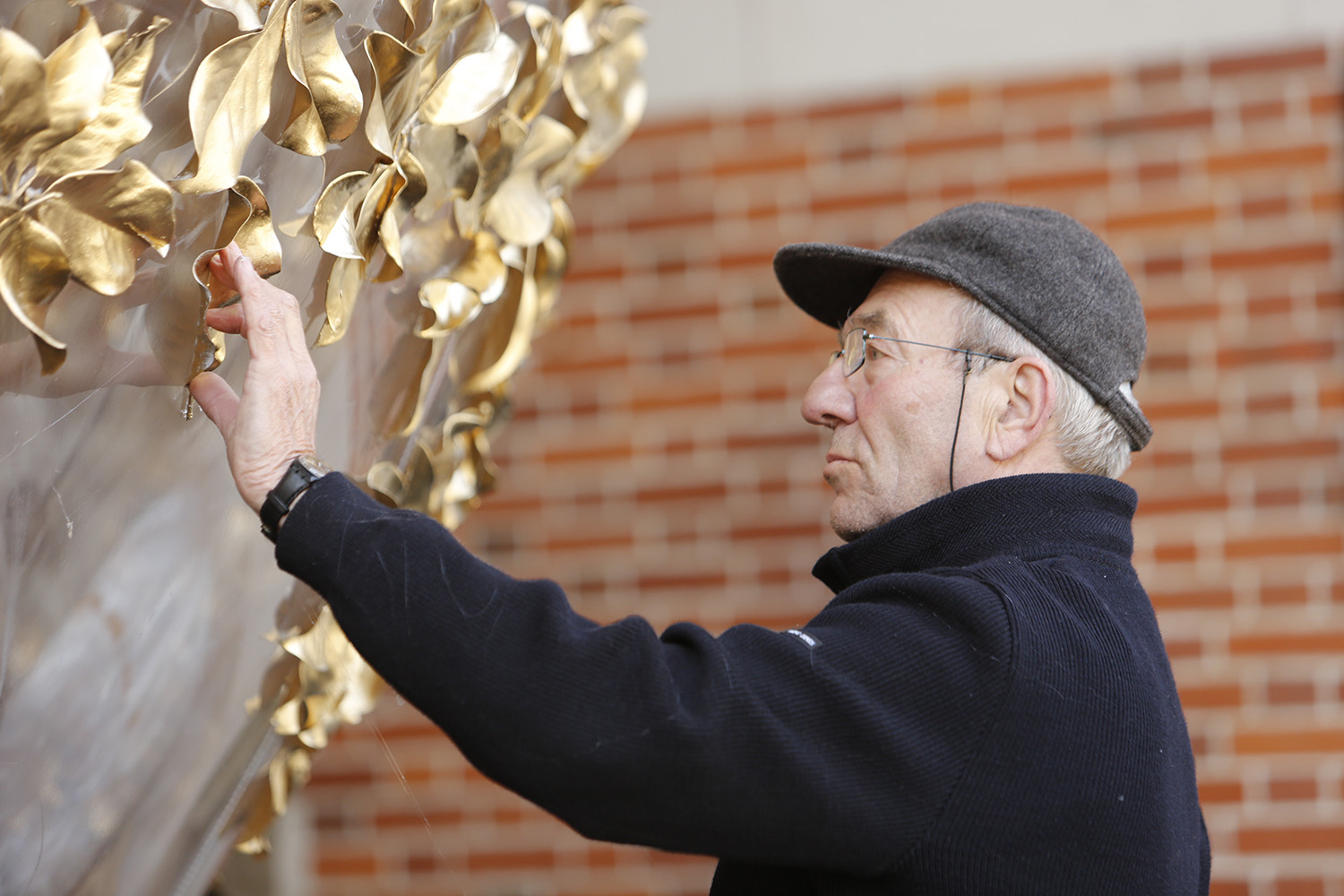
Born in 1940 in Schärding am Inn, Klaus Pinter is an Austrian sculptor. After graduating from the Academy of Fine Arts in Vienna, he made his debut as a professional artist in the early 1960s at the Fuchs Gallery in Vienna. He lived in New York for seven years, spent a few years in Belgrade, Bonn and Paris, and he now lives in Vienna and île d’Oléron off the west coast of France.
By founding the Haus-Rucker-Co group in Vienna in 1967, he struck out from Fine Art and became a forerunner in the installation and locating of a work of art in a given context. In the 1970s, he played a part in forging the reputation of the Austrian radical scene.
Casting a severely critical eye over the notion of progress and industrialisation and their consequences on the environment, Pinter’s research, with Haus-Rucker, bears on experiments of a new relationship with the body. Through his unwavering focus on the architecture of historical venues, museums or sites, the artist prompts us to give thought to the notions of space, symbolism and tradition.
In 2012, he was given an important retrospective in Vienna.