ARTISTIC APPROACH
Since 1997 Gerda Steiner and Jörg Lenzlinger have been developing site-specific ephemeral, burgeoning projects that change over time - halfway between the biological and the artificial. For each exhibition, they tailor their visual vocabulary to the distinctive features of the new setting. Their installation Giardino calante in San Stae Church (Venice Biennale, 2003) brought them worldwide renown. Through their art they examine the concept of fertility, a notion often associated with chemical fertilisers but which above all conjures up the idea of the original energy from which flow all life forms. Enthralled by the creation process of living beings, in 2010 they designed an extraordinary soup of coloured crystals in the château's dining room at Chaumont-sur-Loire, which spilled its crystals over the banqueting tablecloth in surreal slow motion.
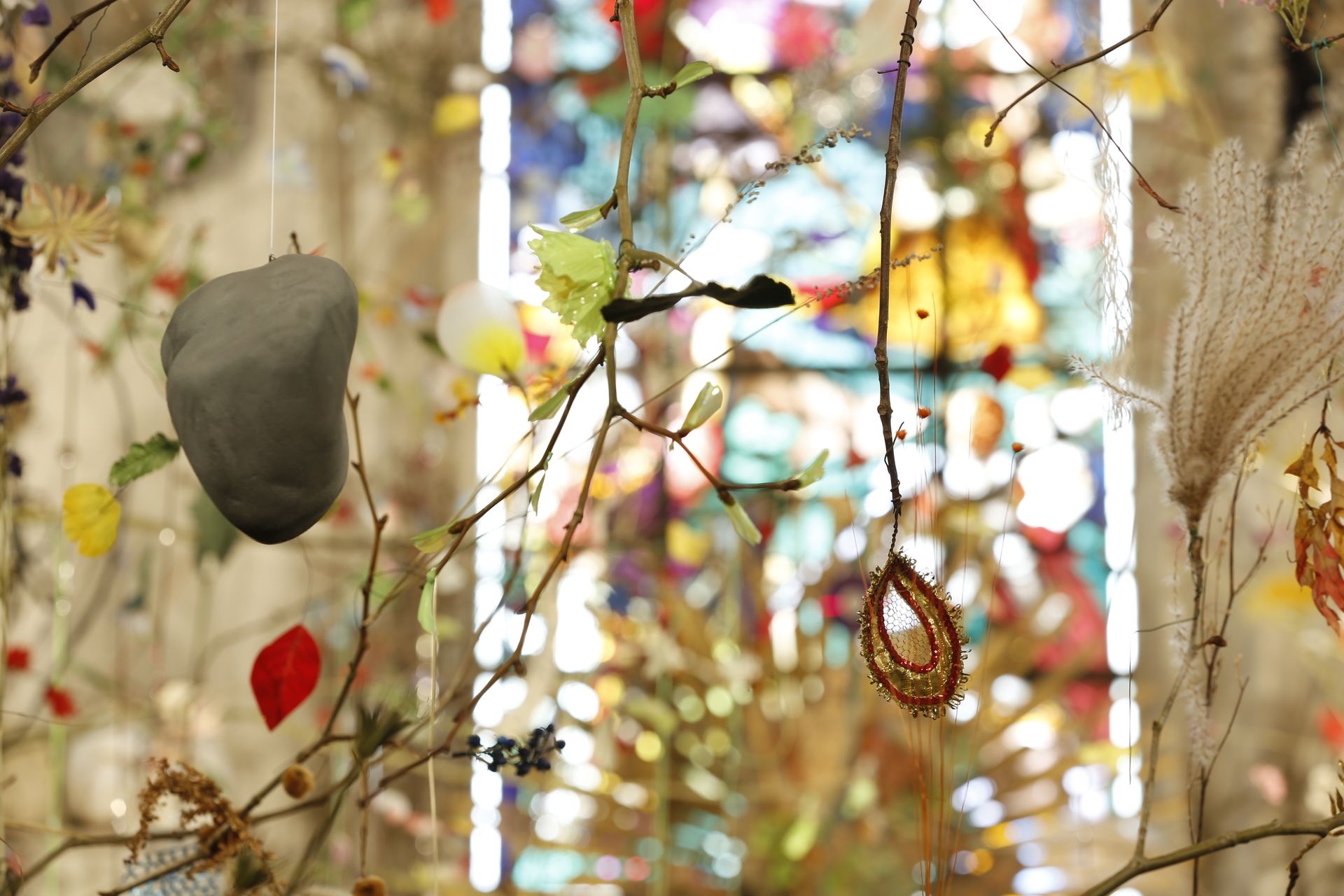
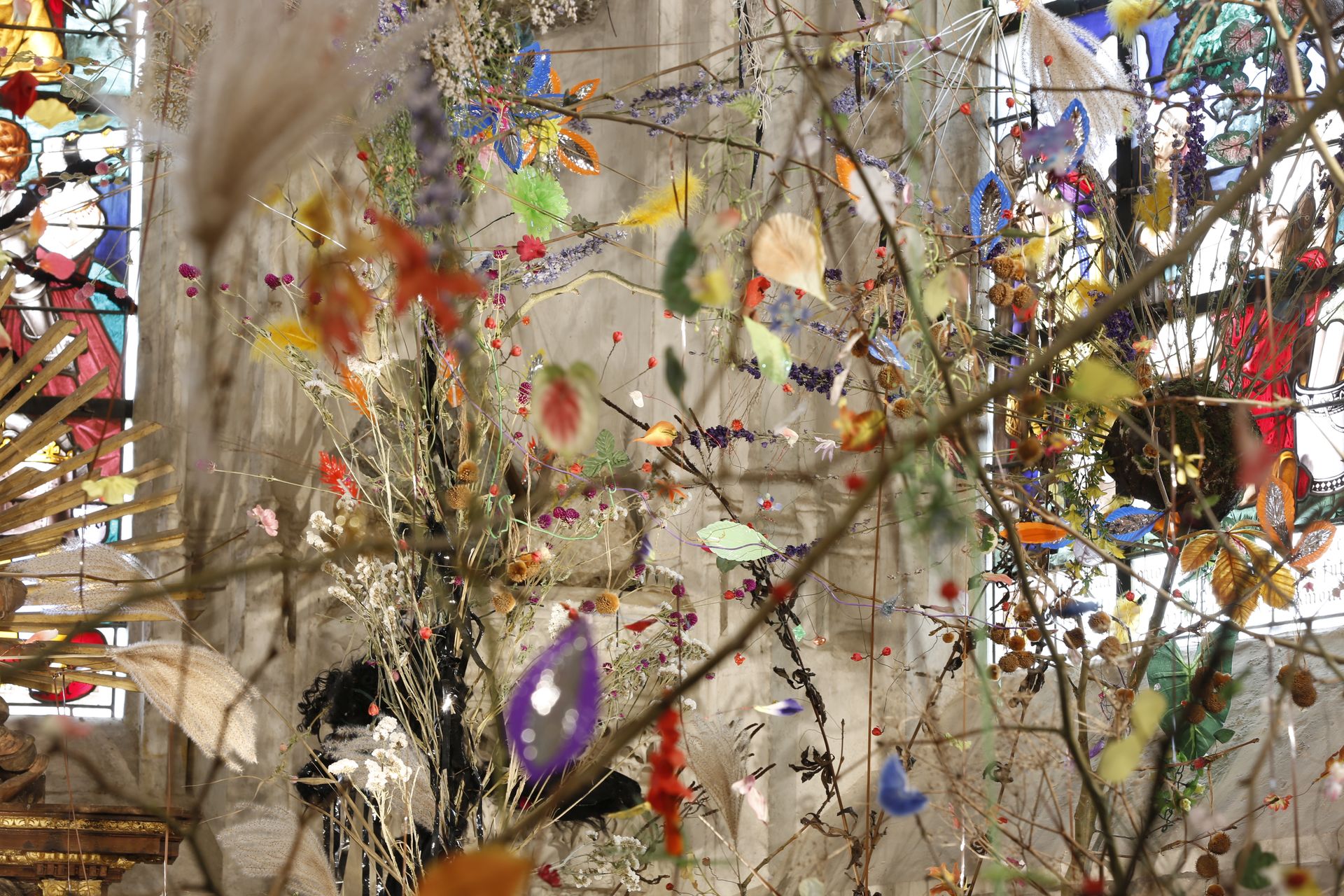
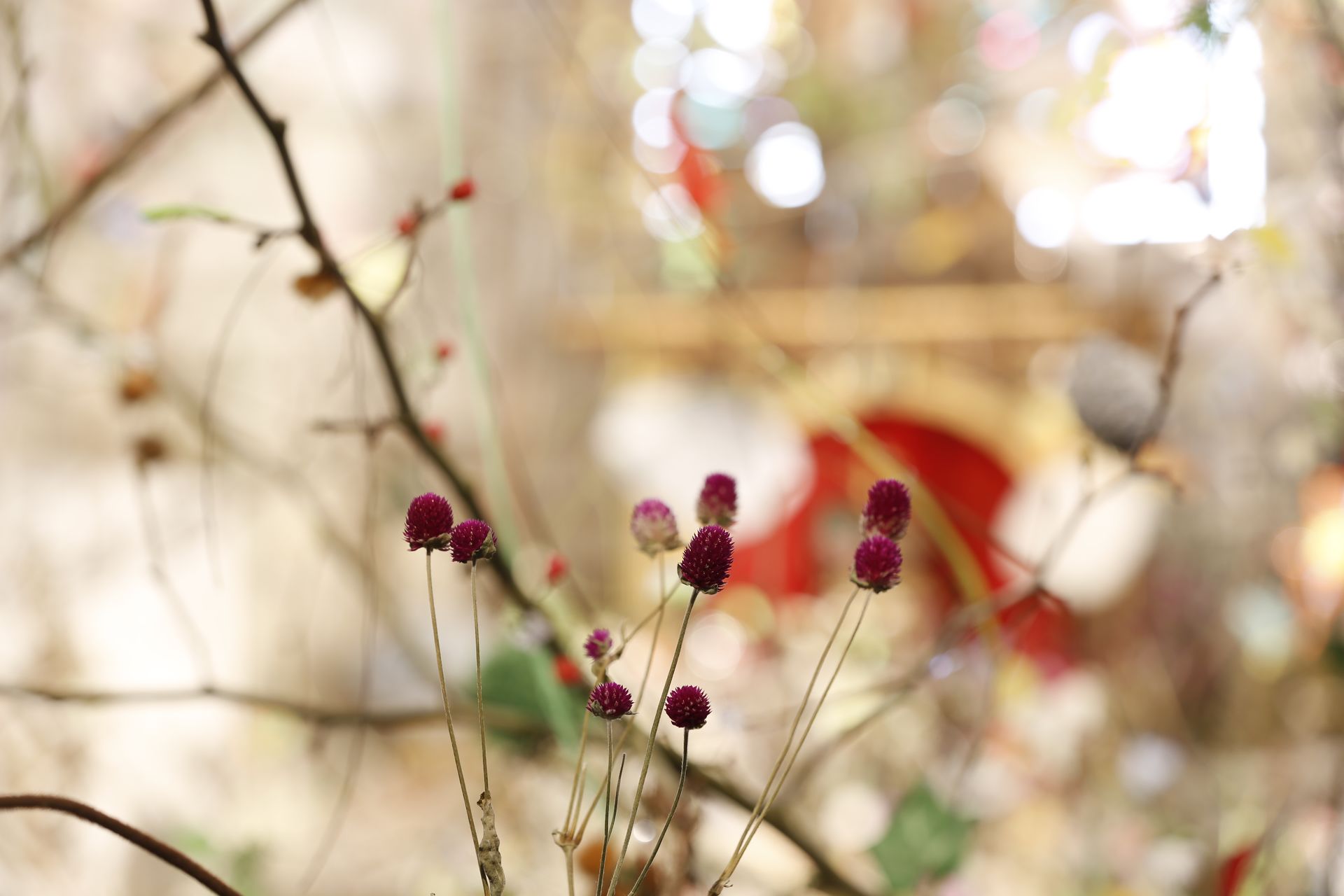
Using various parts of plants, leaves, grass and dried flowers collected from the gardens of the Domain and installed in the space, these Swiss artists, clearly in awe of nature and the power of wonder, have conjured up a living dreamland - an amazing hanging garden that shows off the architecture to stunning effect. BIOGRAPHICAL NOTES
BIOGRAPHICAL NOTES
Gerda STEINER and Jörg LENZLINGER
SWITZERLAND

Gerda Steiner and Jörg Lenzlinger form an artistic couple, born in 1967 and 1964. They live in Uster/Zurich. Since 1997, they have been working on joint projects. They grow artificial plants and crystalline vegetation, fill walls with playful frescos and approach their peers with a disarming charm.
Gerda Steiner owes her fame to huge murals, which are reminiscent of the psychedelic patterns of the sixties with their curved lines and vigorous colours.
Jörg Lenzlinger has specialised in experimenting with industrially produced urea. He uses it to make concretions of multicoloured stalactites and crystal landscapes. Together, they develop huge installations broken up into many parts, small wonderlands, telling their stories with a playful charm and an ironic wink.