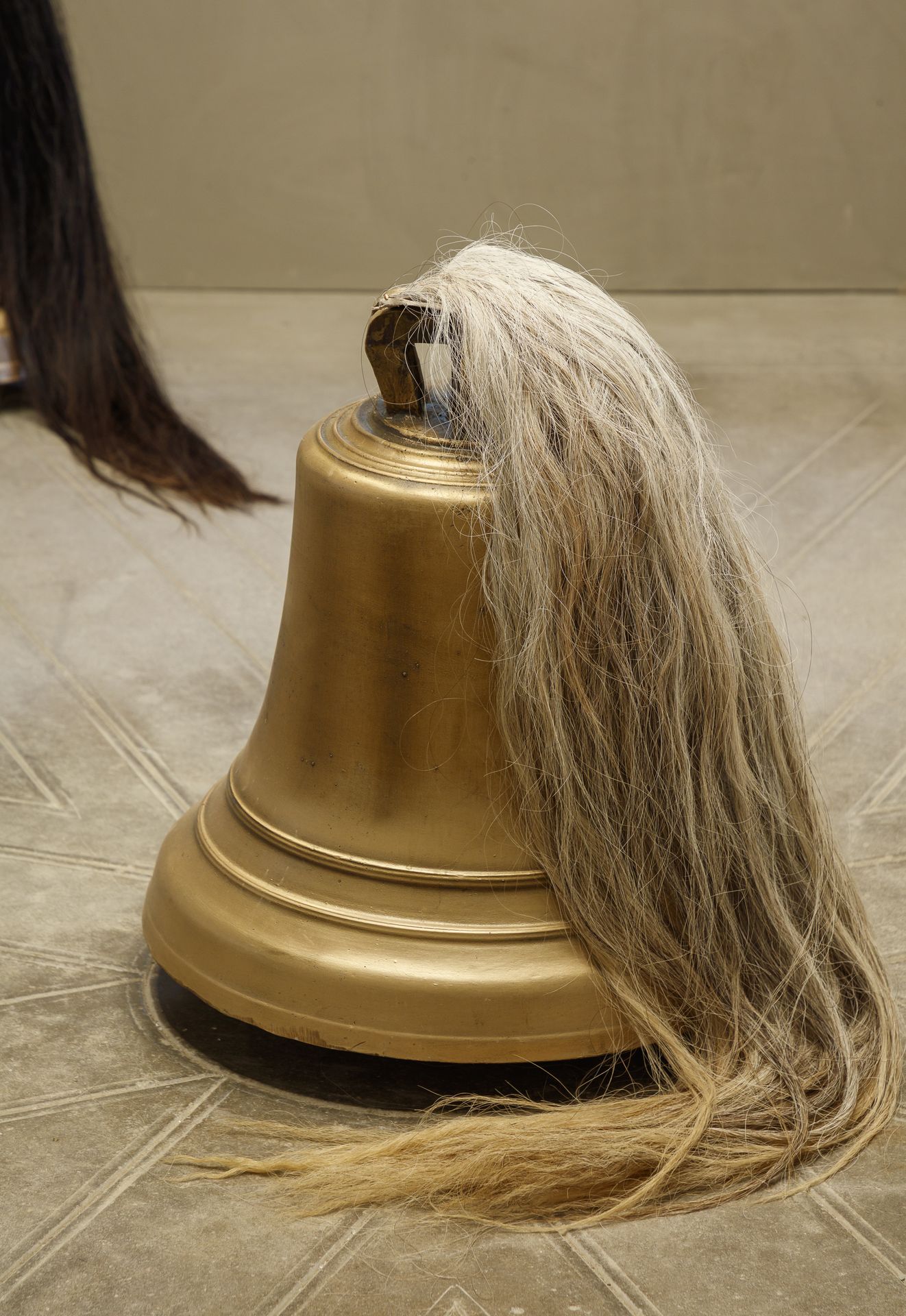
Artistic approach
Pascal Convert’s body of work reveals what remains when objects, places and beings seem to have disappeared. Between memory, absence and survival, his work explores traces as active forms of presence.
The work he is presenting in this year’s Art Season is in keeping with this continuity: a practice that examines what time erases but which suddenly makes it visible, perceptible and sharable.
BIOGRAPHICAL NOTES
Pascal CONVERT
FRANCE

Born in 1957, Pascal Convert lives and works, in Biarritz and Béarn. A visual artist, writer and filmmaker, his main focus is on an archaeology of memory.
Through the use and critical examination of archives, recurrent recourse to the imprint process and the intensity of presence characteristic of his sculpture, the central medium in his body of work, he always strives to invoke reality as powerfully as possible, find multiple ways of initiating the tragic game between presence and absence, between disappearance and power of immediate reality given to the beings summoned before us by his works.
A number of significant creations have succeeded each other over the last ten years: in 2022, for the “Voyage à Nantes”, a permanent installation in the Miséricorde Cemetery had glass deer emerging from the vegetation between the graves — a gentle opening to the great beyond (Miroirs des temps [Mirrors of Time], bas-reliefs on moiré glass).
And it is a characteristic of glass, his favourite material, that it captures body and mind together, creates tangible absence, fascinates by its sensory charm and asserts destruction – that which has already taken place and that which is always possible with this fragile material. Such is the purpose of what may be Pascal Convert’s best-known works, based on what he calls crystallisation: the Christ cristallisé [Crystallised Christ] (2014) in Saint-Eustache Church in Paris, hence Chaumont-sur-Loire’s great Bibliothèque cristallisée [Crystallised Library] (2016).