Přejít na obsah
Chaumont-Photo-sur-Loire 2024/2025

Nicolas Bruant

"Arbres"
Le Château

Artistic approach

Inspired by painting, architecture, literature and music, Nicolas Bruant developed his photographic technique from the 1970’s onwards and soon identified connections between each of these disciplines. The inspiration he drew from observing and listening to artists he considered “good masters” — those whose quality of work had influenced his generation — structured his perspective and empowered him to step back and refocus, a process he considers necessary before any photographic project.

Breaking away from the evidence and representations that build up with habit, Nicolas Bruant lets first impressions fade, those which would satisfy a less observant eye. He does not consider himself a witness and does not describe or authenticate. Instead of photographing what he sees, he photographs what he feels. For Bruant, photography is a means of liberating the eye from what reality imposes, a way of re-examining the world.

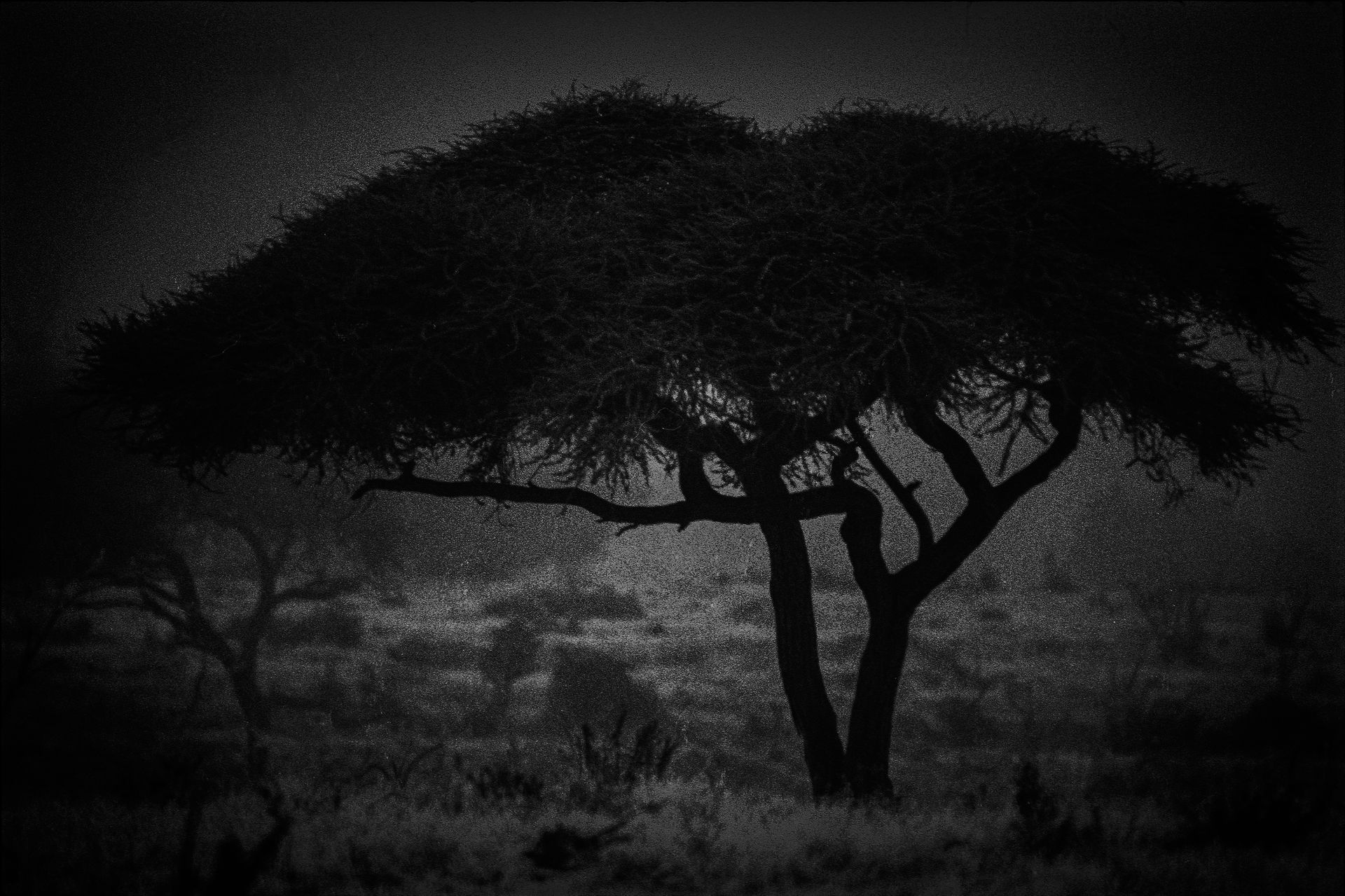
To this end, the photographer seeks to develop a particular “thread” that refrains from storytelling but, with precision, combines geometry and the balance of visual masses. Abandoning colour, he prefers a palette of light and shade. The use of black-and-white photography transports his oeuvre into the realm of abstraction, metamorphosing each element into a tiny part of a larger proof in which the planes merge together. From this, he produces a new figurative process, extracting the lines, curves and shapes he sees to offer up his own representation of the world. Each element becomes a tiny part of a larger print in which the planes merge together, and from which I aim to create a new figurative process, a new artistic reality: dunes become pencil-line undulations; the individuality of the zebra is translated to reveal a multitude of shapes and shadows that structure a previously indistinguishable reality.

Nicolas Bruant’s photography is not simply a process of abstract creation, nor is it limited to a solitary aesthete’s passion. Instead, it is a means of recounting the lives of the men and women he meets on his way, whom he holds in high regard. His many months in Africa enabled him to discover local mores from craftmanship to teaching in Quranic schools to the ceremony of the dead, capturing gestures, gazes, joy, suffering and inter-generational dialogue. Bruant always aims to go beyond the foreigner’s perspective, seeking to attain the very essence of the countries and places in which he stays. “These people have much to teach us.”, he says.

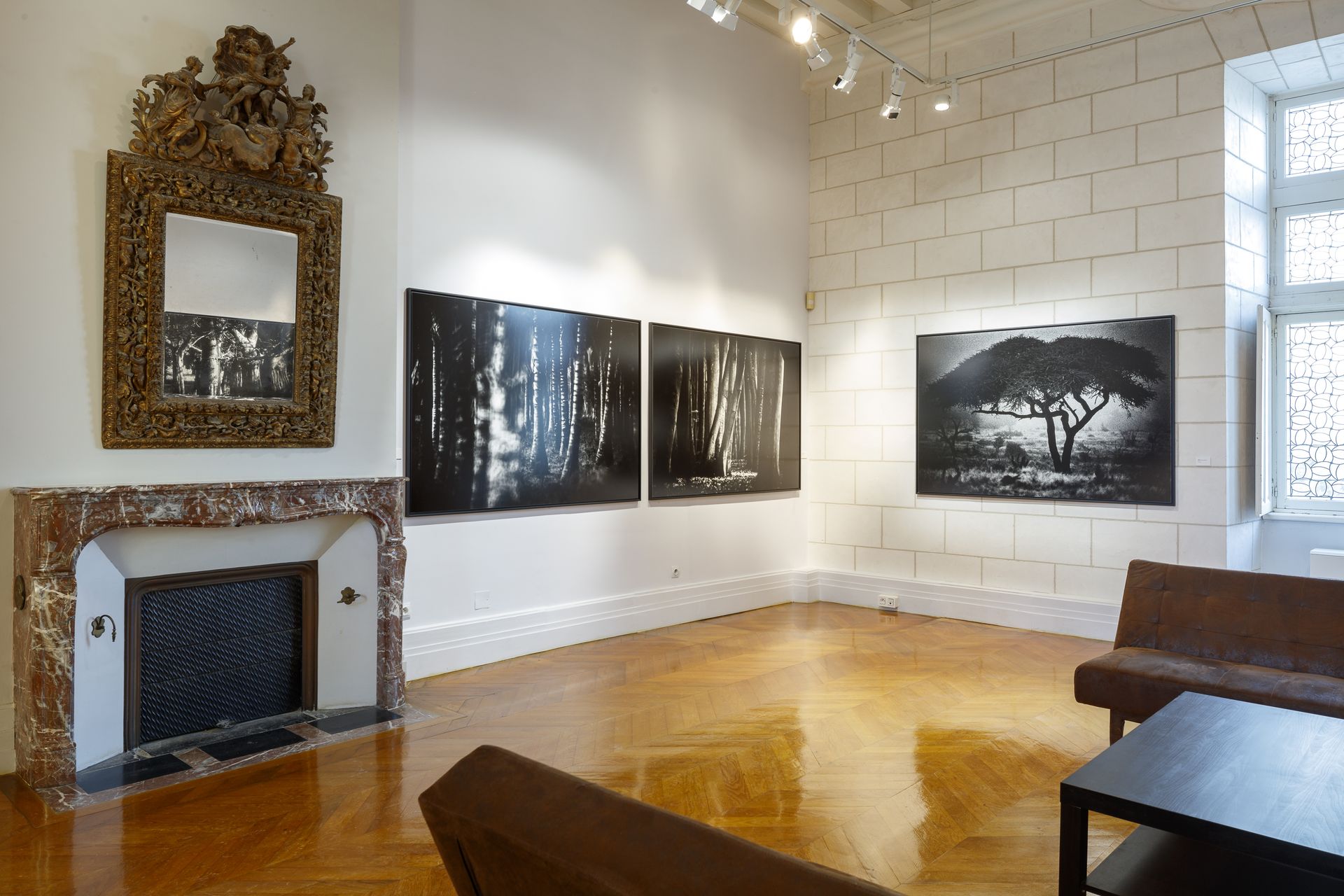
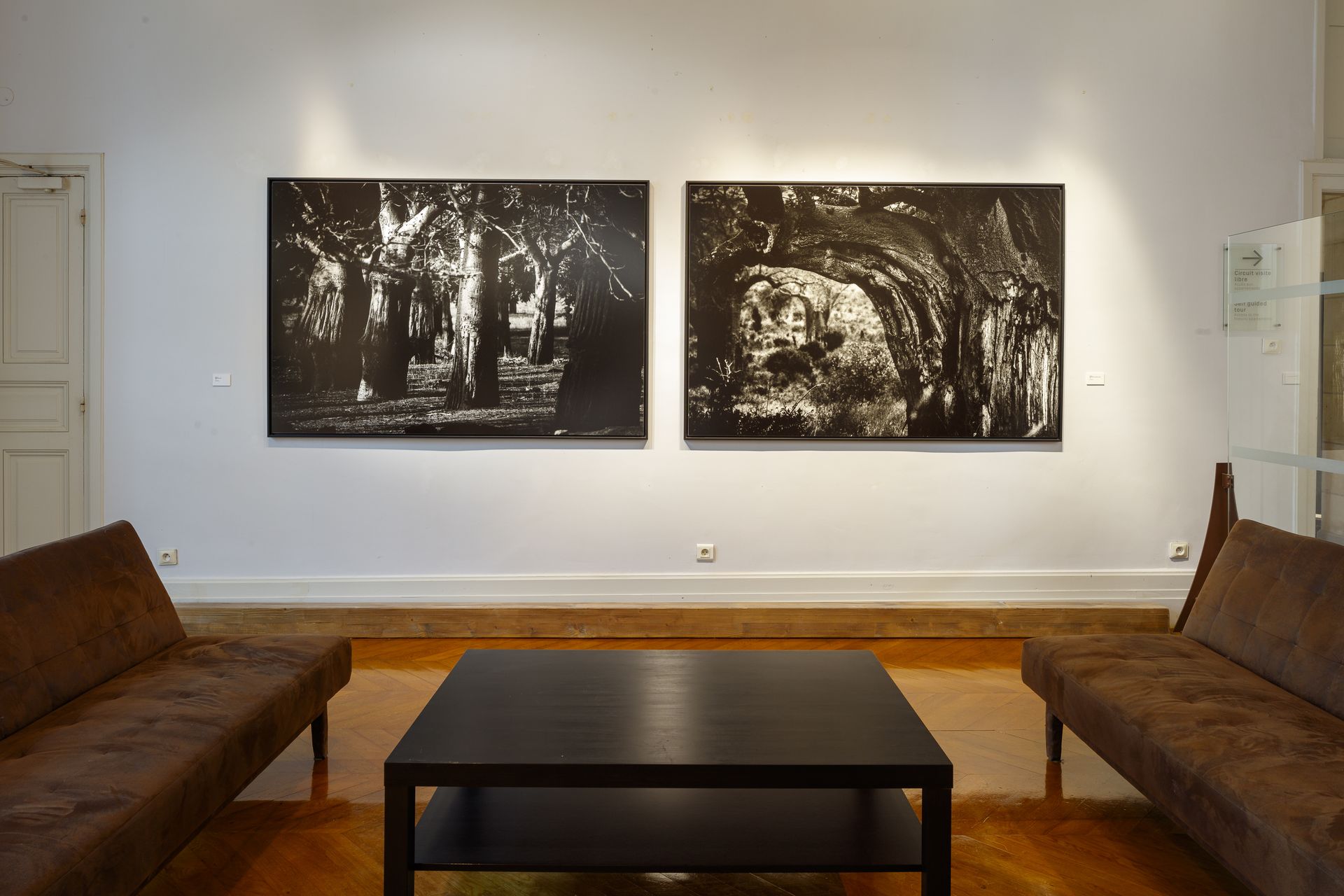
In the Château of the Domain of Chaumont-sur-Loire, Bruant’s deeply humanist oeuvre is represented by his pictures of trees, taken from a series on plant life that invites us to a discover a new perspective by highlighting the expressive nature of each element of the undergrowth, whether it is an army of trunks emerging from the forest floor in Compiègne or a field of baobabs in the land of the Dogon. Photographer-cum-architect Nicolas Bruant recreates the surroundings he sees to offer up a new composition.

BIOGRAPHICAL NOTES
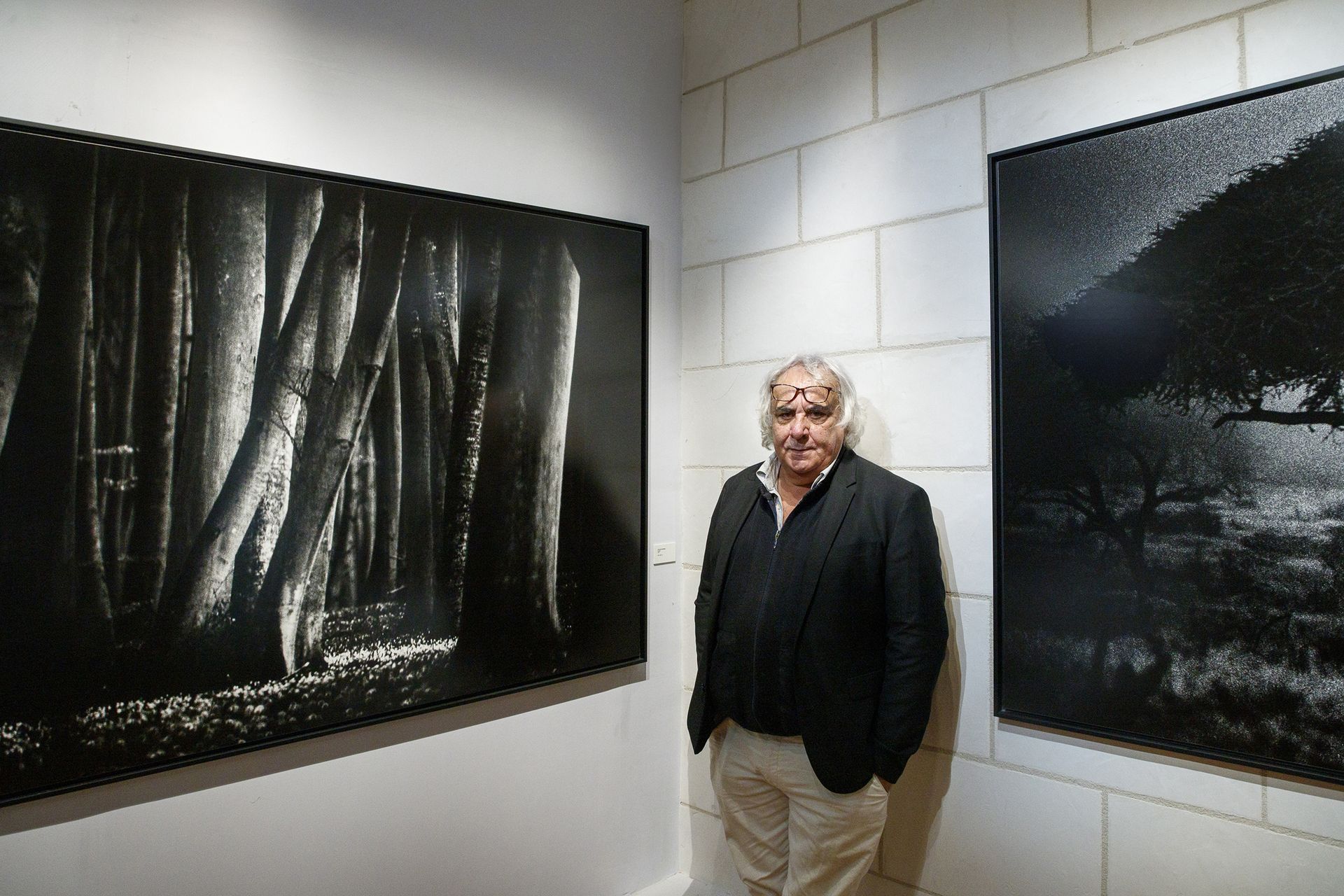
Nicolas BRUANT
FRANCE
 
 
Nicolas Bruant (born Benoit Mathur in 1951) met photographer André Martin when he was very young and later became his assistant, in 1969. For Bruant, Martin would become a travelling companion, teacher and friend. Bruant began to travel in 1971, at the age of 20: first in Asia, then in India, Nepal and Sri Lanka, followed by Africa. He developed an aesthetic approach shaped early on by tales from family friends, great travellers, explorers and artists.
He dabbled in colour as the only way to break into the glossy world of prestigious magazines (Vogue, Condé Nast Traveler, Décoration internationale, etc.), covering architecture, landscapes and fashion.
Advertising commissions proved to be eye-opening opportunities for the artist, who came to apprehend visual balance, the distribution of volume, and the narrative, which he later broke away from in order to focus on black-and-white photography in the 1980s.
If Nicolas Bruant was closely connected with Agence Delpire, a real “artistic hive” frequented by such great figures of the written word and visual arts as Herb Lubalin, Albert Boton, Henri Cartier Bresson and Irving Penn, to name but a few, he always considered photography a solitary activity, like that of a painter or musician. He spent some 30 years travelling through the African continent, where he photographed the Dogon people in Mali for three months a year during six years, producing works that were exhibited at both the Petit Palais and the Galerie des Galeries. He also photographed the Fula, Bozo, Tuareg and other peoples of the region.
In 1972, he began to photograph the animals of Africa and in 1992 published a book dedicated to these works, titled Wild Beast (published by Chronicle Book in San Fransisco, reprinted in 2000 in London by The Bigger Picture Gallery). Inspired by the photographs in Bruant’s book, clarinet player Jean-Marc Foltz released an eponymous album of jazz quartets. The artist’s most recent book, published by Éditions Delpire, is the sombre vision of the sculpture garden of Domaine de Peyrassol, in the south of France.
Nicolas Bruant exhibits all over the world and takes part in many group exhibitions. He has bequeathed some of his photographs of Asia to Musée Guimet and has produced a series of videos titled Silences, in which artists, musicians and actors are presented face-to-face with a camera for 4 minutes in a sort of visual monologue. Through his documentary work all over the word, he has acquired a substantial collection of very varied photographic equipment, which has forced him in recent years to devote time to his archives and inspired a new project, “Trace”, which will be the subject of a book.

LES ARTISTES

SELECTED EXHIBITIONS

2020
7 à La Maison, Exposition sur l’Afrique, l’Inde, le Mexique, la Chine, le Pakistan chez Serge Le Guennan, France
 
2013
Peyrassol, Librairie Durieux, vernissage, Paris, France
 
2012
Traces, Galerie Dutko, Paris, France
L’Arbre, École des Beaux-Arts de Paris, France
 
2011
Traces3, Alcazar, restaurant, Paris, France
Bestiaire, Galerie de la Fondation Maeght, France
 
2010
Traces2, Chapelle des pénitents blancs, Gordes, France
Fragments d’une histoire naturelle, Château de Chambord – Exposition collective avec André Martin, Sarah Moon, Jean-Luc Olezak, Marc Riboud, France
Dogons, Galerie Didier Claees, Brussels, Belgium
 
2009
Africa(s), Galerie Bernard Dulon chez Vincent Collet, Brussels, Belgium
 
2008
Africa, Alcazar, Paris, France
 
2007
Afrique(s), Galerie Bernard Dulon chez Berko, Brussels, Belgium