Artistic approach
A dominant artist on the Brazilian art scene, Tunga – who is nicknamed after the Tonga islands in the Pacific Ocean – is part of a generation of artists following in the footsteps of Lygia Clark and Hélio Oiticica. He dabbles in an array of techniques including sculpture, installations, videos, performances and drawing. Shot through with literary, philosophical and scientific references (maths, entomology, archaeology and medicine among others), Tunga's work sheds light on “the duality between the cerebral image and biological pulsation” (Prof. Nelson Aguilar).
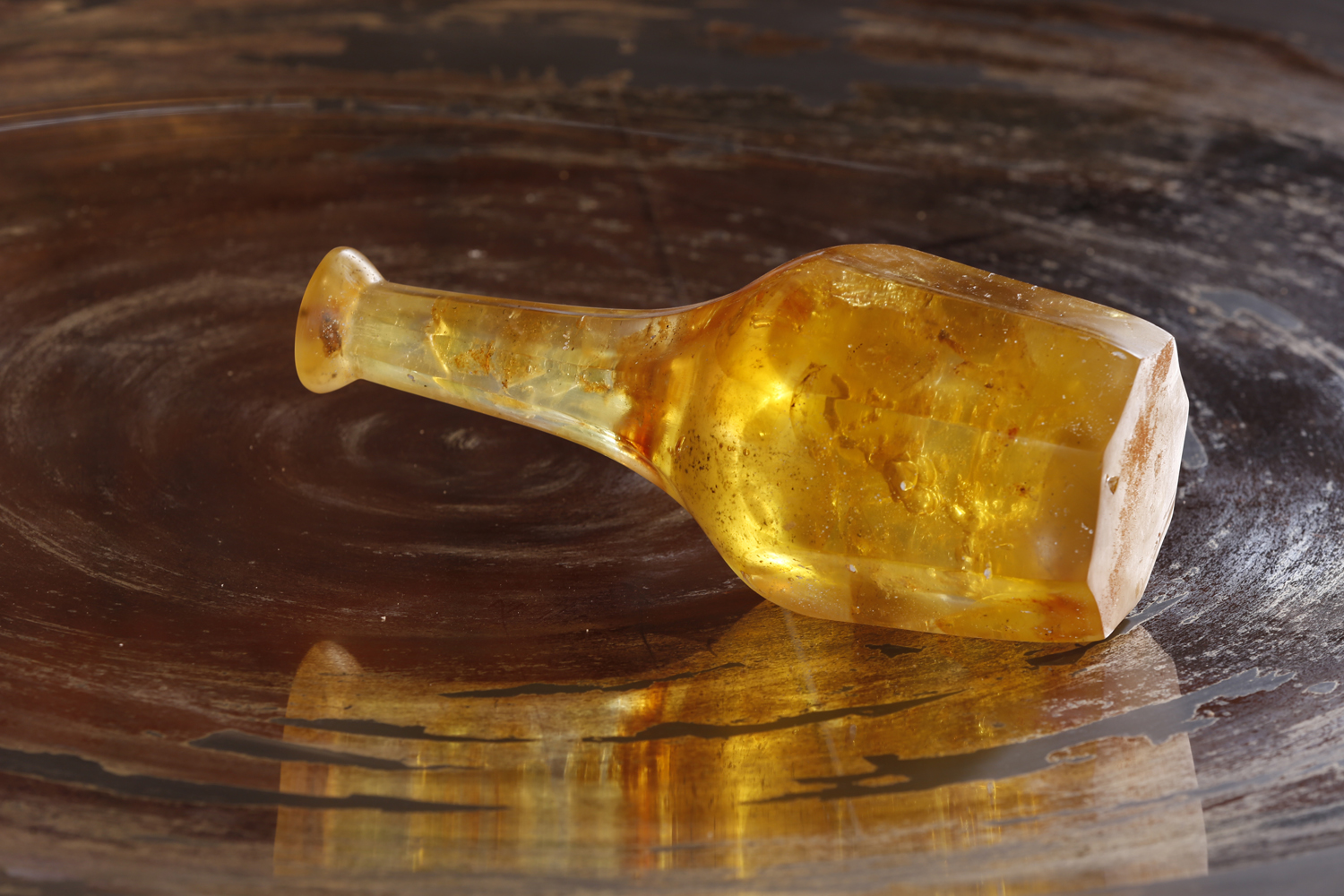
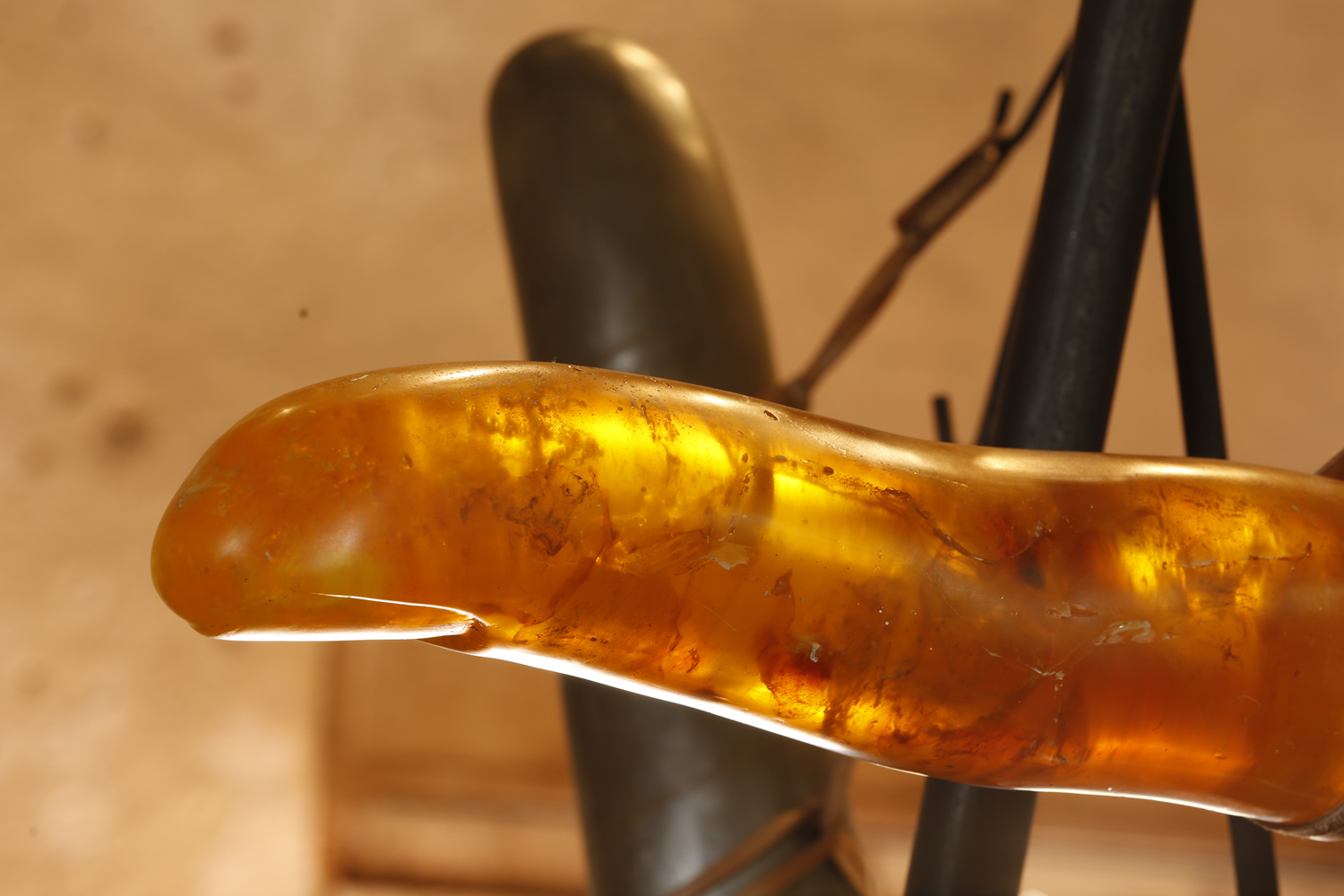
He draws on mythology and fiction and "alchemical" processes to weave together a multi-faceted piece of work that is “disturbingly strange”. His works abound with everyday objects and materials of all kinds, such as blown glass, crystal marbles, snooker balls, sponges, brushes, ropes and minerals...
One of his most eye-catching pieces, True Rouge, is an intriguing sculpture crafted in 1997 and exhibited in Inhotim, Brazil, held together by a diversity of similar objects (sponges, snooker balls, glass marbles, brushes, glass vials), suspended in nets, the whole soaked in blood red liquid… In 2005, his monumental installation À la lumière des deux mondes, on show beneath the Louvre pyramid, brought together the cultures of the New and Old Worlds. Interlaced into the suspended sculpture are woven black supple shapes where golden skulls and statue heads of famous men from the Louvre collection have been imprisoned…
Fascinated by traces of a long-ago past as well as meteorites or celestial bodies from asteroids, Tunga showcases a superb fossilised tree trunk marbled in grey and blue in the Stables Indoor Ring at Domaine de Chaumont-sur-Loire.
BIOGRAPHICAL NOTES
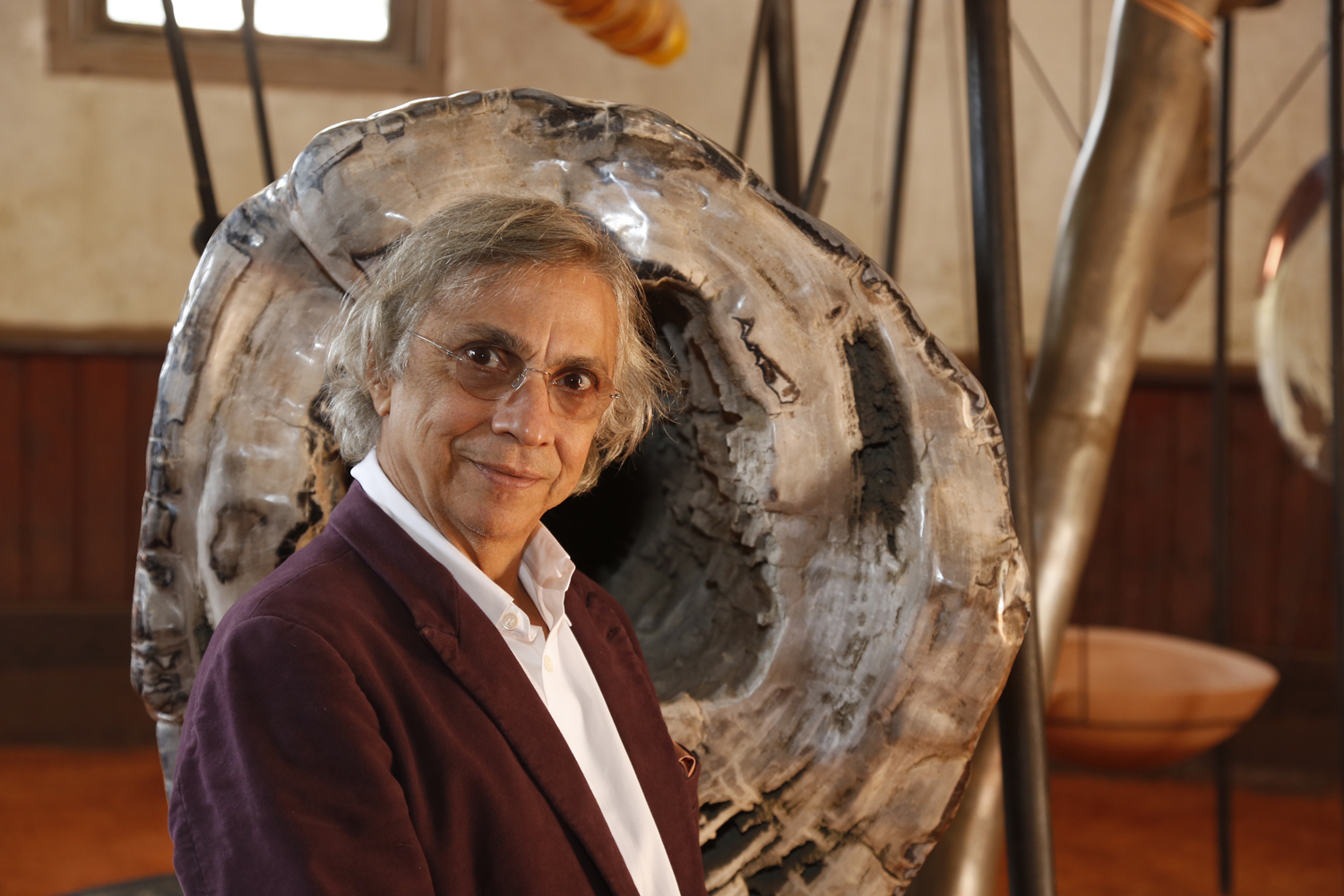
Tunga au Domaine de Chaumont-sur-Loire, 2015 - © Éric Sander
Born in Palmares, Brazil, in 1952, Tunga (Antonio José de Barros Carvalho e Mello Mourão) has become one of the most influential artists of his generation. He splits his time between Rio de Janeiro and Paris.
An architect by training (Faculty of architecture and urban planning at the Universidade Santa Úrsula, Rio de Janeiro), he experiments across the art board. His extraordinary practice encompasses sculpture, drawing, performance, video and poetry. In 1998 he was awarded the Prize for Best Sculptor (Associaçao Paulista de Criticos de Arte Price).
In the 1970s, he worked as part of a group of artists (Cildo Meireles, Waltercio Caldas, José Resende), who would publish together in the journals Malasartes and A parte do Fogo.
In response to the Louvre's invitation in 2005, as part of the Year of Brazil in France, he created a monumental installation that he called À la lumière des deux mondes. This particularly impressive sculpture features figurative elements (skeletons, combs, heads), iron rods, wire ropes and weaving, and was made especially for the occasion in line with the exhibition organised at the Louvre at the same time, Frans Post, le Brésil à la cour de Louis XIV. In 2014 Tunga took part in the collective exhibition Inside, at the Palais de Tokyo, in Paris.
He is represented by Mendes Wood (Brazil), Luhring Augustine Gallery, Christopher Grimes Gallery (USA), Pilar Corrias (England), Galleria Franco Noero (Italy) and Meyer Riegger Berlin (Germany).